
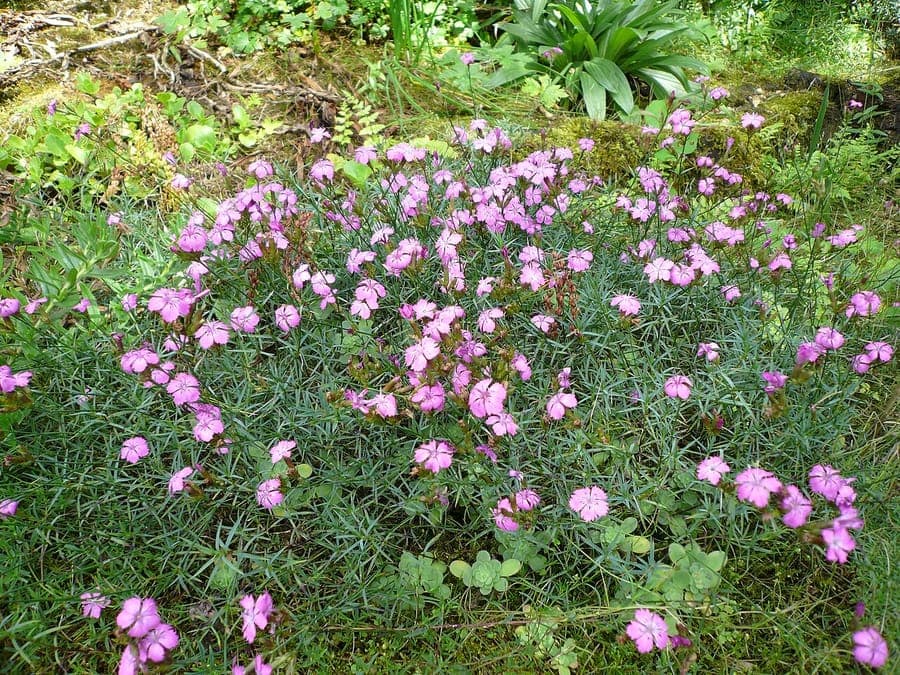
Meneerke bloem / CC BY-SA 3.0, via Wikimedia Commons
Dianthus graniticus: complete guide
Dianthus graniticus
Want to see Dianthus graniticus: complete guide in your garden?
1 minute, no credit card
Dianthus graniticus, commonly called the granite pink or alpine pink, is a charming and scarce species native to the mountainous regions of southeastern France. This miniature alpine gem belongs to the Caryophyllaceae family and is prized by alpine enthusiasts for its delicate dark purple flowers and finely textured gray foliage. Though rarely seen in mainstream nurseries, this plant deserves attention from gardeners seeking a botanical treasure for rock gardens and troughs.
This species thrives naturally on rocky alpine slopes and mountain meadows where granite dominates the soil structure. The plant's name honours this preferred habitat: granite-rich terrain at elevation. Dianthus graniticus is a true dwarf, reaching only 10-20 cm in height, forming tight rosettes of narrow, bluish-grey needle-like leaves that remain ornamental throughout the year.
The real magic happens in bloom season. From June through September, the plant produces numerous small dark purple flowers with delicately fringed petal edges, characteristic of the pink genus. Each bloom measures just a few centimeters across, but they appear in attractive clusters held above the foliage. Peak flowering occurs in July and August, when the plant becomes a lavender-purple jewel in the garden.
In temperate zones, Dianthus graniticus thrives in USDA hardiness zones 5-8, indicating excellent frost tolerance to minus 20 degrees Celsius or lower. However, the plant's true nemesis is winter wet rather than winter cold. Outstanding drainage is absolutely critical for survival. Poor drainage combined with winter moisture commonly causes root rot and plant death.
Soil preparation is crucial. This alpine plant demands well-draining conditions approaching those of a true alpine trough mix. Combine garden soil with at least 40% mineral amendments such as perlite, expanded schist, or coarse sand. Heavy clay soils require significant modification. Nutrient levels should be moderate to low; excessive fertiliser promotes soft, disease-prone growth unsuitable for alpine conditions.
Watering practices must be precise. During the growing season (May-September), water moderately when the top 2-3 cm of soil become dry. Ensure drainage is rapid to prevent waterlogging. Twice-weekly watering typically suffices in normal rainfall years; adjust for summer heat and local conditions. Winter watering should be minimal or absent; the dormant plant requires almost no moisture and withstands significant drought during the cold months.
Maintenance is refreshingly simple. Remove spent flower stems after blooming to maintain tidy appearance and often trigger a second flowering flush in early September. In spring, carefully clear away any dead foliage from the previous year to reduce disease risk and improve air circulation. Dianthus graniticus rarely requires pruning beyond these minimal tasks.
Winter hardiness is excellent throughout much of northern Europe. The plant survives USDA zone 5 temperatures without winter protection. In regions with wet winters, clay-heavy soils, or poor drainage, container cultivation offers an alternative. Grow the plant in pots and relocate to a cool, frost-free location (greenhouse, cold frame, or unheated shed) during winter months. This protects against excessive moisture while maintaining adequate cool dormancy.
In garden design, Dianthus graniticus partners beautifully with fellow drought-tolerant alpines including Sempervivum species, Acantholimon species, and other high-altitude plants. The purple flowers contrast elegantly with silver-foliaged companions. Suitable sites include stone troughs, alpine sink gardens, or crevice-planting situations. This plant makes its greatest impact in intimate settings where its diminutive flowers can be appreciated closely rather than as mass plantings.
Propagation occurs via seed and basal cuttings. Seed germinates under light conditions in standard seed compost at temperatures of 15-20 degrees Celsius within 10-14 days. Seed is uncommon in trade and should be sourced from specialist seed suppliers. Basal cuttings root reliably in sand-peat mix under humid conditions within 3-4 weeks.
GardenWorld recommends sourcing plants from specialty alpine nurseries and seed suppliers rather than standard garden centers. UK gardeners should contact D.T. Brown Seeds or Thompson & Morgan. In continental Europe, check alpine specialist networks and specialty plant fairs. Patience rewards the search: Dianthus graniticus is a collector's treasure, not a supermarket plant, but those who locate it find a rewarding long-lived companion for rocky, free-draining sites.
Want to see Dianthus graniticus: complete guide in your garden? Make a free design now.
Upload a photo, pick a style, and get a photorealistic design with plant list in under a minute.
10,000+ gardens designed already
No credit card required


Similar plants
Dianthus karami: complete guide
Dianthus karami
Dianthus karami is a rare Lebanese mountain pink with fringed pink blooms on limestone cliffs, ideal for rock gardens and troughs.
Sicilian pink: complete guide
Dianthus siculus
Discover Dianthus siculus, an elegant purple bloomer from Sicily. Cultivation, June-September flowering and garden combinations.
Alpine mouse-ear chickweed: complete guide
Cerastium pedunculatum
Full growing guide for Cerastium pedunculatum: ideal location, soil, watering, winter hardiness, and companion plants for rock gardens.