
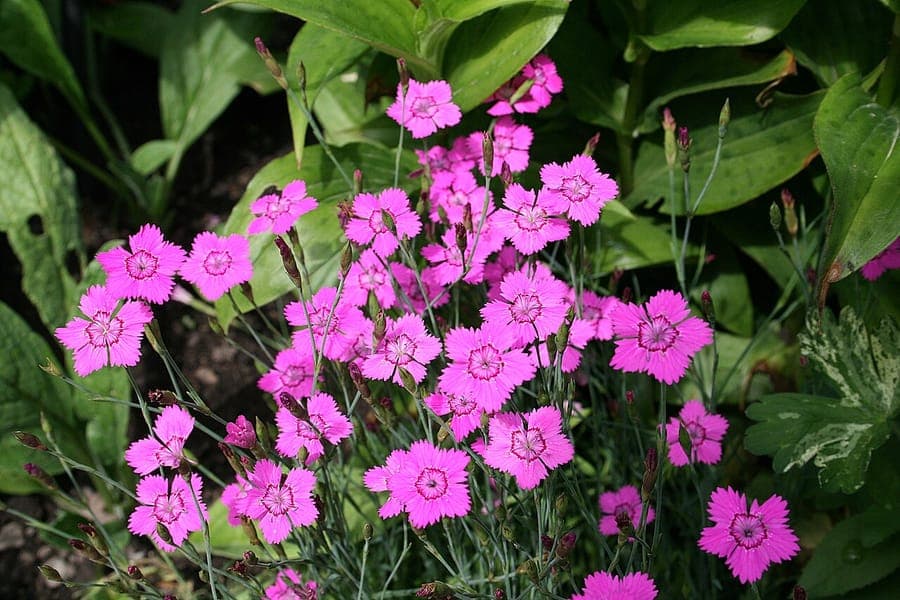
Jean-Pol GRANDMONT / CC BY 3.0, via Wikimedia Commons
Maiden pink: complete guide
Dianthus deltoides
Want to see Maiden pink: complete guide in your garden?
1 minute, no credit card
Overview
Dianthus deltoides, commonly known as Maiden pink, is a hardy, creeping perennial that thrives in dry, sunny conditions where many other plants struggle. Native to central and eastern Europe, it's found naturally on rocky slopes, dry meadows, and sandy soils from Austria to the Baltic states. In the garden, it's prized for its dense, low-growing habit and long bloom period. Reaching only 15–20 cm in height but spreading up to 40 cm wide, it forms a lush mat that suppresses weeds and adds color from early summer into autumn.
On gardenworld.app, you can design a garden layout that highlights Maiden pink's strengths - especially in drought-prone areas or as a soft edging plant along pathways. Its compact size and spreading nature make it ideal for rock gardens, between stepping stones, or as a front-row border plant.
Appearance & bloom cycle
Maiden pink features narrow, dark green leaves with a slightly greyish tinge, especially in full sun. The flowers, 2–3 cm across, appear from June through September, peaking in July and August. Each bloom has the classic fringed edge typical of Dianthus species, with colors ranging from bright pink to deep purple, often with a contrasting white or pale center. The flowers emit a light, spicy fragrance that attracts bees, butterflies, and hoverflies.
After blooming, seed capsules form, but self-seeding is minimal. The plant remains evergreen in mild winters, though foliage may bronze in colder zones. It doesn't spread aggressively, making it a well-behaved choice for mixed borders.
Ideal location
Plant Maiden pink in full sun - at least 6 hours of direct light daily - for best flowering. It tolerates partial shade but blooms less prolifically. It excels in dry, well-drained spots: rockeries, gravel beds, dry slopes, or between pavers. Avoid heavy clay or waterlogged soils. It works beautifully in cottage gardens, alongside lavender, catmint, or low-growing sedums. As a front-of-border plant, it adds texture and soft color without overshadowing taller neighbors.
Using gardenworld.app, you can visualize how Maiden pink integrates into a low-water garden scheme, particularly in zones where irrigation is limited. Its ability to thrive on poor soil makes it a valuable asset in sustainable landscaping.
Soil requirements
Maiden pink prefers lean, sandy, or gravelly soils with a pH between 6.0 and 7.5. Rich, compost-heavy soils encourage leggy growth and reduce flowering. Ensure excellent drainage - amend heavy soils with grit or sand. Avoid organic mulches like bark or leaf litter, which retain moisture and can lead to root rot in winter.
Free design
Want to see Maiden pink: complete guide in your garden? Make a free design now.
Watering
Water newly planted Maiden pink regularly for the first 4–6 weeks to establish roots. Once settled, it's highly drought-tolerant and rarely needs supplemental watering. Rely on rainfall in most climates. In prolonged dry spells, a deep soak once every 2–3 weeks is sufficient. Overwatering is a common mistake - it weakens the plant and increases fungal disease risk.
Pruning
Deadhead spent flowers or shear the plant lightly in late summer (around September) to encourage a tidy appearance and possibly a second flush of blooms. Use clean shears to trim back by about one-third. This also helps prevent the center from becoming bare over time. No pruning is required for survival, but it improves longevity and aesthetics.
Maintenance calendar
- Jan: Check for frost damage; no action needed
- Feb: Dormant; leave undisturbed
- Mar: Light cleanup, remove winter debris
- Apr: Monitor for new growth; no feeding
- May: Prepare for bloom; water only if dry
- Jun: Bloom begins; keep area weed-free
- Jul: Peak flowering; avoid overwatering
- Aug: Continue bloom; no fertiliser
- Sep: Light prune after flowering
- Oct: Leave foliage for winter protection
- Nov: Dormancy begins; no care needed
- Dec: Fully dormant; withstands cold
Winter hardiness
Maiden pink is hardy in USDA zones 3–8, tolerating temperatures down to -40°C. In zone 8 and above, it remains semi-evergreen. In colder zones, foliage may die back but regrows vigorously in spring. The key to winter survival is good drainage - wet soil in winter leads to crown rot. Avoid thick mulch layers; a light gravel topdressing is preferable.
Companion plants
Pair Maiden pink with drought-tolerant perennials like thyme, yarrow, sedum, or lavender. Its soft pink blooms contrast beautifully with silver-foliaged plants such as Artemisia or Stachys. Avoid moisture-loving plants or aggressive spreaders like mint or bugleweed, which can outcompete it. It also works well in alpine troughs or mixed containers with other sun-loving, low-water species.
Closing
Maiden pink is an underrated gem for low-effort, high-impact gardening. It's tough, long-blooming, and supports pollinators without demanding much in return. You'll find it at garden centres across the UK and US, often sold in 9 cm pots or as part of groundcover trays. Combine it with plants that share its preference for dry, sunny spots, and you'll have a resilient front border for years. Plan your layout on gardenworld.app to see exactly where this plant fits best - whether you're filling a gap between stones or softening a sunny edge.
Want to see Maiden pink: complete guide in your garden? Make a free design now.
Upload a photo, pick a style, and get a photorealistic design with plant list in under a minute.
No credit card required


Similar plants
Dianthus karami: complete guide
Dianthus karami
Dianthus karami is a rare Lebanese mountain pink with fringed pink blooms on limestone cliffs, ideal for rock gardens and troughs.
Sicilian pink: complete guide
Dianthus siculus
Discover Dianthus siculus, an elegant purple bloomer from Sicily. Cultivation, June-September flowering and garden combinations.
Alpine mouse-ear chickweed: complete guide
Cerastium pedunculatum
Full growing guide for Cerastium pedunculatum: ideal location, soil, watering, winter hardiness, and companion plants for rock gardens.