
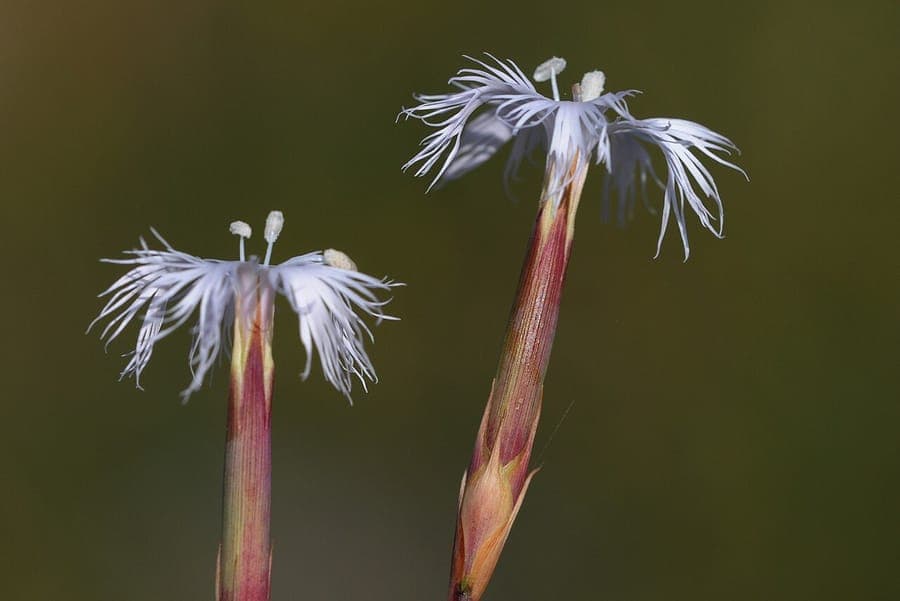
Zeynel Cebeci / CC BY-SA 3.0, via Wikimedia Commons
Hairy carnation: complete guide
Dianthus crinitus
Want to see Hairy carnation: complete guide in your garden?
1 minute, no credit card
Overview
The hairy carnation (Dianthus crinitus) is an elegant groundcover from the Caryophyllaceae family. Native to North Africa through the Caucasus to Iran, this plant has become a favorite for gardeners seeking low-maintenance, sun-loving species. It thrives where many others struggle - in poor soil, exposed sites, and hot conditions.
Appearance and Bloom
This compact plant reaches 30-40 cm in height and forms a dense cushion of finely-divided foliage. The leaves are silver-gray and needle-like, creating a beautiful contrast with the bright pink to red flowers. Blooms emerge from May through July and feature distinctively fringed petals - hence the botanical name "crinitus" meaning "hairy."
Ideal Location
Full sun is essential for Dianthus crinitus. Choose a spot receiving at least 6-8 hours of direct sunlight daily. The plant tolerates wind exposure exceptionally well, making it ideal for rooftops, windy slopes, and other exposed positions where tender plants would suffer.
Soil Requirements
Poor, well-draining soil is actually ideal for this species. It performs best in sandy or gravelly earth where most plants would struggle. If your soil is heavy clay, amend it generously with sand and grit. Excellent drainage is non-negotiable - waterlogging leads to root rot.
Watering
Like most Mediterranean plants, the hairy carnation is drought-tolerant once established. Water moderately during the growing season but allow soil to dry between waterings. Once rooted, supplemental watering is rarely needed except during severe drought. This is a plant that thrives on neglect rather than constant care.
Free design
Want to see Hairy carnation: complete guide in your garden? Make a free design now.
Pruning
Minimal maintenance is required. After blooming (August), you may deadhead spent flowers to encourage a secondary flush. Avoid harsh cutting - this plant dislikes aggressive pruning. Remove only dead wood in spring, leaving the overall shape intact.
Maintenance Calendar
March: Inspect drainage after winter. Gently remove winter damage. April: Plant new specimens or direct sow seed. May-July: Enjoy the flowers; water only in drought. August: Deadhead exhausted blooms. September-October: Plant fall bloomers nearby for seasonal interest. November-February: Minimal care; the plant rests.
Winter Hardiness
Dianthus crinitus is extremely hardy, surviving to -20 degrees Celsius without protection. In most temperate zones, no winter protection is necessary. In extreme climates, mulch around the base if desired, though typically unnecessary.
Companion Plants
Pair the hairy carnation with other drought-loving species. Marjoram (Origanum), lavender (Lavandula), and mouse-ear chickweed (Cerastium) create lovely combinations. In rock gardens, it pairs beautifully with Sedum and other succulents. For contrast, try ornamental grasses or Sempervivum varieties.
Closing Thoughts
The hairy carnation is a genuine treasure for gardeners seeking low-maintenance beauty. With its pink flowers, compact form, and extreme drought tolerance, it's a classic choice for rooftops, rock gardens, and other demanding locations. You'll find young plants at garden centers, and seed is readily available for home sowing. This is a plant that rewards even the most neglectful gardener - order yours from gardenworld.app today and transform a difficult corner into a blooming paradise!
Want to see Hairy carnation: complete guide in your garden? Make a free design now.
Upload a photo, pick a style, and get a photorealistic design with plant list in under a minute.
No credit card required


Similar plants
Dianthus karami: complete guide
Dianthus karami
Dianthus karami is a rare Lebanese mountain pink with fringed pink blooms on limestone cliffs, ideal for rock gardens and troughs.
Sicilian pink: complete guide
Dianthus siculus
Discover Dianthus siculus, an elegant purple bloomer from Sicily. Cultivation, June-September flowering and garden combinations.
Alpine mouse-ear chickweed: complete guide
Cerastium pedunculatum
Full growing guide for Cerastium pedunculatum: ideal location, soil, watering, winter hardiness, and companion plants for rock gardens.