
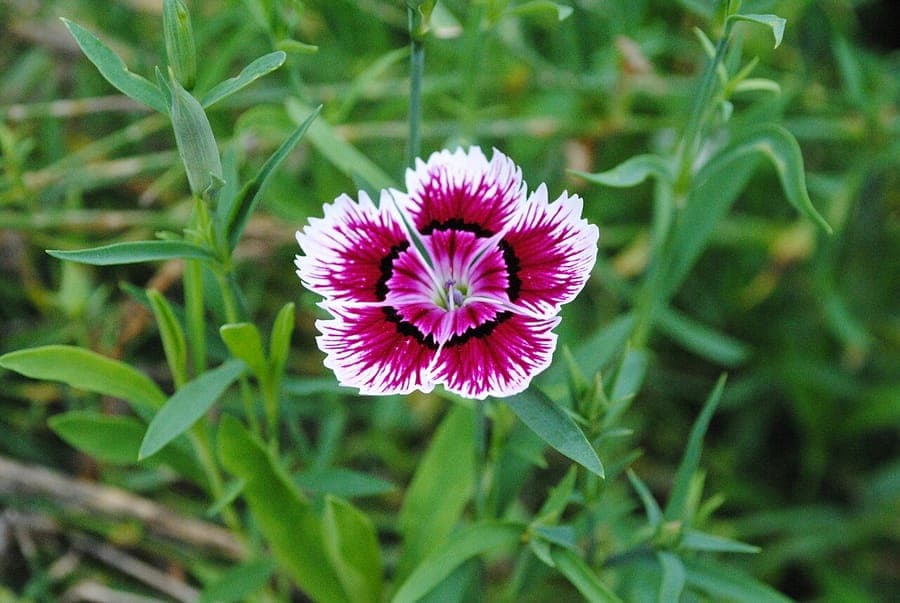
Jjw / CC BY-SA 3.0, via Wikimedia Commons
Japanese pink: complete guide
Dianthus chinensis
Want to see Japanese pink: complete guide in your garden?
1 minute, no credit card
Overview
Dianthus chinensis, commonly known as Japanese pink, is a resilient and attractive herbaceous perennial that brings vibrant colour and texture to gardens from early summer through autumn. Despite its name, this plant is native to wide areas of Asia, including northern and southeastern China, the Altay region, and parts of Russia and the Himalayas. It belongs to the Caryophyllaceae family and typically grows 20 to 40 cm in height, making it ideal for front-of-border planting or container gardening.
Gardeners value Japanese pink for its long blooming season and minimal care requirements. It thrives in sunny, well-drained conditions and can be grown as either a short-lived perennial or an annual, depending on local winter severity. With proper deadheading and soil conditions, Dianthus chinensis will bloom continuously and reward you with a tidy, floriferous display. For garden inspiration, use gardenworld.app to design a planting scheme that highlights Japanese pink alongside complementary perennials.
Appearance & bloom cycle
Japanese pink features narrow, blue-green, slightly glaucous leaves that form a compact, mounding habit. The flowers are usually pink, red, or white, with classic fringed or scalloped edges - a hallmark of many Dianthus species. Individual blooms range from 2.5 to 4 cm in diameter, and both single and double-flowered cultivars are available. Double forms resemble miniature carnations and add a cottage-garden feel.
Bloom time runs from June to October, especially when deadheaded regularly. In milder climates, flowering may even extend into November. The scent is light and spicy-sweet, more noticeable in the evening. Modern hybrids like 'Neon Star' or 'China Pink Supreme' offer improved disease resistance and continuous blooming.
Ideal location
Plant Japanese pink in full sun - at least 6 to 8 hours of direct sunlight daily. It performs poorly in deep shade, where stems become leggy and flowering diminishes. A sunny border, rock garden, or patio container are all excellent choices. Ensure good air circulation to prevent fungal issues, especially in humid summers.
This plant works well in informal cottage gardens, structured borders, or even gravel gardens. Avoid overcrowding; spacing of 15 to 25 cm between plants allows for healthy airflow and reduces disease pressure.
Soil requirements
Japanese pink demands well-drained soil. Heavy clay or waterlogged ground will lead to root rot. Ideal soil is sandy or loamy, with a pH between 6.0 and 7.5. If your soil is too rich, the plant may produce lush foliage at the expense of flowers. Amend heavy soils with grit or coarse sand to improve drainage.
Avoid high-nitrogen fertilisers. These plants thrive in lean to moderately fertile conditions. Overfeeding can reduce flowering and increase susceptibility to fungal diseases like powdery mildew. Use a balanced, slow-release fertiliser sparingly in spring if needed. A soil test via gardenworld.app can help you determine your garden's nutrient balance.
Free design
Want to see Japanese pink: complete guide in your garden? Make a free design now.
Watering
Water Japanese pink moderately, allowing the top inch of soil to dry out between waterings. Once established, it is drought-tolerant and should not be overwatered. Wet foliage and soggy roots are the main causes of failure, especially in cool, damp weather.
When watering, aim at the base to keep leaves dry. This helps prevent fungal infections. In containers, ensure pots have adequate drainage holes and use a free-draining compost mix. Water deeply but infrequently to encourage deep root development.
Pruning
Deadhead spent flowers regularly to promote continuous blooming. Pinch or snip off the flower stem just above a leaf node. This not only improves appearance but also prevents self-seeding unless you want volunteers.
In late autumn or early winter, cut back the remaining stems to about 5 cm above ground level. In colder zones (below USDA 5), apply a light mulch to protect crowns during freeze-thaw cycles. Avoid heavy mulching, which can trap moisture and cause rot.
Maintenance calendar
- January: Check for heaved plants; press back into soil if needed
- February: Light tidy-up in mild areas
- March: Remove winter debris; prepare soil for new growth
- April: Sow seeds indoors or plant out if frost risk has passed
- May: Transplant seedlings; start deadheading once bloom begins
- June: Peak flowering; monitor for slugs and aphids
- July: Continue deadheading; water during dry spells
- August: Maintain bloom by removing faded flowers; check for mildew
- September: Divide mature clumps if flowering declines
- October: Final deadheading; cut back stems after frost
- November: Mulch to protect crowns in exposed sites
- December: Keep area clear of wet leaves to prevent rot
Winter hardiness
Dianthus chinensis is hardy in USDA zones 4 to 9. In zone 8 and above, it typically survives winter with minimal protection. The main threat isn't cold, but wet soil. In regions with heavy winter rains, consider growing in raised beds or containers to improve drainage.
In containers, move pots to a sheltered spot or elevate them on feet to prevent waterlogging. Avoid covering plants with plastic, which can trap moisture. A breathable fabric or straw mulch works better.
Companion plants
Pair Japanese pink with drought-tolerant, sun-loving perennials like Sedum, Lavender, Catmint, or Yarrow. These combinations create a low-maintenance, pollinator-friendly border. Low growers like Thyme or creeping Phlox make excellent ground cover.
Avoid moisture-loving plants such as Hostas or Ferns. Their cultural needs clash with Dianthus. In mixed containers, combine with Verbena, Heliotrope, or ornamental grasses for visual contrast.
Closing
Dianthus chinensis is a dependable, long-blooming plant that earns its place in any sunny garden. Its compact size, vibrant flowers, and resilience make it a favourite among gardeners seeking beauty with minimal fuss. Use it in borders, edging, or pots - it adapts well to many garden styles.
Find Japanese pink at garden centres like B&Q, Wyevale, or local independents in late spring. For layout ideas, browse themed garden plans on gardenworld.app featuring Dianthus pairings and seasonal colour schemes.
Want to see Japanese pink: complete guide in your garden? Make a free design now.
Upload a photo, pick a style, and get a photorealistic design with plant list in under a minute.
No credit card required


Similar plants
Dianthus karami: complete guide
Dianthus karami
Dianthus karami is a rare Lebanese mountain pink with fringed pink blooms on limestone cliffs, ideal for rock gardens and troughs.
Sicilian pink: complete guide
Dianthus siculus
Discover Dianthus siculus, an elegant purple bloomer from Sicily. Cultivation, June-September flowering and garden combinations.
Alpine mouse-ear chickweed: complete guide
Cerastium pedunculatum
Full growing guide for Cerastium pedunculatum: ideal location, soil, watering, winter hardiness, and companion plants for rock gardens.