
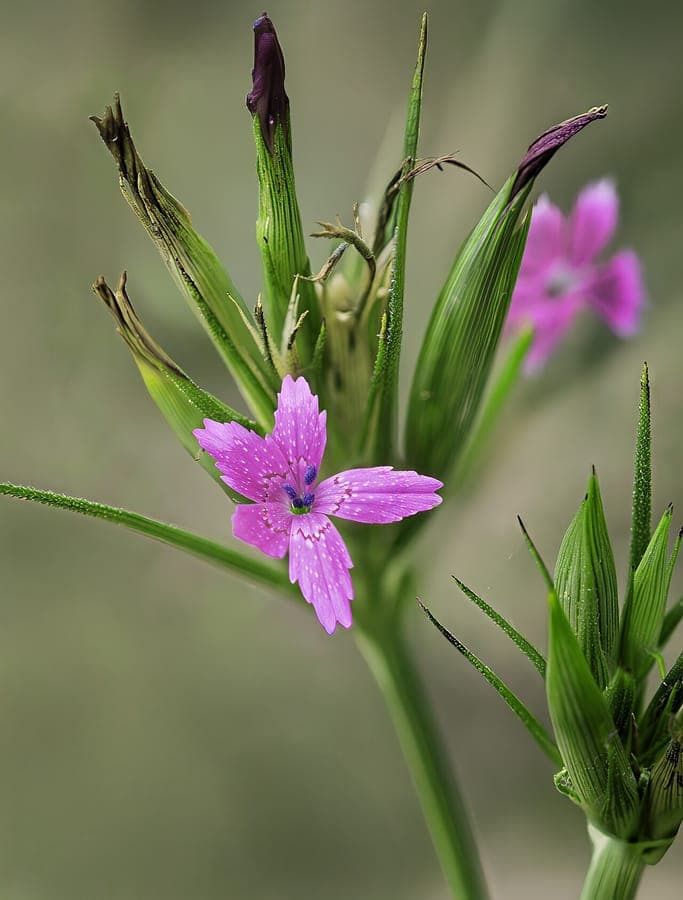
Didier Descouens / CC BY-SA 4.0, via Wikimedia Commons
Grass pink: complete guide
Dianthus armeria
Want to see Grass pink: complete guide in your garden?
1 minute, no credit card
Overview
Dianthus armeria, commonly known as Grass pink, is a resilient and graceful herbaceous perennial native to parts of central and southern Europe, including Austria, France, and the Baltic states. As a member of the Caryophyllaceae family, it shares traits with carnations and pinks but stands out for its airy, informal look and adaptability to tough growing conditions. Reaching 30 to 50 cm in height, Grass pink forms upright, slender stems topped with clusters of vivid purple flowers from June through August. It thrives in dry, sunny spots where many other perennials struggle, making it a go-to choice for low-maintenance gardens.
Appearance & bloom cycle
The bloom season runs from June to August, peaking in July. Flowers are about 2 cm wide, with deeply fringed petals in a rich purple hue and a distinctive dark eye at the center. The foliage is narrow, linear, and blue-green, with a slightly rough texture-hence the species name 'armeria', which references a similar-looking thrift plant. After flowering, seed heads form and may self-sow lightly in gravelly or undisturbed areas. While not aggressive, this natural seeding adds charm to cottage-style or wildflower gardens. The upright habit and fine texture make it ideal for the middle or front of sunny borders.
Ideal location
Full sun is essential-Grass pink needs at least 6 hours of direct sunlight daily. In shade, it becomes leggy and produces fewer blooms. It performs best in dry, well-drained sites such as rock gardens, gravel beds, or sandy slopes. Avoid heavily shaded or moisture-retentive areas. This plant excels in xeriscaping and gravel gardens, where its drought tolerance shines. For gardeners planning a new layout, gardenworld.app offers a visual design tool that helps place Grass pink exactly where sunlight and drainage align.
Soil requirements
Grass pink prefers lean, fast-draining soils. Rich, fertile soils encourage excessive foliage at the expense of flowers. Sandy or loamy soils with a pH between 6.0 and 7.5 are ideal. Heavy clay soils should be amended with coarse sand or grit to improve drainage. If planting in containers, use a quality potting mix with added perlite or gravel at the bottom. Avoid organic-rich composts, which hold too much moisture and can lead to root rot.
Watering
Once established, Grass pink is highly drought-tolerant. Young plants benefit from weekly watering during their first growing season, especially in dry spells. Mature plants rarely need supplemental irrigation except during prolonged droughts. Overhead watering should be avoided to prevent fungal issues. Water at the base using drip irrigation or a watering can. Let the soil dry out completely between waterings-this plant dislikes constant moisture.
Free design
Want to see Grass pink: complete guide in your garden? Make a free design now.
Pruning
Pruning isn't required for survival but can improve appearance and encourage a second, lighter bloom. After the main flowering period in August, cut back spent flower stems to just above the basal rosette. This prevents self-seeding if desired and tidies the plant. Avoid hard pruning in autumn; leave the structure intact for winter interest and habitat value. Gardeners using gardenworld.app can sync their maintenance calendar to get automated reminders for pruning Grass pink at the right time.
Maintenance calendar
- March: Check for dead foliage and gently remove any matted growth.
- April: Plant new specimens in garden beds or containers. Use half-strength fertilizer if needed.
- May: Keep young plants slightly moist. Begin weeding around the base.
- June: Bloom begins. Monitor for aphids or powdery mildew during humid weeks.
- July: Peak flowering. Water only if drought persists.
- August: Deadhead after main flush. Cut back by one-third to encourage late-season growth.
- September: Light rebloom possible. Leave some seed heads for birds.
- October–February: Minimal care. No feeding. Let stems stand for winter structure.
Winter hardiness
Grass pink is hardy in USDA zones 5 to 8. In the UK and most of Europe (zone 7), it survives winter without protection. The basal foliage often remains semi-evergreen, turning light brown in colder months. In areas with wet winters, poor drainage can lead to crown rot. Avoid mulching heavily-this traps moisture. Let the plant go dormant naturally.
Companion plants
Pair Grass pink with other sun-loving, drought-tolerant perennials. Good companions include Sedum 'Herbstfreude', Salvia officinalis, Achillea millefolium, and Stachys byzantina. The purple blooms contrast beautifully with silvery foliage or yellow flowers. Plant in groups of 3–5 for natural impact. Avoid planting near aggressive spreaders or large shrubs with dense root systems.
Closing
Grass pink is a reliable, low-fuss perennial that brings delicate beauty to hot, dry corners of the garden. It asks for little-no rich soil, no frequent watering, no winter cover-and gives back with weeks of summer colour and airy structure. Perfect for beginner gardeners or those seeking sustainable planting. Find healthy plants at trusted garden centres like local independents or chains such as garden centres across the UK. For design inspiration, use the garden planner on gardenworld.app to see how Grass pink fits into your border scheme before you plant.
Want to see Grass pink: complete guide in your garden? Make a free design now.
Upload a photo, pick a style, and get a photorealistic design with plant list in under a minute.
No credit card required


Similar plants
Dianthus karami: complete guide
Dianthus karami
Dianthus karami is a rare Lebanese mountain pink with fringed pink blooms on limestone cliffs, ideal for rock gardens and troughs.
Sicilian pink: complete guide
Dianthus siculus
Discover Dianthus siculus, an elegant purple bloomer from Sicily. Cultivation, June-September flowering and garden combinations.
Alpine mouse-ear chickweed: complete guide
Cerastium pedunculatum
Full growing guide for Cerastium pedunculatum: ideal location, soil, watering, winter hardiness, and companion plants for rock gardens.