
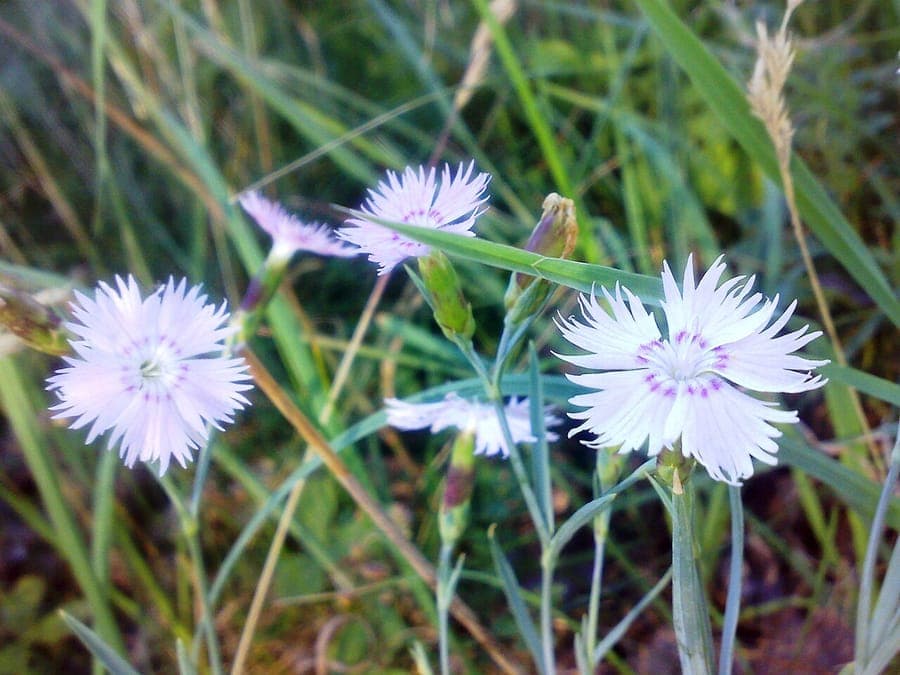
Bjoertvedt / CC BY-SA 3.0, via Wikimedia Commons
Finland pink: complete guide
Dianthus arenarius
Want to see Finland pink: complete guide in your garden?
1 minute, no credit card
Overview
Finland pink, or Dianthus arenarius, is a tough, low-growing perennial that thrives in dry, sandy soils where many other plants struggle. Native to parts of Central and Northern Europe-Finland, Germany, the Baltics, and Russia-it's built for harsh conditions. In the garden, it forms a dense, creeping mat rarely exceeding 15 cm in height but spreading up to 30 cm wide. It's not flashy, but it's dependable, making it a smart choice for sustainable, low-effort landscapes.
Belonging to the carnation family (Caryophyllaceae), Finland pink shares the signature fringed petals and subtle spicy fragrance common to many Dianthus species. It's a herbaceous forb, dying back in winter and re-emerging each spring from its creeping stems. In the UK and northern US, it's becoming popular in gravel gardens, between stepping stones, or along dry borders where moisture is limited.
On gardenworld.app, you can design a layout that highlights Finland pink's strengths-especially in xeriscaping or rock garden setups where drainage and sun exposure are key.
Appearance & bloom cycle
From June through September, Finland pink produces small, dainty flowers about 2.5 cm across. The blooms come in soft white or pale purple, each with five notched petals and a faint clove-like scent. Peak flowering occurs in July and August, providing reliable color for over three months.
The foliage is narrow, grey-green, and needle-like, forming a tight carpet that stays attractive even after blooming. In hot, dry summers, the leaves may take on a bronzy hue, adding seasonal interest. Once flowering ends, the spent blooms can be left to self-clean or lightly trimmed to maintain a neat appearance.
Ideal location
Full sun is non-negotiable. Finland pink needs at least 6–8 hours of direct sunlight daily. It excels in hot, exposed spots-rock gardens, gravel beds, or stone pathways-where competition from weeds and moisture retention are low. In partial shade, it becomes leggy, flowers poorly, and is more prone to fungal diseases.
This plant suits USDA hardiness zones 3–8, making it a reliable option for gardens across much of Europe and North America. In urban gardens with heat-reflecting surfaces, it often performs even better. Use gardenworld.app to check sun exposure in your yard and position Finland pink where it gets maximum light.
Soil requirements
Sandy, well-drained soil is ideal. Finland pink prefers poor to average fertility and a neutral to slightly alkaline pH (6.5–7.5). Avoid heavy clay or rich, compost-heavy soils-these lead to lush foliage but fewer flowers and increased risk of root rot.
If your soil is dense, amend it with coarse sand or grit to improve drainage. A top dressing of gravel or crushed stone helps keep the crown dry and discourages moss or algae buildup. Never use organic mulch like bark or compost-it holds too much moisture and encourages rot.
Free design
Want to see Finland pink: complete guide in your garden? Make a free design now.
Watering
Once established, Finland pink is extremely drought tolerant. Water only during the first few weeks after planting. After that, rely on natural rainfall. In prolonged dry spells (over 4 weeks without rain), a light soak at the base is sufficient-never overhead.
Overwatering is the fastest way to kill this plant. Soggy soil leads to root rot, especially in winter. Use a soaker hose or watering can with a long spout to deliver water directly to the roots and keep foliage dry.
Pruning
Pruning is minimal. After the main bloom cycle ends in late summer, trim back about one-third of the plant to encourage a second, lighter flush of flowers and to prevent legginess. Use sharp, clean shears and cut just above leaf nodes.
In early spring, remove any dead or matted foliage to make room for fresh growth. No need to cut it back hard-it regrows slowly from the base.
Maintenance calendar
- February–March: Clear away old growth, check for winter damage
- April: Let new shoots emerge, avoid fertilizing
- May: Prepare for bloom, ensure good drainage
- June–September: Primary flowering period, no extra feeding
- August–September: Light trim after flowering
- October–January: Dormant phase, no maintenance needed
Winter hardiness
Finland pink is hardy down to -20°C (USDA zone 3). It survives cold winters without protection, retreating into its creeping stems and resprouting in spring. Snow cover actually helps insulate it. The biggest winter threat isn't cold-it's wet soil. Ensure the site stays well-drained, especially during freeze-thaw cycles.
Companion plants
Pair Finland pink with other drought-tolerant, sun-loving perennials. Try it with thyme (Thymus serpyllum), sedums, creeping phlox, or yarrow (Achillea). These combinations create a low, textured tapestry with extended bloom times.
In rock gardens, it works well with dwarf conifers like Juniperus horizontalis or small ornamental grasses such as Festuca glauca. Avoid aggressive spreaders like mint or ivy that can smother it.
Closing
Finland pink isn't a showstopper, but it's a workhorse. It asks for little-full sun, sharp drainage, no rich soil-and gives back months of bloom and a tidy, ground-hugging form. It's perfect for gravel gardens, green roofs, or cracks between stones. Find it at garden centres across the UK and US, or order online. Before planting, use gardenworld.app to visualize how it fits into your garden's sunniest, driest corners.
Want to see Finland pink: complete guide in your garden? Make a free design now.
Upload a photo, pick a style, and get a photorealistic design with plant list in under a minute.
No credit card required


Similar plants
Dianthus karami: complete guide
Dianthus karami
Dianthus karami is a rare Lebanese mountain pink with fringed pink blooms on limestone cliffs, ideal for rock gardens and troughs.
Sicilian pink: complete guide
Dianthus siculus
Discover Dianthus siculus, an elegant purple bloomer from Sicily. Cultivation, June-September flowering and garden combinations.
Alpine mouse-ear chickweed: complete guide
Cerastium pedunculatum
Full growing guide for Cerastium pedunculatum: ideal location, soil, watering, winter hardiness, and companion plants for rock gardens.