
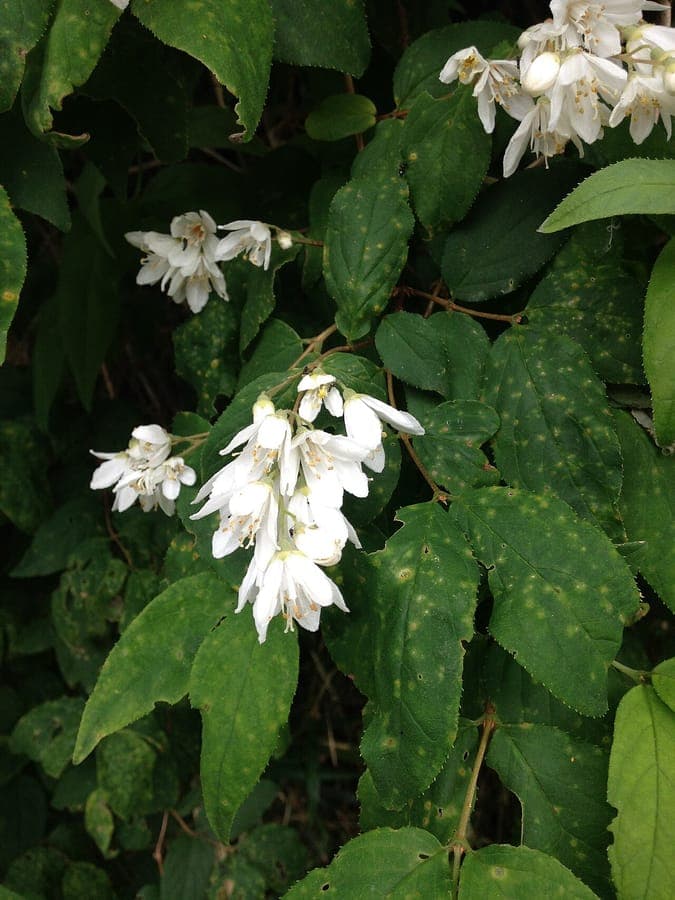
Mason Brock (Masebrock) / Public domain, via Wikimedia Commons
Fuzzy pride-of-rochester: complete guide
Deutzia crenata
Want to see Fuzzy pride-of-rochester: complete guide in your garden?
1 minute, no credit card
Overview
Fuzzy pride-of-rochester - or Deutzia crenata to give it its botanical name - is a standout shrub for any garden craving soft spring drama. Native to Japan, this deciduous shrub thrives in woodland edges and light slopes, and it brings that same natural elegance to UK and North American gardens. Standing 120–150 cm tall and spreading about 100 cm wide, it has an arching, open habit that's perfect for informal borders or mixed shrub plantings. It blooms heavily in late spring, producing clouds of small, star-shaped flowers that drape gracefully along the stems.
One of the best things about this plant? It's low maintenance once established and attracts pollinators like bees and hoverflies. If you're designing a cottage-style garden or a naturalistic planting scheme, Deutzia crenata fits right in. On gardenworld.app, you can create a custom garden layout that highlights its flowing form and pairs it with complementary textures and bloom times.
Appearance & bloom cycle
The leaves are oval, with softly scalloped edges and a slightly rough texture - hence names like 'Rauhblättrige Deutzie' in German. They emerge bright green in spring and darken slightly as summer progresses. The real show starts in late May, when clusters of white flowers, often tinged with pink at the buds, appear along the previous year's wood. Bloom time lasts through June, depending on climate, and the flowers have a delicate, slightly fragrant quality that draws in early-season pollinators.
After flowering, small seed capsules form, but they're not intrusive. The plant remains tidy through summer. In autumn, the foliage turns a modest yellow before dropping, and the bare, arching branches add subtle winter structure. It won't replace your hydrangeas in fall color, but it earns its keep with reliable spring performance.
Ideal location
Plant Fuzzy pride-of-rochester in full sun to partial shade. It blooms best with at least 5–6 hours of direct sunlight, but in hot climates (USDA zones 7–8), afternoon shade helps prevent leaf scorch. A spot facing east is ideal: morning sun with protection from intense afternoon heat.
Avoid deep shade - it'll reduce flowering significantly. Also, ensure good air circulation to minimize the risk of powdery mildew, which can occur in humid conditions. If you're unsure about light levels in your garden, gardenworld.app has tools to help you map sun exposure and pick the best planting spot.
Soil requirements
This shrub isn't fussy, but it prefers well-drained, humus-rich soil. A pH between 5.5 and 7.0 is ideal. Heavy clay soils should be amended with compost or grit to improve drainage. On sandy soils, mix in organic matter to retain moisture. A 5–7 cm layer of mulch each spring helps conserve water and gradually enriches the soil.
Avoid waterlogged conditions - Deutzia crenata won't tolerate soggy roots. Raised beds or sloped areas are excellent choices in wetter gardens.
Free design
Want to see Fuzzy pride-of-rochester: complete guide in your garden? Make a free design now.
Watering
During the first growing season, water weekly if rainfall is below 2.5 cm. Deep, infrequent watering encourages strong root development. After establishment, it's fairly drought-tolerant but performs best with consistent moisture during dry spells.
Water at the base to keep foliage dry and reduce disease risk. Overhead watering, especially in the evening, can promote mildew. A drip irrigation system works well for mature plantings.
Pruning
Prune right after flowering - late June to early July. Since it blooms on old wood, pruning in late summer, fall, or winter removes next year's flower buds.
Cut back about one-third of the oldest stems to ground level to rejuvenate the plant. Lightly trim other stems to shape and encourage bushiness. Use clean, sharp secateurs and disinfect between cuts if you see signs of disease.
For older, leggy plants, a hard prune in March - cutting all stems to 30 cm - can restore vigor. You'll sacrifice one season's flowers, but the plant usually rebounds strongly.
Maintenance calendar
- January: Check for winter damage. No watering needed.
- February: Monitor for pests. No action required yet.
- March: Hard prune if needed. Begin light feeding as soil warms.
- April: New growth appears. Water during dry spells.
- May: Flower buds swell. Stop pruning. Watch for powdery mildew.
- June: Peak bloom. Deadhead if desired, but not necessary.
- July: Flowers fade. Prune immediately after bloom.
- August: Minimal care. Water during droughts.
- September: Stop fertilizing. Let plant prepare for dormancy.
- October: Leaves drop. Clear fallen debris to reduce disease.
- November: No pruning. Inspect overall health.
- December: Protect young plants in zone 5 with mulch or burlap if temperatures drop below -20°C.
Winter hardiness
Fuzzy pride-of-rochester is hardy in USDA zones 6–8 (-23°C to -12°C). In zone 5, it can survive with protection, especially container-grown or young plants. Mature shrubs handle cold well, but late frosts can damage emerging buds. Avoid planting in frost pockets. A layer of mulch over the root zone helps insulate roots during freeze-thaw cycles.
Companion plants
Pair with late-spring bloomers like Pieris, azaleas, or early peonies. Hostas, lungworts (Pulmonaria), and ferns work well beneath it for shade-loving ground cover. For contrast, try blue fescue or carex grasses. Avoid aggressive root competitors like English ivy or shallow-rooted perennials that dry out the soil.
It also looks great near white hydrangeas or silver-foliage plants like artemisia, which enhance its soft bloom color.
Closing
Deutzia crenata is a graceful, reliable shrub that earns its place in any garden. With minimal care and a stunning floral display, it's a smart choice for both beginners and seasoned gardeners. Buy healthy stock from reputable garden centres - look for firm stems and well-developed roots. Plant with enough space (at least 80 cm from neighbours) to allow for its arching form. Whether you're refreshing a border or planting a pollinator-friendly garden, Fuzzy pride-of-rochester delivers year after year. And with gardenworld.app, you can visualise exactly how it'll look in your space before you dig the first hole.
Want to see Fuzzy pride-of-rochester: complete guide in your garden? Make a free design now.
Upload a photo, pick a style, and get a photorealistic design with plant list in under a minute.
No credit card required


Similar plants
Cliff fendlerbush: complete guide
Fendlera rupicola
Everything about Fendlera rupicola, the rare rocky-slope shrub with fragrant white spring flowers that thrives on lean, dry, calcareous soils.
Fivepetal cliffbush: complete guide
Jamesia americana
Everything about Jamesia americana, the fivepetal cliffbush: rocky sites, white blooms, autumn colour, winter hardiness and garden care.
Deutzia parviflora: complete guide
Deutzia parviflora
Discover Deutzia parviflora, an elegant flowering shrub with white blossoms. Growing guide with tips for sunny placement, fertile soil, and regular pruning.