
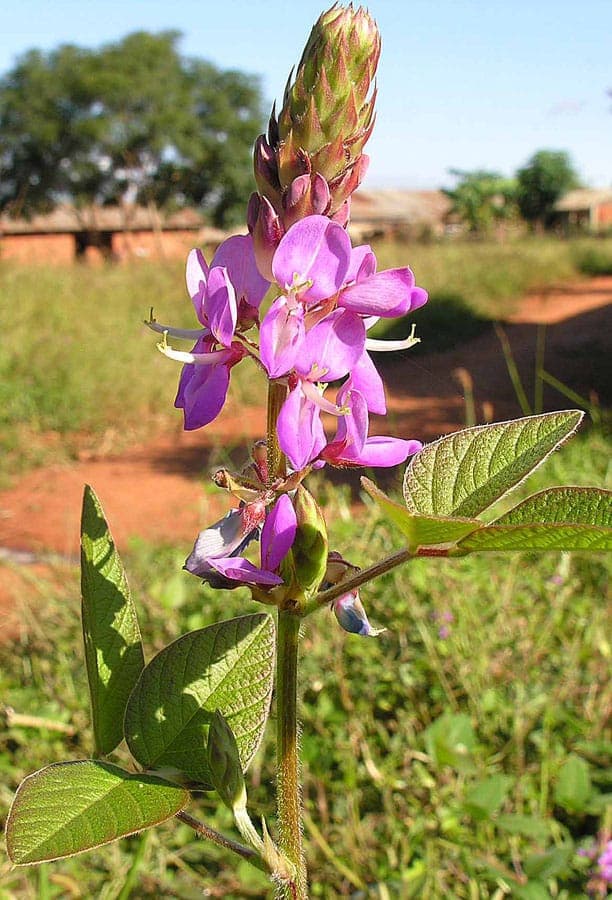
Dick Culbert from Gibsons, B.C., Canada / CC BY 2.0, via Wikimedia Commons
Green-leaf desmodium: complete guide
Desmodium intortum
Want to see Green-leaf desmodium: complete guide in your garden?
1 minute, no credit card
Overview
Green-leaf desmodium (Desmodium intortum), also called beggar-lice, is a tropical and subtropical plant native to Central America and Mexico. This intriguing plant is known for its characteristic seed pods that stick to clothing.
The plant is a climber to shrub that reaches 60-150 centimeters high. It grows in warm, moist climates and is cultivated as an ornamental plant in gardens. The plant blooms continuously with small purple to dark red flowers.
Appearance and bloom
Green-leaf desmodium has compound leaves consisting of three leaflets. The leaflets are oblong-oval and green in color. The leaves have characteristic veining and fine texture.
The flowers are small, about 5-8 millimeters, and appear in clusters. They are purple to red in color. After blooming, the plant forms characteristic seed pods.
Blooming lasts from summer to fall in temperate climates.
Ideal location
Green-leaf desmodium grows best in a full sun location. The plant prefers 6-8 hours of direct sunlight per day. It can also grow in light shade but will be less floriferous.
Plant it in sheltered locations, protected from strong cold winds. In warm zones, winter cultivation outdoors is possible.
Soil
Green-leaf desmodium grows in virtually all soil types as long as good drainage is present. Sandy, loamy and clay soils are all tolerated. The plant is not fussy about pH.
Supplementation with compost or organic material gives better growth. The plant is moderately moisture-loving.
Watering
Green-leaf desmodium must be watered regularly, especially during growing periods. Water when the soil is one centimeter deep dry. During heat and drought, water more frequently.
In winter, reduce watering. Too much water can lead to root rot.
Free design
Want to see Green-leaf desmodium: complete guide in your garden? Make a free design now.
Pruning
Green-leaf desmodium can be cut back annually in early spring to maintain shape. Remove dead or damaged branches. The plant tolerates pruning well and blooms again quickly.
In warm zones the plant can be cut back as desired. The plant grows back quickly.
Maintenance calendar
Spring (March-May): Prune for shape. Resume watering. Add fertilizer in temperate climates.
Summer (June-August): Water regularly. Plant blooms abundantly. Extra fertilizer can stimulate growth.
Fall (September-October): Gradually reduce watering. Plant goes dormant. Prevent seed pods from collecting.
Winter (November-February): In warm zones minimal care. In temperate zones the plant may die. Minimize feeding.
Winter hardiness
Green-leaf desmodium is not frost-hardy. The plant tolerates only frost-free conditions. In temperate climates, the plant must be overwintered indoors or treated as an annual.
In USDA zones 10-11 and other warm zones, the plant can survive outdoors.
Companion plants
Green-leaf desmodium combines well with other tropical and subtropical plants. Good with hibiscus, jasmine, bougainvillea and other exotic flowers. It also works well with tropical foliage plants.
Conclusion
Green-leaf desmodium is an interesting choice for warm climates. The characteristic seed pods make the plant unique and educational. For garden design enthusiasts who want to add tropical elements, the plant offers possibilities. Where to buy: Online plant retailers have this available.
Want to see Green-leaf desmodium: complete guide in your garden? Make a free design now.
Upload a photo, pick a style, and get a photorealistic design with plant list in under a minute.
No credit card required


Similar plants
Tall Silky Lupine: complete guide
Lupinus elatus
Tall silky lupine is a fast-growing Californian perennial with silvery foliage and blue-purple flower spikes, ideal for a prairie-style garden.
Garfield Lupine: complete guide
Lupinus garfieldensis
The Garfield lupine is a rare, fast-growing American perennial for alkaline, dry grassland gardens, with striking blue flower spikes.
Lupinus elegans: complete guide
Lupinus elegans
Lupinus elegans, the elegant lupine, is a spectacular blooming plant from Mexico with blue flower spikes. Care, cultivation and garden use.