
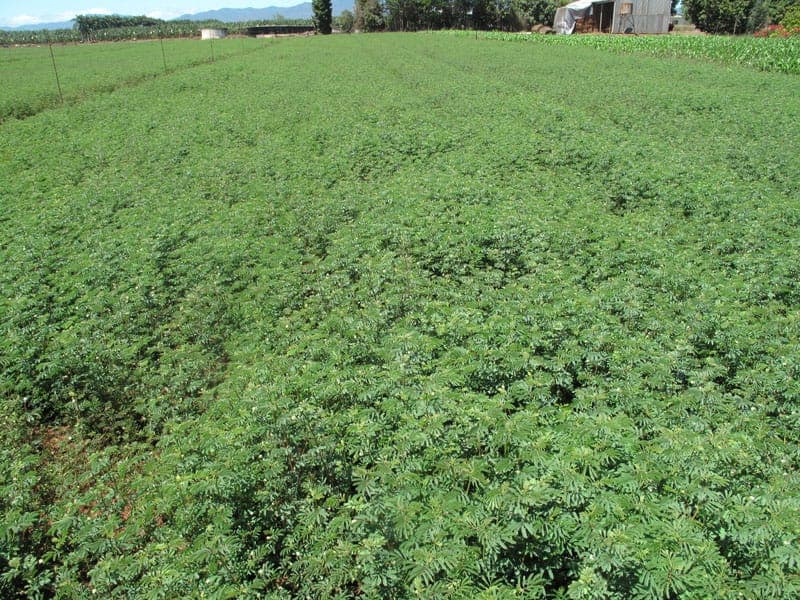
Btcpg / CC BY-SA 3.0, via Wikimedia Commons
Wild tantan: complete guide
Desmanthus virgatus
Want to see Wild tantan: complete guide in your garden?
1 minute, no credit card
Overview
Desmanthus virgatus, commonly known as wild tantan, virgate bundleflower, or virgate mimosa, is a multi-stemmed leguminous subshrub or herb in the family Fabaceae. It occurs naturally from Texas and Florida southward through Central America and the Caribbean - including Cuba, Jamaica, and the Leeward Islands - all the way to Argentina, Chile, and Uruguay, and is also found in the Galapagos Islands. The species was formally described by Carl Ludwig Willdenow in 1806, based on the earlier Mimosa virgata described by Linnaeus. The epithet 'virgatus' means 'rod-like' or 'twiggy', referencing the plant's upright, wiry growth habit. Beyond the Americas, it has been introduced in parts of Africa, South Asia, Australia, and various Pacific islands.
In its native range, wild tantan grows on dry slopes, rocky grasslands, roadsides, and coastal scrublands in tropical and subtropical zones. It thrives in poor soils thanks to nitrogen-fixing root nodules containing Rhizobium bacteria - a key ecological role that makes it valuable for soil improvement and land restoration in degraded tropical habitats. If you are looking for ways to include ecologically useful plants in your garden design, gardenworld.app can help you plan a planting that balances beauty with function and supports biodiversity.
The plant has several recorded synonyms in the botanical literature, including Acuan virgatum, Desmanthus depressus, and Mimosa depressa, reflecting the taxonomic complexity of this widespread and variable species.
Appearance and bloom cycle
Desmanthus virgatus produces multiple slender, pale-green stems reaching 30 to 120 cm in height depending on growing conditions and the length of the season. The stems branch near the base and tend to be somewhat wiry and upright. The leaves are twice-pinnate, finely divided into dozens of small oblong leaflets that fold inward when touched or at nightfall - a movement behaviour called nyctinasty, also seen in related mimosa and acacia species. The overall foliar texture is described as fine and lacy, giving the plant an airy, graceful appearance very similar to that of a fine-leaved acacia or sensitive plant.
The flowers are small, white to creamy-white, and clustered into round, compact heads arising from the leaf axils along the stems. While individually inconspicuous, they appear over a long season from June through November in temperate gardens, or year-round in tropical climates. They attract pollinators including small bees, hoverflies, and other insects. After flowering, the plant produces narrow, curved pods ranging from 4 to 8 cm in length, which turn dark brown at maturity and are clearly visible hanging from the stems. These pods are both decorative and persistent, remaining on the plant well into autumn. Each pod contains several grey-brown seeds that remain viable for several years under dry storage conditions.
Ideal location
This plant demands full sun. It performs best in open, sunny positions receiving at least six hours of direct sunlight per day. In garden centres across Europe you will occasionally encounter it as an unusual seasonal plant for patios and conservatories. In its natural range it colonises dry, warm, disturbed habitats and coastal zones within USDA hardiness zones 9b and warmer. In cooler climates it is grown as an annual or as a container plant brought indoors before the first frost.
Warmth is the single most important environmental factor for this species. A sheltered south-facing position - ideally against a warm wall that radiates retained heat - can meaningfully extend the growing season in cooler regions. In a warm European summer, plants started indoors in April and moved outside in May can reach 80 cm or more by September, flowering prolifically until the first cold snap. In a Mediterranean climate, or with winter protection, the plant can survive for several years and develop a woody base from which it resprouts annually.
Soil
Desmanthus virgatus tolerates poor, dry, and even stony soils with remarkable ease. It grows well in sandy or loamy substrates with a pH between 5 and 8. Its nitrogen-fixing ability means it can establish in soils far too lean for most ornamental plants, making it a pioneer plant of degraded and nutrient-poor ground. Good drainage is the single most important physical soil requirement: waterlogged soil will cause root rot and rapid decline. Fertile, compost-rich garden soil can lead to excessive leafy growth at the expense of flowering and pod production. For container growing, use a mix of general-purpose compost and coarse sand or perlite at a ratio of 2:1 to ensure rapid drainage.
Free design
Want to see Wild tantan: complete guide in your garden? Make a free design now.
Watering
Once established, wild tantan is drought-tolerant and needs little supplemental water. Young seedlings and recently transplanted specimens need regular moisture during the first two to three weeks until their root systems are established. After that, water only during extended dry spells, applying water at the base of the plant rather than overhead to reduce the risk of fungal disease. Container plants must have drainage holes to prevent waterlogging - never allow pots to stand in water-filled saucers for extended periods. During winter storage indoors, watering should be reduced significantly to once every two to three weeks, depending on the temperature and humidity of the storage location. The most common cause of failure with this species in temperate climates is overwatering.
Pruning
In warm climates where the plant is perennial, cut it back hard in early spring before new growth begins, reducing stems to a low framework of 10 to 20 cm. This encourages bushy, well-branched growth and more prolific flowering during the coming season. If left unpruned, the plant stretches upward and becomes woody at the base, with gradually reduced flowering. In temperate zones where it is grown as an annual, deadheading spent flower heads will keep the plant tidy and prevent unwanted self-seeding in warmer situations. The plant tolerates firm pruning well, provided it is not done during cold weather. In autumn, before bringing container plants indoors, a light trim reduces the plant's size for easier storage.
Maintenance calendar
January to March: overwinter container plants in a light, frost-free location at a minimum of 8 degrees Celsius and reduce watering to once every two weeks. Late March to April: sow seeds at 22-25 degrees Celsius in a propagator or greenhouse; scarify hard seeds with sandpaper or soak for 24 hours in warm water before sowing to improve germination. May: move plants outdoors after the last frost, acclimatising them gradually over a week in a sheltered, partially shaded spot before moving them to full sun. June to August: growing season with regular flowering; water during drought periods but do not over-water; no heavy feeding required. September: peak pod formation; harvest pods as they turn dark brown but before they split open, to collect seed. October: bring container plants indoors before the first frost, or collect remaining seed and compost the whole plant. November to December: rest period with minimal care; reduce watering significantly.
Winter hardiness
Desmanthus virgatus is not frost-hardy in cool temperate climates. It tolerates temperatures down to about -2 degrees Celsius for brief periods, but prolonged cold or temperatures below -5 degrees Celsius kills the above-ground parts outright. In USDA zones 9b and warmer - such as coastal Portugal, southern Spain, much of Italy, and the Channel Islands - it can survive mild winters and resprout from a woody base in spring, behaving as a perennial subshrub. In northern Europe, including the Netherlands and Belgium (USDA zones 7-8), gardeners should treat it as an annual or overwinter container specimens in a light, frost-free greenhouse, conservatory, or bright indoor space above 8 degrees Celsius. Seed collected from your own plants germinates readily the following spring, making it easy to maintain the plant year after year without purchasing new specimens. Store seed dry and cool at 5 to 15 degrees Celsius.
Companion plants
Desmanthus virgatus pairs well with other heat-loving and drought-tolerant plants that share its preference for warmth, sun, and well-drained soil. In a summer border, try combining it with Crotalaria species (rattlepod), Cosmos sulphureus, Tithonia rotundifolia, or Lantana camara for a tropical look. The finely feathered foliage makes an attractive textural contrast with bold-leaved plants such as Canna hybrids or Tropaeolum (nasturtium). In a functional planting scheme, fellow nitrogen-fixing legumes such as Indigofera tinctoria or Sesbania bispinosa complement its ecological role while adding colour and interest. In container arrangements, low-growing Portulaca grandiflora makes a good companion, filling the base of the pot with bright flowers and hiding the bare lower stems. Explore more tropical and heat-loving plant combinations on gardenworld.app.
Closing
Desmanthus virgatus is a captivating, underused tropical plant that earns its place in the garden through both ornamental value - its feathery foliage, long-flowering habit, and striking seed pods - and ecological function as a nitrogen fixer and pollinator resource. Whether grown as a summer annual in a border or raised each year as a container specimen overwintered in a conservatory, it brings a genuine tropical character to European gardens with remarkably little effort. Its tolerance for poor soils and drought makes it particularly interesting for low-maintenance experimental planting schemes. Look for seeds at specialist suppliers or at retailers such as Intratuin and Gamma, which occasionally stock unusual tropical annuals.
Want to see Wild tantan: complete guide in your garden? Make a free design now.
Upload a photo, pick a style, and get a photorealistic design with plant list in under a minute.
10,000+ gardens designed already
No credit card required


Similar plants
Tall Silky Lupine: complete guide
Lupinus elatus
Tall silky lupine is a fast-growing Californian perennial with silvery foliage and blue-purple flower spikes, ideal for a prairie-style garden.
Garfield Lupine: complete guide
Lupinus garfieldensis
The Garfield lupine is a rare, fast-growing American perennial for alkaline, dry grassland gardens, with striking blue flower spikes.
Lupinus elegans: complete guide
Lupinus elegans
Lupinus elegans, the elegant lupine, is a spectacular blooming plant from Mexico with blue flower spikes. Care, cultivation and garden use.