
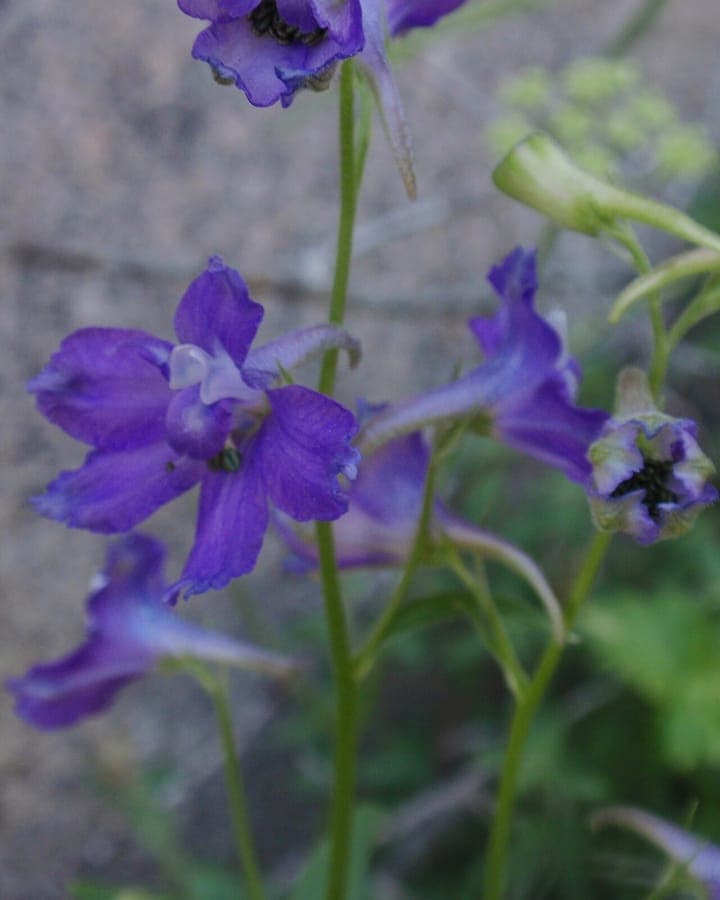
Tom Hilton / CC BY 2.0, via Wikimedia Commons
Delphinium polycladon: complete guide
Delphinium polycladon
Want to see Delphinium polycladon: complete guide in your garden?
1 minute, no credit card
Overview
Delphinium polycladon, known as Mountain Marsh Larkspur, represents a rare and particularly fascinating California alpine species belonging to the Ranunculaceae family. This plant originates from mountainous regions of California and Nevada, where it naturally colonizes moist mountain seeps and marshy alpine zones. The botanical name "polycladon" refers to the plant's many-branched flower structure, an unusual characteristic among Delphinium species.
This alpine specialist remains underappreciated by most gardeners, despite deserving considerably greater attention for its unique beauty and specialized ecological requirements. It occupies a fascinating ecological niche - a larkspur tolerating significantly more moisture than most alpine Delphiniums while maintaining alpine hardiness.
Appearance and Bloom
Mountain Marsh Larkspur displays an interesting growth habit with erect to sprawling stems reaching 30-60 centimeters. The finely divided foliage contributes an elegant, airy quality to the entire plant.
The flowers reveal this plant's true glory - magnificent blue-purple to indigo hues, densely clustered in characteristic spikes. What makes this species uniquely valuable is its "polycladon" growth pattern - many branches within the flower structure - resulting in more blooms per plant than comparable species. This creates spectacular flowering extending across an unusually lengthy period.
The flowering season extends from July through September, considerably longer than typical alpine plants. This extended bloom period holds particular value in alpine garden design.
Ideal Location
Unlike most Delphiniums, Mountain Marsh Larkspur tolerates somewhat wetter conditions, though drainage remains essential. This plant naturally colonizes mountain areas where water remains regularly available without stagnation.
Ideal locations feature mountain slopes with persistent subsurface moisture - places where water availability sustains growth without waterlogging. Elevated mountain beds near natural drainage systems work perfectly. Sun exposure of at least 4-6 hours proves beneficial, though light shade remains acceptable, particularly in warmer mountain locations.
Free design
Want to see Delphinium polycladon: complete guide in your garden? Make a free design now.
Soil
Soil composition proves critical for success. Unlike most alpine plants requiring dryness, this species tolerates somewhat greater moisture. Drainage remains essential - the distinction proves subtle.
Target pH between 6.0 and 7.5. The soil should consist of well-processed organic matter, especially compost and aged manure. A mixture of 40 percent garden loam, 30 percent processed compost, 20 percent coarse sand, and 10 percent gravel works excellently.
The soil cannot be heavy or compacted. Annual organic matter additions maintain soil quality and support moisture retention.
Watering
Watering differs significantly from other Delphinium species. After planting, ensure regular moisture until establishment occurs.
Once established, this plant requires consistent water, particularly during active growth. This represents not a dry alpine plant but a moist alpine specialist. Ensure the soil never dries out completely while preventing waterlogging.
In natural conditions, this plant receives water through mountain seeps and subsurface drainage systems. In gardens, replicate this by watering regularly when the top 2-3 centimeters of soil feel dry.
Pruning
Pruning remains minimal. Remove spent flowers to encourage continuous blooming and stimulate the plant's characteristic many-branched flowering.
In autumn, once the plant clearly enters dormancy, remove all dead stems, cutting back to ground level. Remove damaged foliage immediately, as moisture conditions may promote fungal growth.
Maintenance Calendar
Spring (April-May): Inspect for new growth. Remove dead material. Add compost.
Summer (June-August): Growing season. Provide consistent water. Begin deadheading spent flowers.
Autumn (September-October): Plant enters dormancy. Cut back dead stems. Collect seeds.
Winter: Plant dormant. Protect against waterlogging.
Winter Hardiness
Mountain Marsh Larkspur proves hardy in mountainous regions with moderate winters. Its California origins suggest tolerance down to approximately -10 to -15 degrees Celsius. In regions with harsher winters, winter protection may prove beneficial.
Waterlogging presents greater winter threat than temperature. Ensure good drainage throughout winter.
Companion Planting
This alpine plant succeeds alongside other moisture-tolerant alpine species.
Excellent Companions:
- Other Delphinium species
- Alpine aster
- Globe flower (Trollius)
- Mertensia
- Veratrum
- Siberian iris
Closing Thoughts
Mountain Marsh Larkspur represents a unique and valuable plant for gardeners wishing to experiment with moist alpine specialists. With proper placement and consistent water, it rewards growers with spectacular flowers. For plant acquisition, consult specialized alpine nurseries offering rare species.
Want to see Delphinium polycladon: complete guide in your garden? Make a free design now.
Upload a photo, pick a style, and get a photorealistic design with plant list in under a minute.
No credit card required


Similar plants
Drummond's anemone: complete guide
Anemone drummondii
Discover Drummond's anemone (Anemone drummondii): a silvery-grey mountain plant for cool rock gardens and alpine troughs.
Korean clematis: complete guide
Clematis serratifolia
Clematis serratifolia is a hardy climber with fragrant yellow bell flowers in August-September. Pruning group 3, location and care tips.
Aquilegia brevistyla: complete guide
Aquilegia brevistyla
Discover Aquilegia brevistyla, the elegant North American columbine. Growing tips, shade tolerance, and design ideas for woodland and shadowed gardens.