
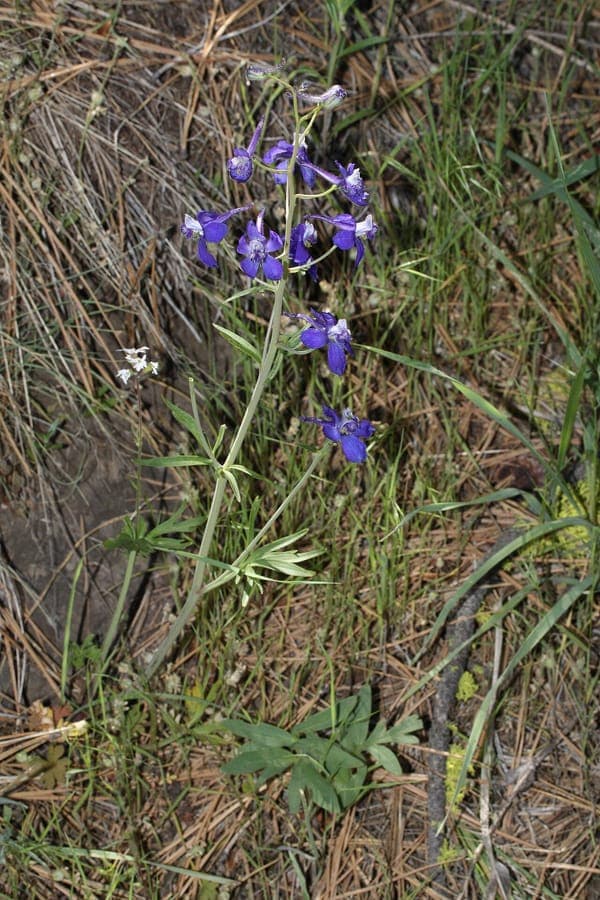
Walter Siegmund (talk) / CC BY-SA 3.0, via Wikimedia Commons
Delphinium nuttallianum: complete guide
Delphinium nuttallianum
Want to see Delphinium nuttallianum: complete guide in your garden?
1 minute, no credit card
Overview
Delphinium nuttallianum, commonly known as Nuttall's larkspur or Two-Lobe larkspur, is a magnificent North American alpine gem native to western regions of Canada and the United States. This wild larkspur belongs to the Ranunculaceae family and is named after Thomas Nuttall, the renowned 19th-century botanist and naturalist. Growing naturally in mountainous terrains with highly variable climatic conditions, this plant demonstrates exceptional toughness and adaptability.
Two-Lobe larkspur is highly valued among alpine plant enthusiasts and native plant gardeners for its elegant form and significant ecological value. The common name refers to the two-lobed segments visible in certain floral parts. This species contributes meaningfully to the preservation of wild flora and fauna within garden settings.
Appearance and Bloom
Delphinium nuttallianum exhibits an elegant growth habit with slender, upright stems reaching 30-80 centimeters in height. The leaves are deeply divided into narrow segments, contributing an airy, delicate quality to the entire plant.
The flowers reveal the true magic. They appear in stunning blue, purple, or occasionally pink-white hues, densely clustered in characteristic spikes that gradually open from bottom to top. Each flower bears the distinctive spur defining the larkspur genus, creating an exotic, fantastical appearance. These blooms prove irresistible to pollinators, particularly native bees and hummingbirds.
The flowering period extends through summer months, typically June through August, though timing varies with elevation and local climate. Flowers maintain exceptional longevity and perform well as cut flowers for indoor arrangements.
Ideal Location
Two-Lobe larkspur thrives in full sun to light shade. In mountainous regions where this plant grows naturally, it typically receives abundant direct sunlight. However, in more southern or warmer garden locations, afternoon shade proves beneficial.
The location must offer excellent drainage and somewhat drier conditions than most perennials. This plant cannot tolerate waterlogging or low-lying wet areas. Mountain slopes, rock gardens, and raised borders prove ideal. Ensure adequate air circulation to prevent fungal issues.
Planting among other alpine flora helps this species feel at home. Container cultivation works equally well, provided drainage remains exceptional.
Soil
In its natural habitat, Two-Lobe larkspur colonizes soils ranging from acidic to neutral, with a preference for pH 6.0 to 7.5. The plant displays remarkable flexibility regarding chemical soil composition, provided drainage remains paramount.
Drainage represents the critical factor. Amend heavy clay soils generously with coarse sand, gravel, or perlite. A mixture of 50 percent garden loam, 30 percent coarse sand, and 20 percent gravel performs excellently. Interestingly, poor soils suit this plant well - excessive nutrients sometimes promote weak, disease-prone growth.
Aeration matters equally. In natural settings, this plant colonizes mountain terrain where soil remains continuously aerated through erosion and weather exposure.
Free design
Want to see Delphinium nuttallianum: complete guide in your garden? Make a free design now.
Watering
After planting, provide regular moisture until plants establish thoroughly - typically several weeks. Once established, this alpine plant proves remarkably drought-tolerant.
During normal growing seasons with adequate rainfall, supplemental watering may prove entirely unnecessary. Only during extended dry periods exceeding 3-4 weeks without precipitation should you provide water.
When watering, deliver deep soaking at the plant base, never onto foliage. Drip irrigation proves ideal. Allow the soil to dry somewhat between waterings.
Pruning
Pruning requirements remain minimal. Deadhead spent flower spikes to encourage extended flowering. This redirects energy from seed production to flower production, potentially extending bloom season several weeks.
In autumn, once the plant clearly enters dormancy, remove all dead stems, cutting them back to ground level. This creates space for clean, vigorous growth in the following year. Remove any visibly damaged or diseased foliage immediately to prevent fungal spread.
Maintenance Calendar
Spring (April-May): Inspect plants for new growth. Remove all winter-killed material. Apply a thin compost layer.
Summer (June-August): Peak flowering period. Deadhead spent flowers regularly. Ensure excellent drainage and prevent excessive moisture.
Autumn (September-October): Plant enters dormancy gradually. Collect seeds if desired. Cut back dead portions.
Winter: Plants remain dormant. Protect against excessive winter moisture.
Winter Hardiness
Two-Lobe larkspur demonstrates exceptional cold tolerance. In its native habitat, it ranges from the Canadian border southward through western US mountains, where temperatures regularly plunge far below freezing. This plant successfully endures temperatures between -20 and -30 degrees Celsius.
Even in severe winters with frequent freeze-thaw cycles, this species typically survives without difficulty. Winter's greatest threat proves not cold but waterlogging. Ensure adequate drainage during winter precipitation periods.
In subtropical climates, this plant may not perform well unless you reside at significant elevation.
Companion Planting
Two-Lobe larkspur combines beautifully with other alpine flora requiring similar growing conditions.
Excellent Companions:
- Other Delphinium species
- Alpine aster
- Mountain coreopsis varieties
- Fleabane (Erigeron)
- Lupinus species
- Creeping phlox (Phlox subulata)
- Pasque flower (Pulsatilla)
These combinations succeed because all companions share identical requirements for well-drained soil, sun exposure, and drought tolerance. Together they create authentic alpine garden experiences.
Closing Thoughts
Two-Lobe larkspur proves a bewitching choice for gardeners appreciating genuine wild alpine flora. Its robust nature, spectacular flowers, and ecological value merit inclusion in more gardens. Minimal care requirements and exceptional winter hardiness make it ideal for alpine gardens, mountain borders, and native plant landscapes. For plant acquisition, consult specialized nurseries offering alpine and native plants throughout North America and Europe.
Want to see Delphinium nuttallianum: complete guide in your garden? Make a free design now.
Upload a photo, pick a style, and get a photorealistic design with plant list in under a minute.
No credit card required


Similar plants
Drummond's anemone: complete guide
Anemone drummondii
Discover Drummond's anemone (Anemone drummondii): a silvery-grey mountain plant for cool rock gardens and alpine troughs.
Korean clematis: complete guide
Clematis serratifolia
Clematis serratifolia is a hardy climber with fragrant yellow bell flowers in August-September. Pruning group 3, location and care tips.
Aquilegia brevistyla: complete guide
Aquilegia brevistyla
Discover Aquilegia brevistyla, the elegant North American columbine. Growing tips, shade tolerance, and design ideas for woodland and shadowed gardens.