
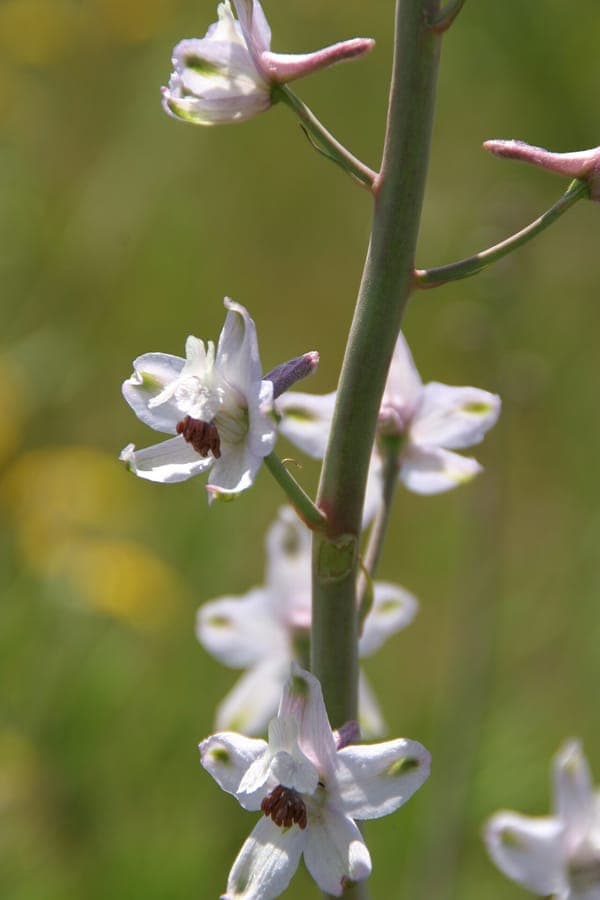
joedecruyenaere / CC BY-SA 2.0, via Wikimedia Commons
Delphinium gypsophilum: complete guide
Delphinium gypsophilum
Want to see Delphinium gypsophilum: complete guide in your garden?
1 minute, no credit card
Overview
Delphinium gypsophilum, commonly known as Pinoche Creek larkspur, is a captivating North American alpine treasure belonging to the Ranunculaceae family. This wild larkspur originates from California and is celebrated for its delicate, blue-purple flower spikes that command attention in any mountain garden. With its herbaceous growth habit and moderate stature, it makes an excellent choice for alpine borders and specialist collectors.
This species holds particular significance for gardeners seeking authentic alpine and mountain flora. The botanical name "gypsophilum" reveals the plant's preference for chalky soils, a characteristic common to many western American alpine plants. Its elegant habit and abundant flowering make it a prized addition to discerning garden designs.
Appearance and Bloom
Pinoche Creek larkspur presents an elegant silhouette with finely divided stems that rise upward in graceful arches. The deeply lobed foliage contributes an airy, feathery quality that catches light beautifully throughout the growing season.
The true glory emerges in the flowers. These appear in stunning violet-blue to indigo hues, densely packed into characteristic flower spikes at stem tips. Each individual bloom bears the distinctive spurred form that defines the larkspur genus, creating an exotic appearance. These flowers prove irresistible to pollinators and hummingbirds, bringing vibrant movement and ecological value to your garden.
The flowering period extends through summer into early autumn, depending on climate and cultivation. Blooms have excellent longevity and can be harvested as cut flowers, though they serve best as living garden ornaments where their full beauty can be appreciated.
Ideal Location
Pinoche Creek larkspur thrives in full sun to light shade conditions. In regions with intense summer heat, afternoon shade offers beneficial cooling, but generally this mountain plant demands abundant light for optimal flowering.
The location must offer excellent drainage and somewhat drier conditions than typical perennials. Avoid low-lying, wet areas entirely. Elevated beds, rock gardens, and alpine borders prove ideal. Ensure adequate air circulation to prevent fungal issues common in humid, stagnant conditions.
When cultivated in containers, position pots in sunny locations where water cannot accumulate. The plant's natural habitat - California mountain slopes - dictates the selection of well-drained, freely draining positions.
Soil
Soil requirements prove critical for success with Delphinium gypsophilum. In its native mountain habitats, this plant colonizes chalky to neutral soils. Garden soils should target a pH range between 6.5 and 7.5 for optimal growth.
Drainage represents the paramount concern. Waterlogged conditions during winter or rainy seasons invite root rot - this cannot be compromised. Incorporate substantial coarse sand, gravel, or perlite into planting areas. Professional cultivators often amend soil with a mixture of 40 percent garden loam, 40 percent coarse sand, and 20 percent gravel.
Aeration proves equally important. Interestingly, naturally impoverished soil often proves beneficial, as excess nutrients promote soft, fungal-susceptible growth. A thin annual compost layer suffices for all necessary nutrition.
Free design
Want to see Delphinium gypsophilum: complete guide in your garden? Make a free design now.
Watering
Watering demands careful management. After planting, provide regular moisture until plants establish thoroughly - typically several weeks to months. Once established, this alpine species proves remarkably drought-tolerant.
During warm dry periods, water when the top 2-3 centimeters of soil feel dry. Too much water presents greater danger than too little. In typical rainfall seasons, supplemental watering may never be necessary. Avoid wetting foliage, as moisture pooling promotes fungal disease. Use drip irrigation or water at soil level exclusively.
Pruning
Pruning for Pinoche Creek larkspur requires minimal intervention. Remove spent flower spikes to encourage extended flowering - this deadheading redirects energy from seed production toward additional blooms.
In autumn or early spring, after the plant clearly ceases active growth, cut all dead stems to ground level, clearing space for vigorous spring regeneration. Remove any visibly damaged or diseased foliage immediately whenever encountered, pruning out affected portions entirely.
Maintenance Calendar
Spring: Inspect for new growth and remove all winter-killed material. Apply a thin compost layer around plant base.
Summer: Ensure adequate moisture without waterlogging. Remove spent flowers regularly for continuous bloom.
Autumn: Observe as the growing season concludes. Collect seeds if desired for next season's propagation.
Winter: Plants enter dormancy. Protect from excessive moisture through mulching if drainage proves questionable.
Winter Hardiness
Pinoche Creek larkspur displays impressive cold tolerance derived from its California alpine origins. It successfully navigates temperatures well below freezing. In most temperate zones, winter survival proves reliable and consistent.
Extreme winters may benefit from added protection, particularly in areas experiencing frequent freeze-thaw cycles. A light mulch layer around the plant base can provide insurance through harsh periods. In regions with persistently wet winters, moisture management poses greater concern than temperature.
This species proves unsuitable for tropical climates or extreme heat unless artificial cooling proves feasible.
Companion Planting
Pinoche Creek larkspur pairs successfully with other alpine plants sharing similar ecological requirements and soil preferences.
Excellent Companions:
- Other Delphinium species
- Buckwheat (Eriogonum)
- Cranesbill (Geranium)
- Alpine aster
- Saxifraga species
- Alpine heather (Calluna)
These combinations work beautifully because companion plants share the same exacting drainage requirements and sun preferences, creating harmonious, ecologically coherent alpine gardens.
Closing Thoughts
The Pinoche Creek larkspur represents an excellent choice for gardeners pursuing serious alpine cultivation. With proper location selection, careful soil preparation, and attentive care, this plant rewards growers with years of exquisite blue flowers. Though demanding specific conditions - particularly excellent drainage - the investment proves worthwhile. For plant acquisition and ongoing support, consult specialist alpine nurseries and quality garden centers throughout North America, Europe, and beyond.
Want to see Delphinium gypsophilum: complete guide in your garden? Make a free design now.
Upload a photo, pick a style, and get a photorealistic design with plant list in under a minute.
No credit card required


Similar plants
Drummond's anemone: complete guide
Anemone drummondii
Discover Drummond's anemone (Anemone drummondii): a silvery-grey mountain plant for cool rock gardens and alpine troughs.
Korean clematis: complete guide
Clematis serratifolia
Clematis serratifolia is a hardy climber with fragrant yellow bell flowers in August-September. Pruning group 3, location and care tips.
Aquilegia brevistyla: complete guide
Aquilegia brevistyla
Discover Aquilegia brevistyla, the elegant North American columbine. Growing tips, shade tolerance, and design ideas for woodland and shadowed gardens.