
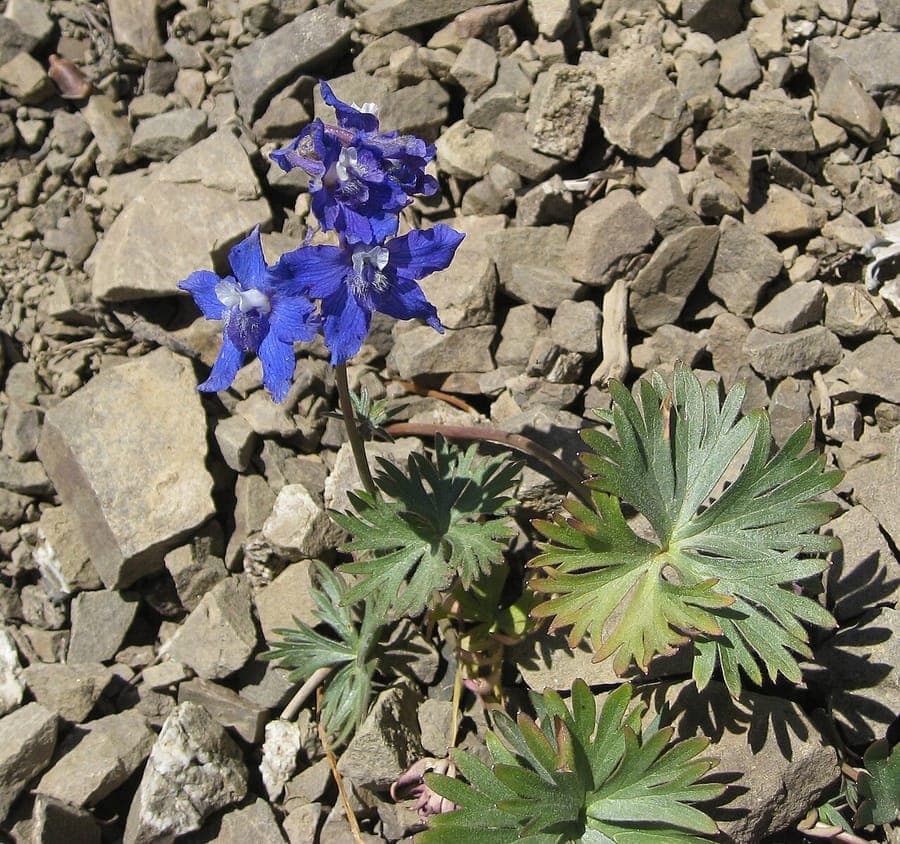
brewbooks from near Seattle, USA / CC BY-SA 2.0, via Wikimedia Commons
Delphinium glareosum: complete guide
Delphinium glareosum
Want to see Delphinium glareosum: complete guide in your garden?
1 minute, no credit card
Overview
Delphinium glareosum, commonly known as Olympic larkspur, Rockslide larkspur, or Olympic Mountain larkspur, is a breathtaking alpine beauty from the Ranunculaceae family. Native to the mountains of British Columbia through Oregon and Washington, this plant thrives in rugged scree slopes and rocky crevices where few others persist. It is a refined, slender herbaceous perennial that brings subtle elegance to alpine garden settings.
Appearance and Bloom
Olympic larkspur grows to roughly 30-60 centimeters (12-24 inches) tall, featuring slender, branched stems with finely divided foliage that appears almost feathery. The flowers are truly exceptional: intense deep blue to purple-blue single blooms with prominent, extended nectary spurs that project beyond the petals more dramatically than many hybrid delphiniums. Flowering occurs in July and August. The blooms form open spires, creating an airy, delicate aesthetic perfectly suited to rockeries and sloped sites. Each flower is individually stunning yet part of a graceful collective display.
Ideal Location
Full sun is essential; provide at least six hours of direct sunlight daily for robust flowering. Partial shade will allow survival but dramatically reduces bloom abundance. As a true alpine dweller, this species performs better at elevated garden positions or on northward-facing slopes where air circulation is excellent and temperature extremes are moderated. Avoid low-lying, stagnant moisture pockets that trap water.
Soil
Excellent drainage is non-negotiable. Mix garden compost, sharp sand, and mineral matter (gravel, scree, or alpine grit) to create an open, free-draining substrate. Slightly acidic to neutral soil (pH 6.0-7.0) is preferred. Limit organic matter; excessive fertility promotes foliage at the expense of flowers. For rock gardens: work soil deeply, replacing heavy clay with 50% mineral grit and 50% compost. The plant rewards sparse, austere conditions.
Watering
Once established, Olympic larkspur is moderately drought-tolerant. During active growth (spring) and bloom (summer), water regularly if the top centimeter of soil feels dry. Excessive moisture, particularly in winter, risks root rot. In scree gardens: apply water carefully with a drip system or slow soaker; avoid overhead spraying. Do not wet foliage at dusk to prevent fungal issues. Winter moisture is the primary enemy; excellent winter drainage prevents most losses.
Free design
Want to see Delphinium glareosum: complete guide in your garden? Make a free design now.
Pruning
Minimal pruning is required. Remove spent flower spikes after the main bloom to redirect energy and potentially encourage a second, smaller flush. In autumn, leave dry foliage intact as winter protection; insects and small organisms shelter within, benefiting the ecosystem. Cut stems back only when entirely brown. Annual major pruning is unnecessary; this species naturally maintains a neat, compact form.
Maintenance Calendar
February-March: Inspect drainage around the plant base. Gently remove dead leaves. April-May: Begin moderate watering as new growth emerges. June-July: Water consistently; deadhead spent spikes to extend bloom. August-September: Prevent drought stress; continue watering as needed. October-November: Reduce watering. Allow foliage to dry naturally. December-January: Rest period. Protect from severe frost damage with a leaf mulch layer.
Winter Hardiness
Delphinium glareosum is hardy to approximately -25 degrees Celsius (-13 Fahrenheit), readily surviving UK and northern European winters. However, it prefers dry winters to wet ones. Heavy clay soils combined with winter wet can be fatal; ensure impeccable drainage. In persistently wet conditions, raise the planting bed 15-20 centimeters (6-8 inches) to shed excess water and prevent collar rot.
Companion Plants
Pair Olympic larkspur with fellow alpine enthusiasts: Saxifraga, Silene, Armeria, Sedum, and Sempervivum species. Rocky geraniums (Geranium sanguineum) bloom slightly earlier, providing a continuity bridge. Silver-foliaged plants like Artemisia ludoviciana or Senecio jacobaeus offer striking contrast to blue flowers. In full scree settings: intermingle with Pulsatilla vulgaris and low-growing Achillea tomentosa for a naturalistic alpine meadow effect.
Closing Remarks
Olympic larkspur is a gem for gardeners willing to meet its precise requirements. This alpine treasure demands exceptional drainage, ample sunlight, and respect for its mountain heritage. On GardenWorld.app, you can design a front yard that reflects your unique microclimate and plant preferences, selecting specimens like this delicate beauty to create lasting visual impact. Consider incorporating Delphinium glareosum into alpine sites where drainage and sunlight converge in harmonious abundance.
Where to Buy
Available from specialty alpine plant nurseries across the UK and northern Europe during spring months (April-May). Some garden centers stock young plants seasonally. Seeds are offered by alpine plant specialists; these germinate reliably outdoors in autumn or stratified indoors in January-February.
Want to see Delphinium glareosum: complete guide in your garden? Make a free design now.
Upload a photo, pick a style, and get a photorealistic design with plant list in under a minute.
No credit card required


Similar plants
Drummond's anemone: complete guide
Anemone drummondii
Discover Drummond's anemone (Anemone drummondii): a silvery-grey mountain plant for cool rock gardens and alpine troughs.
Korean clematis: complete guide
Clematis serratifolia
Clematis serratifolia is a hardy climber with fragrant yellow bell flowers in August-September. Pruning group 3, location and care tips.
Aquilegia brevistyla: complete guide
Aquilegia brevistyla
Discover Aquilegia brevistyla, the elegant North American columbine. Growing tips, shade tolerance, and design ideas for woodland and shadowed gardens.