
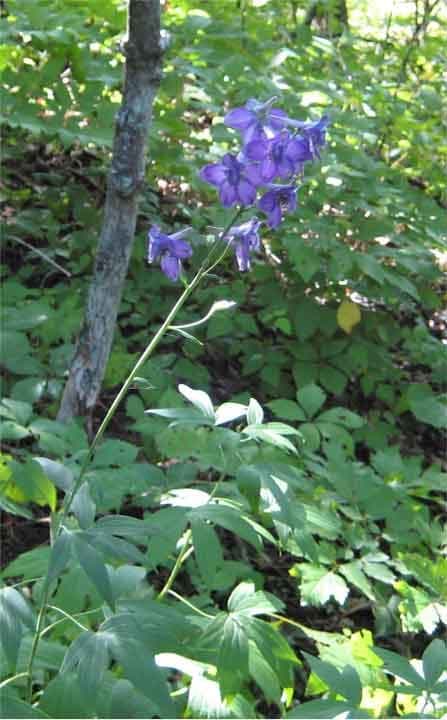
NPS / Public domain, via Wikimedia Commons
Delphinium exaltatum: complete guide
Delphinium exaltatum
Want to see Delphinium exaltatum: complete guide in your garden?
1 minute, no credit card
Overview
Delphinium exaltatum, known as tall larkspur, is a stately wildflower originating from central and eastern North America. This is a biennial plant that distinguishes itself from annual larkspurs through its robust growth and longer, more impressive flower spikes.
This plant naturally grows in moist woodlands and light shade, though it also performs well in full sun. In European gardens, it presents a fascinating accent for wilderness enthusiasts, bringing genuine wild genetics into a home garden context.
This article provides complete instructions for growing Delphinium exaltatum as a biennial, meaning you get foliage in the first year and flowers in the second season.
Appearance and Bloom
Delphinium exaltatum grows as a stately, upright plant reaching 60 to 130 cm tall. The plant features finely divided leaves that grow primarily in a rosette in the first year, then cover stems in the second year.
The flowers are the highlight: long, densely packed flower spikes with deep blue to purple flowers. The flowers display the characteristic spur structure of delphiniums, giving them elegant, geometric appearance.
The flowering period runs from July to August in the second growing year. The flower spikes can reach 50 cm long and are spectacularly striking.
Ideal Location
Delphinium exaltatum thrives in both full sun and light shade, making it versatile. In hot climates, partial shade may even be preferable.
The plant requires wind protection given its height. Strong wind can damage the flower spikes.
In Dutch gardens, the plant fits well near woodland edges, in lightly shaded garden corners, or in mixed borders where it forms a background screen.
Soil
Delphinium exaltatum prefers moist, well-draining soil that is reasonably fertile. This reflects the natural habitats where this plant grows.
Ensure good water retention without waterlogging. Add compost and ensure drainage is adequate.
The plant can grow in a pH range of 5 to 8, so it's reasonably tolerant of acidity.
Watering
Delphinium exaltatum is more water-tolerant than many other delphiniums. During the first growing year, the plant should receive regular water, especially during dry periods.
In the second year, when the plant flowers, regular water remains important. Blooming can suffer under water stress.
Always ensure well-draining soil to prevent root rot.
Free design
Want to see Delphinium exaltatum: complete guide in your garden? Make a free design now.
Pruning
In the first year, pruning is typically unnecessary. Allow the plant to assume its natural form.
In the second year, when flowers appear, you can deadhead spent blooms for continued flowering.
Maintenance Calendar
May-June (Year 1): Sow seeds and provide adequate germination conditions. Seeds need cold stratification.
July-September (Year 1): Seedlings grow. Provide regular watering.
October (Year 1): Seedlings can be overwintered outdoors or in a cold frame.
April-May (Year 2): Seedlings grow actively. Provide support if needed.
June (Year 2): Flowering begins. Water regularly.
July-August (Year 2): Peak flowering period. Deadhead for continued blooms.
September (Year 2): Flowering ends. Plant can set seed or be removed.
Winter Hardiness
Delphinium exaltatum is reasonably winter-hardy in Dutch climate as a biennial. The plant usually survives Dutch winters in the first year when still small.
In the second year, frost can damage the flowers, but the plant usually survives.
In very severe winters, straw protection may be helpful, especially during the first growing year.
Companion Plants
Delphinium exaltatum works well in wild, natural gardens with other American wildflowers. Combine with bergamot, coneflowers, and black-eyed susan.
In more formal settings, it works well as a background plant in borders, with low-growing bloomers in front for contrast.
The plant attracts pollinators and provides food for birds and other wildlife.
Closing Thoughts
Delphinium exaltatum appeals to gardeners who love wild, natural aesthetics. The plant brings genuine American ecology into your own garden.
The biennial growth pattern makes cultivation a multi-year project that rewards patience. In the second year, you'll be astonished by the size and beauty of the flower spikes.
This is a plant that sparks conversation. Visitors will ask what this spectacular blue plant is.
Seeds are available from various seed suppliers. Provide cold stratification as indicated on the packet.
Enjoy this piece of wild America in your own yard. With patience and care, you'll have a magnificent, stately plant that returns annually if you let it self-seed.
Want to see Delphinium exaltatum: complete guide in your garden? Make a free design now.
Upload a photo, pick a style, and get a photorealistic design with plant list in under a minute.
No credit card required


Similar plants
Drummond's anemone: complete guide
Anemone drummondii
Discover Drummond's anemone (Anemone drummondii): a silvery-grey mountain plant for cool rock gardens and alpine troughs.
Korean clematis: complete guide
Clematis serratifolia
Clematis serratifolia is a hardy climber with fragrant yellow bell flowers in August-September. Pruning group 3, location and care tips.
Aquilegia brevistyla: complete guide
Aquilegia brevistyla
Discover Aquilegia brevistyla, the elegant North American columbine. Growing tips, shade tolerance, and design ideas for woodland and shadowed gardens.