
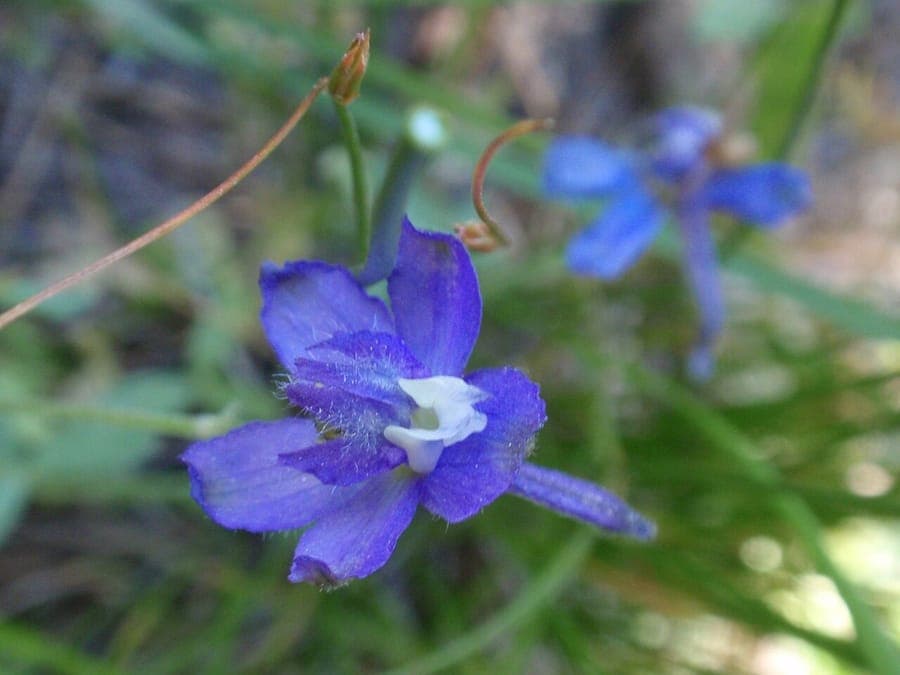
Tom Hilton / CC BY 2.0, via Wikimedia Commons
Slim larkspur (Delphinium depauperatum): complete guide
Delphinium depauperatum
Want to see Slim larkspur (Delphinium depauperatum): complete guide in your garden?
1 minute, no credit card
Overview
Slim larkspur (Delphinium depauperatum) is a delicate, herbaceous wildflower native to the mountains of northwestern North America, ranging from Washington and Oregon through Nevada and California. This refined alpine plant produces slender spikes of brilliant blue flowers during spring months and thrives in well-draining, rocky soils. Its delicate form and minimal requirements make it ideal for rock gardens and drought-tolerant borders.
Appearance and bloom
Slim larkspur grows as an upright herb reaching 30-60 cm in height. The flowers are small but brilliantly blue to purple, appearing in loose, elegant racemes at stem tips from April to May. The leaves are finely divided, almost thread-like, imparting a delicate, airy appearance characteristic of alpine species. The overall plant form suggests natural mountain meadows and open grasslands.
Ideal location
Choose positions with:
- Full sun (minimum 6-8 hours direct light)
- Open, unshaded situations
- Protection from extreme wind exposure
- Good air circulation
- Alpine or hillside garden settings ideal
Soil requirements
Plant slim larkspur in well-draining, gritty soil. This species strongly prefers dry to moderately dry conditions and will not tolerate waterlogged soil. Choose nutrient-poor to moderately fertile soil, mimicking natural alpine conditions. Heavy clay is unsuitable; add sand or gravel to improve drainage.
Watering
Slim larkspur is drought-tolerant once established. During the first growing season:
- Water regularly until plant becomes established
- Reduce watering once flowering begins
- Provide minimal water after bloom
- Overwatering is the primary cause of failure
Free design
Want to see Slim larkspur (Delphinium depauperatum): complete guide in your garden? Make a free design now.
Pruning and maintenance
This plant requires minimal maintenance. Deadhead spent flowers to encourage additional blooms. After flowering, cut stems back to ground level. The plant often self-seeds in suitable conditions.
Maintenance calendar
- April-May: Flowering period; enjoy the delicate blue spikes
- June: Seed setting; allow some seeds to drop for self-sowing
- July-August: Plant dies back to rootstock in dry conditions
- September-March: Dormant; awaiting spring return
Winter hardiness
Slim larkspur is winter hardy to USDA Zone 4-8 (-30 to -18 degrees C), making it extremely well-suited to UK and Northern European gardens. The plant survives harsh winters without protection, especially on well-draining sites.
Ecological value
In wild habitats, this species grows on dry alpine meadows, rocky slopes, and open grasslands. This preference translates perfectly to garden situations featuring mineral-rich, well-draining soil. The plant is valuable for native pollinators across its North American range.
Companion plants
Combine slim larkspur with:
- Gaillardia: for red-yellow contrast
- Eriogonum (wild buckwheat): for texture
- Salvia nemorosa: for purple accents
- Festuca glauca (blue fescue): for structural blue-gray effect
Propagation and seeding
Slim larkspur germinates readily from seed. Sow in autumn or early spring in well-draining seed compost. Cold stratification over winter enhances germination rates.
Closing thoughts
Slim larkspur is a refined choice for gardeners appreciating wildflower beauty and alpine elegance. With minimal maintenance, dry growing conditions, and full sun, this North American treasure will return year after year. Perfect for rock gardens, scree beds, and drought-tolerant borders.
Want to see Slim larkspur (Delphinium depauperatum): complete guide in your garden? Make a free design now.
Upload a photo, pick a style, and get a photorealistic design with plant list in under a minute.
No credit card required


Similar plants
Drummond's anemone: complete guide
Anemone drummondii
Discover Drummond's anemone (Anemone drummondii): a silvery-grey mountain plant for cool rock gardens and alpine troughs.
Korean clematis: complete guide
Clematis serratifolia
Clematis serratifolia is a hardy climber with fragrant yellow bell flowers in August-September. Pruning group 3, location and care tips.
Aquilegia brevistyla: complete guide
Aquilegia brevistyla
Discover Aquilegia brevistyla, the elegant North American columbine. Growing tips, shade tolerance, and design ideas for woodland and shadowed gardens.