
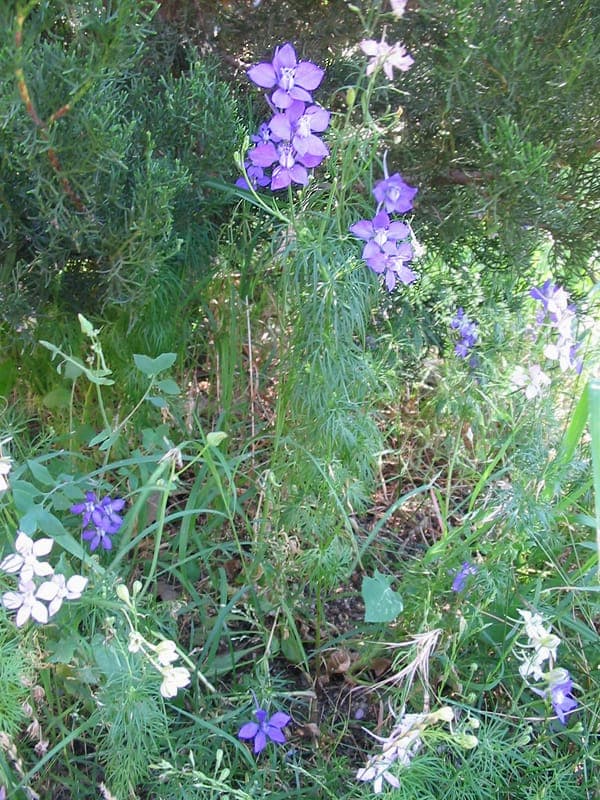
Alberto Salguero / CC BY-SA 3.0, via Wikimedia Commons
Rocket larkspur: complete guide
Delphinium ajacis
Want to see Rocket larkspur: complete guide in your garden?
1 minute, no credit card
Rocket Larkspur (Delphinium ajacis), also known as Doubtful Knight's-Spur or Pied-d'Alouette d'Ajax, is a classic annual flower from southern Europe to Central Asia. This elegant, tall-growing plant belongs to the Ranunculaceae family and is primarily known for its densely arranged flower spikes in vibrant blue, purple, pink, or white. It is an indispensable flower for cutting gardens, formal plantings, and landscape drama.
Delphinium ajacis grows as an upright plant with heights of 60-150 cm, depending on cultivar and growing conditions. The flowers are densely arranged in racemose spikes up to 30-60 cm long. Each flower is bilabiateWith spur-shaped nectaries, characteristic of the Delphinium genus.
The plant is an annual to biennial, flowering in summer (June-August in northern hemisphere) with intensely colored blooms that hold well both in the garden and in cut arrangements.
Ideal location and light
Rocket Larkspur grows best in full sun, requiring 6-8 hours of direct sunlight daily. It accepts partial shade, but flowering is less prolific. In very hot climates (southern Spain, southern Italy), afternoon shade sometimes benefits by preventing growth halt.
The plant grows in zones 2 to 10. It tolerates cold and can even grow in colder climates if seed is sown in autumn for spring emergence.
Soil preparation
Rocket Larkspur requires well-draining, nutrient-rich soil. Heavy clay can be improved with compost. Ideal pH is neutral to slightly alkaline (pH 6.5-7.5). Avoid very acidic soils.
Before sowing, incorporate 2-3 cm of ripe compost into the seedbed. This promotes germination and strong young growth. Good drainage is essential; waterlogging leads to damping-off and fungal diseases.
Sowing and establishment
Rocket Larkspur grows best from seed sown directly in ground. In mixed climates, autumn sowing (September-October) is possible; seeds overwinter and germinate in early spring. In colder zones, sow in spring (April-May) as soon as soil is workable.
Sow seed directly where it is to grow, thin later to 30-45 cm spacing. Seed can be surface-sown (uncovered) or very lightly covered (about 3 mm). Seed requires light for germination. Keep seedbed moister until germination (2-3 weeks).
Alternatively: sow in pots under glass in March, provide chilling for dormancy-breaking (2 weeks at 5°C), then warmth (15-20°C).
Watering and feeding
During growth water carefully so soil is moist but not wet. Delphinium is unhappy with waterlogging. Once established, plants can tolerate less moist conditions.
Feeding: apply balanced fertilizer (10-10-10) monthly until flowering starts. Excess nitrogen leads to too much leaf growth and less flowering. Potassium and phosphorus are important for flower production.
Mulch with 3-5 cm compost to retain moisture.
Free design
Want to see Rocket larkspur: complete guide in your garden? Make a free design now.
Support and shaping
Tall cultivars (120-150 cm) always require support against wind and rain-weight. Install bamboo stakes or hazel rods early, when plants are 30 cm tall. Gently tie the stem with plant tie.
Remove faded flowers in late summer to encourage more flowering breaks.
Maintenance calendar
April-May: Sow seed directly or from pots; thin young plants.
May-June: Growth intensifies; stake tall plants; tie in support.
June-August: Peak flowering; water regularly; apply monthly feeding.
August-September: Remove spent flower spikes; stop feeding.
September-October: Collect seed for next year (in colder zones); autumn sowing for early emergence in zones 3-7.
November-March: Winter dormancy; no maintenance needed.
Winter hardiness and annuality
Delphinium ajacis is technically annual to biennial. In milder climates (zones 7-10), it can overwinter and bloom next season. In zones 2-6, it dies after first frost and seed should be sown again next spring.
For self-seeding: allow a few plants to set seed in late summer; seed self-sows in autumn and blooms next summer.
Companion plants
Rocket Larkspur combines spectacularly with other summer flowers. Planting alongside roses, blanket flower, scarlet sage, peonies, and lavender creates classic cottage look. The deep blue-purple tones contrast beautifully with yellow and white.
In cutting gardens: group 5-10 plants together for full "wall" of color; sow staggered sowings (every 2 weeks) for extended flowering.
Seed collection and propagation
Seed collection: allow a few flower spikes to reach full seed-ripeness. When pod browns, cut and hang in dry, warm place to further ripen. Shake seed into paper bag. Store seed in cool location.
Seed remains viable 2-3 years under good storage conditions. Fresh seed for next season.
Pests and diseases
Mealybugs: can occur on young growth; treat with insecticidal soap spray.
Powdery mildew: in dry, warm periods; improve air circulation.
Leaf spot: leaves can develop fungal spots; remove damaged foliage.
Spider mites: in extreme heat and drought; spray with water or use sulfur dust.
Recommendations for gardenworld.app
Rocket Larkspur is ideal for:
- Cutting flower gardens (long-lasting in arrangements)
- Formal plantings and cottage gardens
- Clean borders in summer schemes
- Gardens in all zones (2-10)
Use in groups of 5-10 for dramatic effect. Perfect back plant for borders because of height.
Seed sourcing: widely available in seed catalogs (Suttons, Altman Seeds, etc.). Cultivars available: 'Delft Blue', 'Frosted Skies' (white-blue), 'Picotee' (purple-white).
Conclusion: Rocket Larkspur remains a classic because it excels in color, height, and classic flower proportion. Sow anew each year for infinitely renewable flower shows.
Want to see Rocket larkspur: complete guide in your garden? Make a free design now.
Upload a photo, pick a style, and get a photorealistic design with plant list in under a minute.
No credit card required


Similar plants
Drummond's anemone: complete guide
Anemone drummondii
Discover Drummond's anemone (Anemone drummondii): a silvery-grey mountain plant for cool rock gardens and alpine troughs.
Korean clematis: complete guide
Clematis serratifolia
Clematis serratifolia is a hardy climber with fragrant yellow bell flowers in August-September. Pruning group 3, location and care tips.
Aquilegia brevistyla: complete guide
Aquilegia brevistyla
Discover Aquilegia brevistyla, the elegant North American columbine. Growing tips, shade tolerance, and design ideas for woodland and shadowed gardens.