
Frank Vincentz / CC BY-SA 3.0, via Wikimedia Commons
Deer-foot fern: complete guide
Davallia canariensis
Want to see Deer-foot fern: complete guide in your garden?
1 minute, no credit card
The Deer-foot fern (Davallia canariensis), also called Canary fern or Hare's-foot fern, is a fascinating tropical fern from the Polypodiaceae family. This epiphytic fern naturally grows on tree bark and rocks in Macaronesian islands like the Canary Islands, Azores, and Madeira. The most distinctive feature is the hairy, beige rhizomes that genuinely resemble rabbit feet.
Overview
Davallia canariensis is a tropical, epiphytic fern originating from the Western Mediterranean islands. Rather than growing in soil, this plant grows on tree bark and rocks, obtaining nutrients from debris and rainfall. This growth habit makes it perfect for hanging baskets and fern collections. The fern is semi-hardy in USDA zones 9-11.
Appearance and Fronds
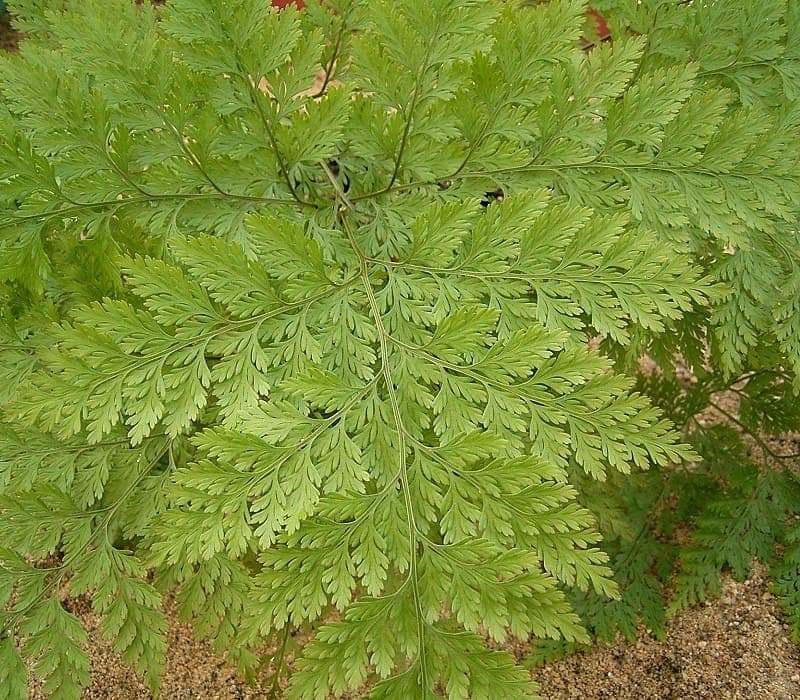
The fronds of Davallia canariensis are triangular, dissected, and intricately divided. They grow in elegant, cascading forms reaching about 20-30 centimeters length. The most striking features are the hairy, beige to brown rhizomes growing above the substrate, genuinely resembling rabbit feet. These rhizomes produce aerial rootlets that help anchor the plant. Frond undersides display brown sporangia containing spores.
Ideal Location
Deer-foot fern prefers warm, humid climates with indirect light. Indoors, it flourishes on windowsills with morning or evening light. Outdoors in warm regions (USDA 10-11), grow against tree bark or rocks in partial shade. Hang in baskets or place high where rhizomes can cascade elegantly.
Soil/Substrate
Epiphytic ferns need no normal soil. Use an airy, fast-draining substrate instead: mix leaf mould, orchid bark, and perlite equally. Add sphagnum moss for moisture retention. Substrate must never compact. For wall mounting, attach to boards with moisture holders nearby.
Free design
Want to see Deer-foot fern: complete guide in your garden? Make a free design now.
Watering
Consistent but non-soggy moisture is essential. Mist fronds daily in warm, dry weather. Water pot substrate when the surface feels dry. Spray misting works well for hanging plants. Important: true waterlogging weakens rhizomes. Winter water less but never fully dry. Humidity of at least 60 percent is crucial.
Pruning
Minimal maintenance needed. Remove brown or diseased fronds gently. Never repot into normal potting soil; keep epiphytic. Division can be done in spring by breaking off rhizome pieces and mounting on new substrate. Young plants grow quickly.
Maintenance Calendar
Spring (March-May): Growth accelerates. Mist regularly for humidity. Summer (June-August): Peak growing season. Daily misting in heat. Autumn (September-November): Growth slows. Misting remains important. Winter (December-February): Minimal growth. Mist less frequently.
Winter Hardiness
Deer-foot fern tolerates brief freezing to about -3°C. In USDA zones 9-10, it may overwinter outside in protected spots. In colder climates (Netherlands, Belgium), grow as a greenhouse or houseplant. Many nurseries stock it as a houseplant.
Companion Plants
Davallia canariensis grows well with other tropical ferns. Combine with Platycerium, Asplenium, and ferns. On the same display structure, epiphytic orchids and bromeliads create a complete tropical ecosystem.
Closing
The Deer-foot fern is a fascinating, decorative fern that gives any home a tropical character. With proper humidity and warmth, you'll enjoy years of graceful, cascading fronds and distinctive rhizomes.
Want to see Deer-foot fern: complete guide in your garden? Make a free design now.
Upload a photo, pick a style, and get a photorealistic design with plant list in under a minute.
No credit card required


Similar plants
Dryopteris sieboldii: complete guide
Dryopteris sieboldii
Discover Dryopteris sieboldii (Siebold's Buckler Fern), an elegant evergreen fern from Asia. Growing tips, care, and uses in shade gardens.
Dryopteris tyrrhena: complete guide
Dryopteris tyrrhena
Discover Dryopteris tyrrhena (Mediterranean Buckler-fern), a rare and exquisite fern species. Growing tips, care, and shade garden design.
Dryopteris villarii: complete guide
Dryopteris villarii
Dryopteris villarii, known as rigid buckler fern, is a shade-loving fern form from the Alps. Discover how to grow and maintain this elegant alpine fern in your garden.