
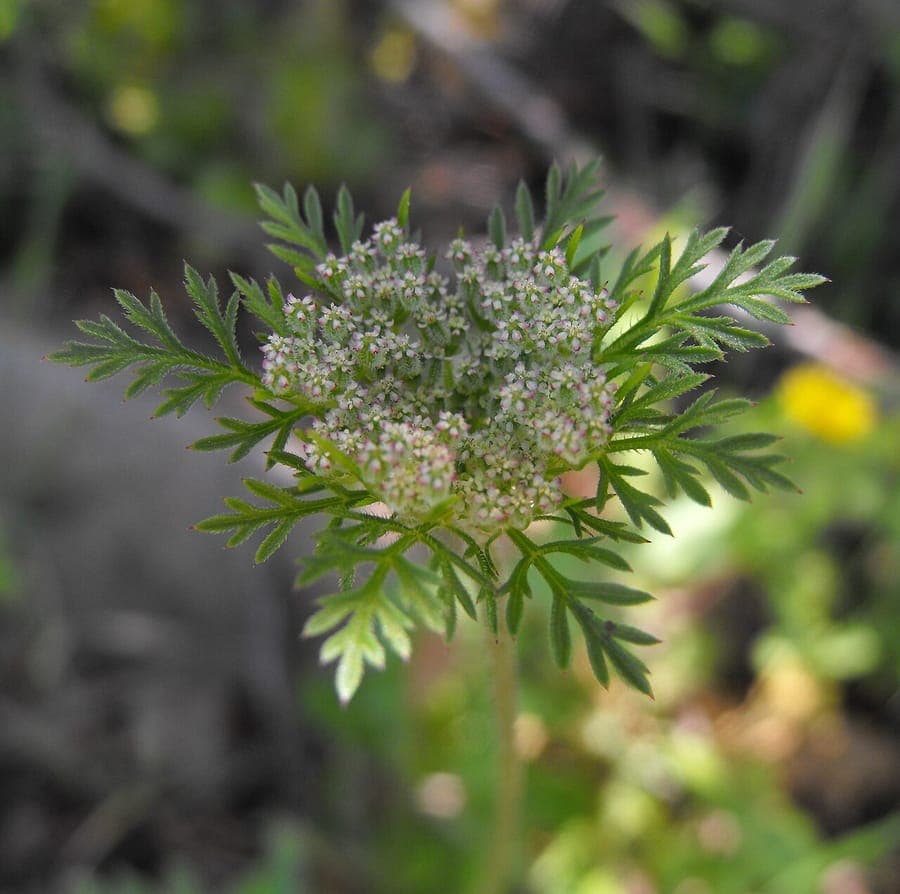
Stickpen / Public domain, via Wikimedia Commons
Daucus pusillus: complete guide
Daucus pusillus
Want to see Daucus pusillus: complete guide in your garden?
1 minute, no credit card
Overview
Daucus pusillus, commonly called rattlesnake-weed or American wild carrot, is a fascinating herbaceous plant with a wide geographic range. Although originating from North and South America, this plant has also been introduced to Europe and grows as an escape in certain regions. The plant belongs to the Apiaceae family, the same family that includes cultivated carrots and parsley.
This article explores how to successfully introduce, maintain, and likely witness the natural spread of this wild plant in your garden. It's a plant that perfectly fits natural, wildlife-friendly gardens where you want to encourage wild flora.
Appearance and Bloom
Daucus pusillus grows as a compact, low plant typically reaching 20-60 cm tall. It features compound, finely divided leaves that are delicate and ornamental, resembling carrot or parsley foliage with intricate texture.
The flowers appear in typical Apiaceae fashion: small, white to pale pink flowers clustered in flat or slightly domed umbels. These flower clusters are small, typically 2-4 cm across, but collectively create a delicate effect. Each tiny flower has five small petals.
After flowering, the plant produces characteristic small fruits resembling microscopic ridged seeds. These fruits aid dispersal and are ecologically important.
Ideal Location
Daucus pusillus thrives in full sun on dry to moderately moist locations. The plant can tolerate light shade, though growth is less robust under heavy shade.
The plant feels at home in open areas, along pathways, in border edges, or naturalistic meadow-like sections of your garden. Perfect for ecological gardening where you wish to encourage wild flora.
Wind poses no problem for this robust plant; it simply carries on. You need not plan specifically for wind protection.
Soil
Daucus pusillus is not particular about soil. The plant grows well on poor to moderately fertile soil, preferring dry to moderately moist conditions. Heavy clay is not ideal but won't kill the plant.
The plant thrives on sandy, stony, or gravelly soils, reflecting natural habitats where this plant grows. If you have heavy clay, you need not make major amendments; the plant will adapt.
A pH range of approximately 5.5 to 7 is acceptable. The plant shows little concern for pH adjustments.
Watering
Daucus pusillus is fairly drought-tolerant, especially once established. This results from the plant developing deeper roots. During the first few weeks after planting or sowing, you'll need to water more regularly.
Once established, the plant needs only sporadic water. In dry summers you can occasionally water, but the plant will also survive on rainfall alone.
Before switching to "naturalistic" watering, ensure the plant is well-established (at least one growing season).
Free design
Want to see Daucus pusillus: complete guide in your garden? Make a free design now.
Pruning
Pruning is typically unnecessary for Daucus pusillus. The plant grows naturally compact and needs little support.
You can certainly allow the plant to self-seed. If you prefer preventing wild seed spread, deadhead before seeds ripen. But in many natural gardens, plant self-spreading is desired.
If you want to propagate, allow seeds to ripen and fall naturally, or collect them manually and sow where desired.
Maintenance Calendar
April-May: Sow seeds directly in ground at final location, or start in pots and plant later.
May-July: Growth period. Ensure adequate water in first weeks. Plant grows, requiring no special care.
July-August: Flowering period begins. No feeding needed.
August-September: Peak bloom and seed-setting. Deadhead flowers if you want to prevent spread.
September-October: Seeds ripen. Allow seeds to fall or collect manually.
October-November: Plant dies back after seed production. Don't clean aggressively; leave dead material for insects and birds.
Winter Hardiness
Daucus pusillus is typically an annual plant in the Dutch climate. This means the plant dies after producing seeds. In warmer climates it may be biennial.
The plant doesn't survive Dutch winters as a mature plant. What does survive are seeds in the soil, which germinate the following spring.
This actually makes growing this plant very simple - you sow seeds and let the plant do what it does naturally.
Companion Plants
Daucus pusillus combines well with other wild herbs and flowers, such as chamomile, viper's bugloss, and cornflowers. It also fits well in groups with other Apiaceae family members.
Use the plant in wildflower border edges, in natural meadow plantings, or in ecological gardens where you wish to retain wild flora.
The plant attracts pollinators and birds enjoy the seeds, making it valuable for garden ecosystems.
Closing Thoughts
Daucus pusillus is a plant that invites gardeners to reconsider their perspective on "weeds." This wild plant is no less beautiful or useful than cultivated garden plants. Actually, such wild plants offer biological value that many modernized garden plants don't provide.
By allowing Daucus pusillus to grow in your garden, you support local insect pollinators and birds while creating a landscape that feels more naturally authentic than a strict monoculture garden.
Visitors seeing your garden will wonder what this delicate white-flowered plant is. It's a fantastic conversation starter about wildflowers and ecological gardening.
The plant is available from seeds via various online suppliers and even some physical garden centers. The seed is inexpensive and easy to handle.
Enjoy this charming wild plant in your garden. With minimal effort you get an ecologically valuable, delicate plant that reproduces itself year after year. This is the real magic of natural gardening: working with nature, not against it.
Want to see Daucus pusillus: complete guide in your garden? Make a free design now.
Upload a photo, pick a style, and get a photorealistic design with plant list in under a minute.
No credit card required


Similar plants
Whorled carrot: complete guide
Daucus involucratus
Daucus involucratus is a Mediterranean umbellifer with white flower heads framed by lacy bracts. Growing this gravel garden gem.
Daucus muricatus: complete guide
Daucus muricatus
Daucus muricatus, the spiny wild carrot, grows wild on Mediterranean coasts. Discover sowing, June-July bloom, and wildflower meadow use.
Daucus pumilus: complete guide
Daucus pumilus
Daucus pumilus is a dwarf wild carrot relative with white lacy umbels, thriving on dunes and coastal rock in poor, fast-draining soil.