
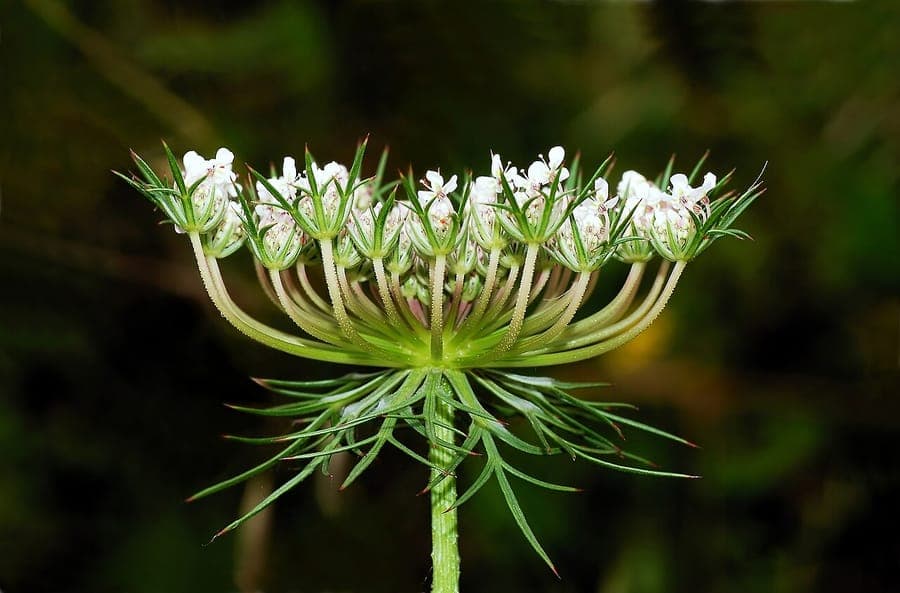
Alvesgaspar / CC BY-SA 3.0, via Wikimedia Commons
Carrot: complete guide
Daucus carota
Want to see Carrot: complete guide in your garden?
1 minute, no credit card
Overview
Carrot (Daucus carota) is a staple in any productive garden, prized for its crisp, sweet roots and its role in supporting beneficial insects. This member of the Apiaceae family is typically grown as an annual, though it's naturally biennial. In its first year, it develops a taproot and a rosette of feathery foliage. In the second year, if left unharvested, it sends up a flowering stalk with lacy white umbels.
Carrots are adaptable, whether you're growing them in a traditional vegetable patch, raised bed, or deep container. They thrive in temperate climates and are commonly grown across USDA hardiness zones 3–10. On gardenworld.app, you can design a planting layout that maximizes space and sunlight for carrots, helping you avoid common pitfalls like overcrowding or poor soil prep.
Appearance & bloom cycle
The familiar orange taproot is just one part of this plant's lifecycle. Carrot leaves are finely divided, bright green, and fern-like, growing up to 30–40 cm tall. In year two, the plant produces compound umbels of small white flowers, often with a dark red or purple floret in the center - a telltale sign of wild carrot. Bloom time runs from June to August.
These flowers attract pollinators like hoverflies, lacewings, and parasitic wasps, making carrots a valuable addition to an insect-friendly garden. After pollination, the flower head curls inward, forming a 'bird's nest' structure that holds the seeds.
Ideal location
Carrots need full sun - a solid 8 out of 10 on the light scale. Aim for 6–8 hours of direct sunlight daily. A south- or southeast-facing spot is ideal. Avoid shaded areas, as they lead to stunted roots and longer maturity times.
If growing in containers, choose pots at least 30 cm deep to accommodate root development. Ensure the site has good air circulation to reduce fungal diseases like leaf blight. Use gardenworld.app to assess your garden's sunlight exposure and plan your carrot beds accordingly.
Soil requirements
The soil must be loose, well-drained, and free of clods, rocks, or compaction. Heavy clay or stony soils cause forking, splitting, or misshapen roots. Ideal pH is between 6.5 and 7. Amend the soil with well-rotted compost or aged manure before planting, but avoid fresh manure - it encourages leafy top growth at the expense of root development.
Prepare the bed by double-digging to 20–30 cm deep and raking it smooth. For heavy soils, mix in sand or perlite. Raised beds filled with sandy loam are excellent for consistent root growth.
Watering
Carrots need consistent moisture, especially during germination. Keep the top 2.5 cm of soil evenly moist - dry spells at this stage lead to poor or spotty emergence. Use a fine mist or drip irrigation to avoid crusting.
Once established, water deeply once or twice a week, providing about 2.5 cm of water. Avoid overhead watering to prevent foliar diseases. In hot, dry summers, increase frequency but ensure the soil drains well. Overwatering encourages rot, particularly in poorly drained soils.
Free design
Want to see Carrot: complete guide in your garden? Make a free design now.
Pruning
Carrots don't require pruning, but thinning is essential. When seedlings are 2–3 cm tall, thin to 5–10 cm apart, depending on the variety. Crowded plants produce small, stunted roots.
Do not cut back foliage during the first year - it feeds the developing root. In the second year, leave flower stalks intact unless you're collecting seed. Harvest mature seed heads when they turn brown and dry, then store in a cool, dry place.
Maintenance calendar
- Jan: No activity
- Feb: Start early varieties indoors or in a greenhouse
- Mar: Prepare soil; sow in protected beds if frost risk is low
- Apr: Direct sow in open ground; thin seedlings
- May: Weed regularly; watch for carrot fly
- Jun: Flowers appear in overwintered plants; maintain even moisture
- Jul: Peak bloom in wild types; monitor for leaf spot
- Aug: Collect seeds from biennial plants; allow some to self-seed
- Sep: Harvest late crops; sow winter carrots (by mid-September)
- Oct: Lift remaining roots; mulch beds for frost protection
- Nov: No sowing; clean up plant debris
- Dec: Dormant period; review seed performance for next year
Winter hardiness
Carrots are hardy in USDA zones 3–10. Mature roots can overwinter in the ground under a thick mulch of straw or leaves, surviving temperatures down to -6°C. They can be harvested as needed through mild winters.
Biennial plants will survive the winter and bolt the following spring. In colder zones, consider lifting and storing roots in sand indoors. Wild carrot is fully hardy and often self-seeds in disturbed soils.
Companion plants
Carrots grow well with onions, leeks, lettuce, and herbs like rosemary and sage. Onions deter carrot fly with their strong scent. Avoid planting near dill, parsnip, or fennel - they attract similar pests or compete for resources.
Marigolds and nasturtiums act as trap crops, drawing aphids away. Lettuce provides light ground cover, reducing soil moisture loss. Pair carrots with tomatoes in deeper beds - their root systems occupy different layers.
Plan smart combinations on gardenworld.app to boost yields and reduce pest pressure.
Closing
Carrots are a rewarding crop for both novice and experienced gardeners. With proper soil prep, consistent watering, and thoughtful companion planting, you can enjoy crisp, homegrown roots all season. Buy seeds or seedlings from trusted garden centres like those stocking organic varieties.
Whether you're growing 'Nantes', 'Chantenay', or 'Purple Haze', attention to detail pays off. Use gardenworld.app to track your planting dates, monitor growth, and plan crop rotation for healthier soil and better harvests year after year.
Want to see Carrot: complete guide in your garden? Make a free design now.
Upload a photo, pick a style, and get a photorealistic design with plant list in under a minute.
No credit card required


Similar plants
Whorled carrot: complete guide
Daucus involucratus
Daucus involucratus is a Mediterranean umbellifer with white flower heads framed by lacy bracts. Growing this gravel garden gem.
Daucus muricatus: complete guide
Daucus muricatus
Daucus muricatus, the spiny wild carrot, grows wild on Mediterranean coasts. Discover sowing, June-July bloom, and wildflower meadow use.
Daucus pumilus: complete guide
Daucus pumilus
Daucus pumilus is a dwarf wild carrot relative with white lacy umbels, thriving on dunes and coastal rock in poor, fast-draining soil.