
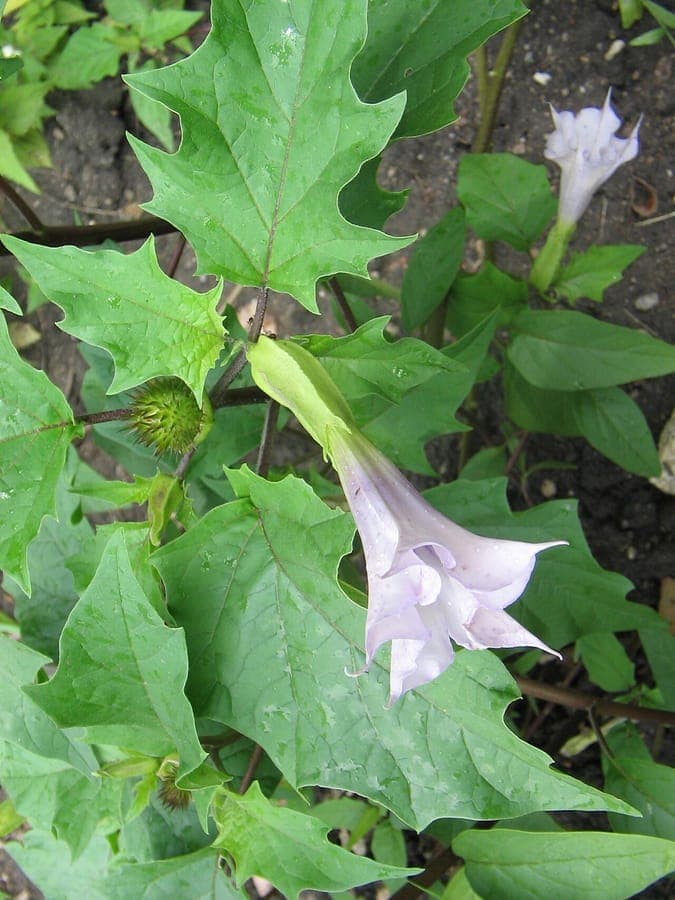
No machine-readable author provided. Taka assumed (based on copyright claims). / CC BY-SA 3.0, via Wikimedia Commons
Thorn-apple: complete guide
Datura stramonium
Want to see Thorn-apple: complete guide in your garden?
1 minute, no credit card
Overview
Thorn-apple, or Datura stramonium, is a bold, herbaceous plant that grabs attention with its dramatic white flowers and spiky seed pods. Native to tropical regions of Central America - including Cuba, Belize, and Costa Rica - it thrives in warm, sunny conditions and has naturalized in many temperate zones. In the UK and US, you'll find it in gardens, wastelands, and along roadsides where soil is poor and drainage is sharp. It's a member of the Solanaceae family, related to tomatoes and potatoes, but don't be fooled - every part of this plant is dangerously toxic.
The active compounds - atropine, scopolamine, and hyoscyamine - can cause hallucinations, rapid heartbeat, and even death if ingested. Keep it well away from pets and young children. That said, for experienced gardeners, Thorn-apple offers unmatched drama. Its fragrant night blooms and architectural form make it a standout in summer borders. On gardenworld.app, you can design a garden layout that safely places Thorn-apple where it shines without risk.
Appearance & bloom cycle
Thorn-apple grows 2 to 4 feet tall with a spread of about 18 inches. It has upright, branching stems covered in fine hairs and large, jagged leaves that can reach up to 8 inches long. The foliage has a slightly unpleasant smell when crushed, a natural defense against herbivores.
From July through October, it produces large, pure white, trumpet-shaped flowers that unfurl at dusk. Each bloom can stretch 6 inches long and stays open through the night, releasing a sweet, narcotic fragrance. By late summer, the flowers give way to spiny, 1.5 to 2-inch seed capsules that burst open when dry, scattering dozens of black seeds. This self-seeding habit means it can pop up in unexpected places next year - useful if you like surprises, problematic if you don't.
Ideal location
Give Thorn-apple full sun - aim for 8 hours daily. A light rating of 8/10 suits it perfectly. Plant it in a south-facing border, against a warm wall, or in a gravel garden where heat radiates. It loves heat and performs best in USDA zones 8–11 as a perennial, but in zones 5–7 it's grown as an annual from seed.
Avoid shaded, damp areas. It won't tolerate wet soil or competition from dense ground covers. If you're using containers, choose terracotta or wood pots with generous drainage holes. A sunny patio or deck is ideal. Check your garden's sun patterns on gardenworld.app to find the best spot for maximum bloom.
Soil requirements
Thorn-apple isn't fussy about soil, but it demands excellent drainage. A sandy or loamy mix with a pH between 7.0 and 7.5 works best. Avoid rich, compost-heavy soils - too much fertility leads to leggy growth and fewer flowers. If your soil is heavy clay, amend it with grit, perlite, or coarse sand to improve flow.
For container growing, use a standard potting mix with added horticultural grit. Keep fertilization minimal - a single application of balanced slow-release granules at planting is enough. Overfeeding reduces flowering and increases toxicity risks.
Free design
Want to see Thorn-apple: complete guide in your garden? Make a free design now.
Watering
Once established, Thorn-apple is drought-tolerant. During the first few weeks after planting, water every 3–4 days with about 1 liter per plant. After that, reduce to once a week unless it's extremely dry. Let the soil dry out completely between waterings - soggy roots lead to rot.
Water at the base in the early morning to avoid wet foliage, which can invite fungal diseases. Use rainwater when possible, as tap water with high lime content may affect soil pH over time.
Pruning
No heavy pruning needed. To encourage bushier growth, pinch out the growing tips when the plant reaches 12 inches tall. This promotes lateral branching and more flowers. Remove any yellowing or damaged leaves with clean snips, wearing gloves - the sap can irritate skin.
Deadheading isn't required, but removing spent blooms can prevent excessive self-seeding. Dispose of cuttings carefully; do not compost, as seeds may survive.
Maintenance calendar
- Jan: No action
- Feb: Start seeds indoors at 20°C under grow lights
- Mar: Transplant seedlings into larger pots if needed
- Apr: Harden off seedlings, begin outdoor acclimatization
- May: Plant outside after last frost (mid to late May in zones 6–7)
- Jun: Pinch tips, monitor for slugs and aphids
- Jul: Blooms begin, reduce watering frequency
- Aug: Peak flowering, inspect for pests monthly
- Sep: Seed pods form, reduce water slightly
- Oct: Harvest seeds, pull plants if not overwintering
- Nov: Dies back in cold zones, no care needed
- Dec: Dormant period
Winter hardiness
Thorn-apple is perennial in USDA zones 8–11. In colder zones, it's treated as an annual. It won't survive hard frosts. In milder areas, mulch around the base with dry straw or bark to protect the crown. Even then, top growth usually dies back, though it may resprout in spring if roots survive.
If you want to keep it year-round, dig up a healthy plant in autumn, pot it, and overwinter indoors in a sunny window at 15–18°C. Water sparingly through winter. Return outside after frost danger passes.
Companion plants
Pair Thorn-apple with other heat-loving, drought-tolerant plants. Good companions include Lavender, Yarrow, Russian Sage, and Sedum. These share similar water needs and create a low-maintenance, pollinator-friendly border.
Avoid planting near edibles or in children's play areas. Also steer clear of moisture-loving plants like Astilbe or Hosta, which require opposite conditions. The contrast in care needs will stress both plants.
Closing
Thorn-apple isn't for every garden, but for those who appreciate bold, architectural plants with nighttime appeal, it's hard to beat. Its towering blooms and spiky fruit add drama from midsummer to fall. Just treat it with caution - wear gloves, label it clearly, and place it thoughtfully. With the right conditions, it rewards you with months of striking flowers. For layout ideas and companion suggestions, gardenworld.app offers visual planning tools to help you design around its unique needs. Grow it with respect, and Thorn-apple becomes a powerful focal point in any summer garden.
Want to see Thorn-apple: complete guide in your garden? Make a free design now.
Upload a photo, pick a style, and get a photorealistic design with plant list in under a minute.
No credit card required


Similar plants
Solanum dolichosepalum: complete guide
Solanum dolichosepalum
Discover Solanum dolichosepalum, an Andean nightshade with striking long sepals. Growing tips, hardiness, and companion planting for your patio.
Solanum ripense: complete guide
Solanum ripense
Discover Solanum ripense, a moisture-loving Andean nightshade for pond edges and conservatories. Growing tips, hardiness, and companions.
Solanum tomentosum: complete guide
Solanum tomentosum
Discover Solanum tomentosum, a thorny South African nightshade with felted leaves. Growing tips, hardiness, and companion planting ideas.