
Alexey Yakovlev / CC0, via Wikimedia Commons
Fierce thorn-apple: complete guide
Datura ferox
Want to see Fierce thorn-apple: complete guide in your garden?
1 minute, no credit card
Overview
Datura ferox, commonly known as fierce thorn-apple, is a dramatic and rugged plant from the nightshade family (Solanaceae). Native to parts of Mexico and Texas, it thrives in hot, dry conditions and brings a bold, almost prehistoric presence to summer gardens. While not winter hardy in cooler climates, it grows quickly as an annual and makes a striking statement with its large leaves, dramatic flowers, and unmistakable spiny seed pods.
This isn't a plant for the faint-hearted. It's toxic, thorny, and fast-growing. But if you're after a conversation piece with real presence, Datura ferox delivers. On gardenworld.app, you can design a layout that highlights its architectural form, placing it where it won't be accidentally brushed against but can still be admired from a distance.
Appearance & bloom cycle
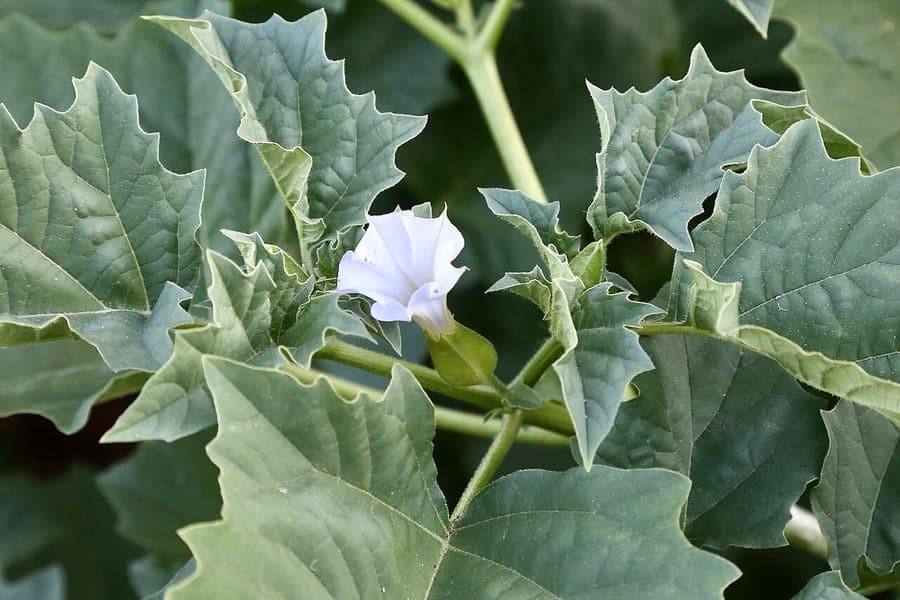
Fierce thorn-apple typically reaches 80 to 120 cm in height with a spread of up to 60 cm. The stems are hairy and branched, supporting large, deeply lobed leaves that can grow up to 20 cm long. The foliage has a rough texture and emits a strong, somewhat unpleasant scent when touched – a natural defense mechanism.
Flowering occurs from July through September. The blooms are pure white, trumpet-shaped, and can stretch up to 15 cm in length. They open in the evening and release a sweet, intoxicating fragrance to attract nocturnal pollinators like hawk moths. After flowering, the plant produces hard, spiky capsules – the infamous 'thorn apples' – up to 4 cm across. These dry and split open to release black seeds, which can remain viable for years.
Ideal location
This plant demands full sun. Aim for a spot rated 7 to 10 on the light scale, preferably with direct exposure from mid-morning to late afternoon. South or southwest-facing beds work best. In partial shade, Datura ferox becomes leggy, with sparse flowering and weaker stems.
Use gardenworld.app to assess sun patterns in your garden, especially if you're working with small urban plots or courtyards. Positioning is critical – keep this plant away from high-traffic areas due to its spines and toxicity, but in a spot where its dramatic form can shine.
Soil requirements
Datura ferox is adaptable but prefers well-draining soil with a slightly alkaline pH of 7.5 to 8.0. Sandy or loamy soils are ideal. Avoid heavy clay that retains water, as this can lead to root rot. If planting in containers, use a mix of two parts potting soil to one part coarse sand or perlite.
A light application of compost at planting time can help, but don't over-fertilize. Too much nitrogen encourages leafy growth at the expense of flowers. Ensure containers have drainage holes and a base layer of gravel to prevent waterlogging.
Free design
Want to see Fierce thorn-apple: complete guide in your garden? Make a free design now.
Watering
Once established, Datura ferox is drought tolerant. Water young plants regularly during the first few weeks to help roots establish. After that, water deeply once a week during dry spells, letting the top 2–3 cm of soil dry out between sessions.
Avoid overhead watering, especially in the evening, to reduce the risk of fungal diseases. Use a soaker hose or water at the base. During prolonged rain, monitor drainage – this plant won't tolerate soggy soil.
Pruning
Pruning isn't essential, but pinching back the tips in early summer (around July) can encourage bushier growth and prolong blooming. Cut back main stems by 10–15 cm using clean, sharp shears.
Wear gloves when handling the plant – all parts are poisonous and can cause skin irritation. Remove dead or damaged foliage as needed. Dispose of clippings in sealed bags, never on the compost pile, and keep away from pets and children.
Maintenance calendar
- March–April: Start seeds indoors at 20°C or buy young plants from garden centres.
- May: Transplant outdoors after all risk of frost has passed (late May in most of the UK and US zones 7–8).
- June: Apply half-strength liquid fertilizer every 3–4 weeks.
- July–August: Monitor for water, pinch back if needed, and enjoy peak bloom.
- September: Leave seed pods for ornamental effect or remove to prevent self-seeding.
- October: Pull up plants and dispose of properly. Do not compost.
Winter hardiness
Datura ferox is not frost tolerant. It dies back at temperatures below 5°C. It's best grown as an annual in USDA zones 7 and below. In zones 9–11, it may survive mild winters but is often treated as annual due to unpredictable cold snaps.
There's little point in trying to overwinter indoors – the plant becomes weak, spindly, and prone to pests like spider mites.
Companion plants
Pair Datura ferox with other heat- and drought-tolerant species. Good companions include lavender (Lavandula angustifolia), coneflower (Echinacea purpurea), and sage (Salvia officinalis). Their purple, pink, and blue hues contrast beautifully with the stark white blooms.
Avoid low-growing, soft plants like impatiens or begonias that could be damaged by the spiny stems. Use the thorn-apple as a focal point in mixed borders or near dry stone walls. Keep at least 30 cm clearance from footpaths to prevent accidental contact.
Closing
Datura ferox isn't for every garden, but for those who appreciate bold forms and aren't afraid of a challenge, it's a rewarding choice. It asks for little beyond sun and good drainage but gives back with striking presence and nighttime allure. Purchase responsibly from trusted garden centres, and always label it clearly in your planting plan.
For layout ideas and companion suggestions, visit gardenworld.app – where you can build a garden that balances drama with safety, and beauty with practicality.
Want to see Fierce thorn-apple: complete guide in your garden? Make a free design now.
Upload a photo, pick a style, and get a photorealistic design with plant list in under a minute.
No credit card required


Similar plants
Solanum dolichosepalum: complete guide
Solanum dolichosepalum
Discover Solanum dolichosepalum, an Andean nightshade with striking long sepals. Growing tips, hardiness, and companion planting for your patio.
Solanum ripense: complete guide
Solanum ripense
Discover Solanum ripense, a moisture-loving Andean nightshade for pond edges and conservatories. Growing tips, hardiness, and companions.
Solanum tomentosum: complete guide
Solanum tomentosum
Discover Solanum tomentosum, a thorny South African nightshade with felted leaves. Growing tips, hardiness, and companion planting ideas.