
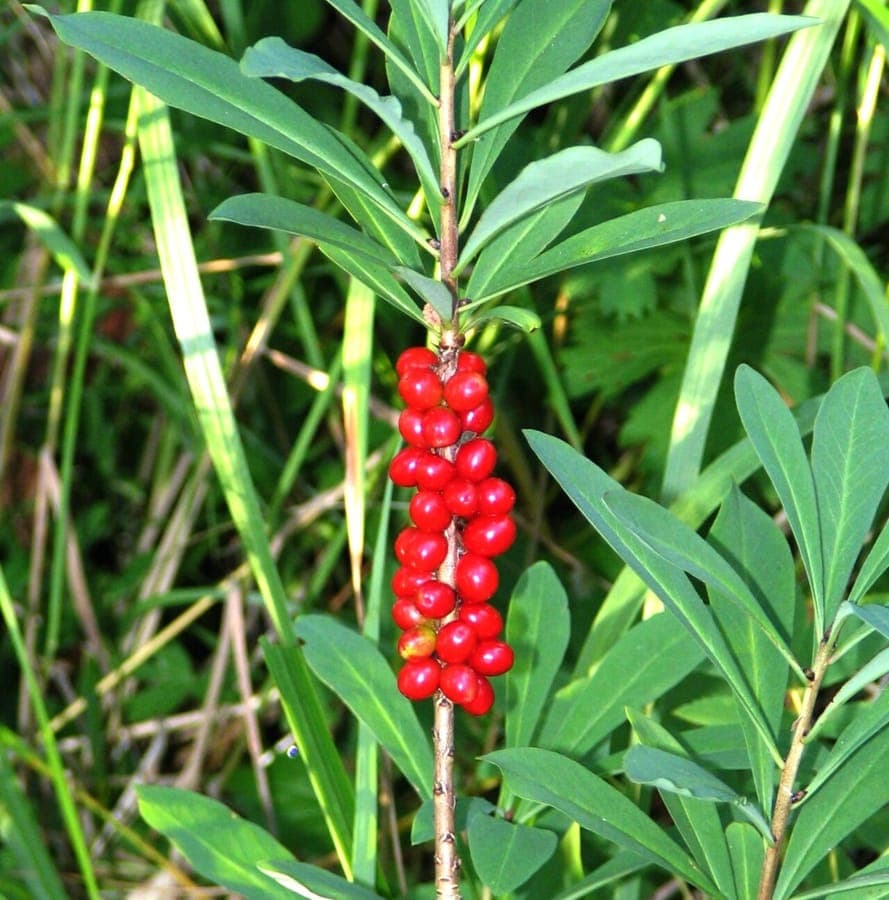
Wikimedia Commons / CC BY-SA 3.0, via Wikimedia Commons
Mezereon: complete guide
Daphne mezereum
Want to see Mezereon: complete guide in your garden?
1 minute, no credit card
Overview
Daphne mezereum, commonly known as mezereon, is a small, early-flowering deciduous shrub that brings bold colour and fragrance to the late winter garden. Native to woodlands across central and eastern Europe, it thrives in naturalistic plantings, woodland gardens, and shaded borders. While its beauty is undeniable, every part of the plant - bark, berries, leaves, and flowers - is highly toxic. This makes it unpalatable to deer and rabbits, but a serious hazard around children and pets.
If you're designing a shady corner with seasonal interest, mezereon is worth considering. On gardenworld.app, you can visualise how this shrub fits into your layout, especially when paired with other shade-loving perennials.
Appearance & bloom cycle
Mezereon grows 60–100 cm tall with a loose, upright habit. From February to April, before the leaves emerge, clusters of rich pink to deep purple flowers bloom directly on the bare stems. Each flower is tubular, about 1.5 cm long, and emits a sweet, honey-like fragrance that draws early pollinators like hoverflies and bumblebees.
After flowering, narrow, glossy green leaves appear - 3–7 cm long - giving the plant a fresh, delicate look. By midsummer, bright red berries form in clusters along the stems. These berries are extremely poisonous and must never be consumed. The plant loses its leaves in autumn and stands bare through winter, ready to bloom again the following spring.
Growth is slow - expect 5–8 cm per year under good conditions.
Ideal location
Mezereon prefers dappled shade to partial shade. A spot with morning sun and afternoon shade works best. Full sun can scorch roots and dry out soil too quickly, while deep shade delays or reduces flowering. Rate it a 5 on the light scale (1 = full sun, 10 = full shade).
Ideal placements include under open-canopy trees like birch, hazel, or alder, or along the north or east side of a building. Avoid south-facing, exposed spots. Use gardenworld.app to map light patterns in your garden and pinpoint the best microclimate for your mezereon.
Soil requirements
This shrub likes well-drained, calcareous soil with a pH of 7.0–7.5. Heavy clay soils should be amended with grit and sand to improve drainage. If your soil is acidic, add ground limestone or crushed oyster shell to raise the pH.
Avoid waterlogged or compacted soils - root rot is a real risk. When planting, dig a wide hole and mix native soil with some compost-free loam and grit. Don't enrich the soil too much; excessive fertility leads to lush foliage at the expense of flowers.
Free design
Want to see Mezereon: complete guide in your garden? Make a free design now.
Watering
Young plants need consistent moisture in their first two growing seasons. Water deeply once a week during dry spells, especially in spring. After establishment, mezereon is fairly drought-tolerant, though it performs best with even moisture.
Use rainwater when possible - it's less alkaline and better for the plant. Always check soil moisture to 5 cm depth before watering. Avoid wetting the crown, as this can encourage fungal issues.
Pruning
Pruning is rarely needed. Mezereon flowers on old wood, so cutting it back in spring or summer removes next year's blooms. Only remove dead, damaged, or crossing stems in late winter, before bud swell.
If the shrub becomes leggy, you can rejuvenate it by cutting a third of the oldest stems to the ground right after flowering. Wear gloves - the sap can irritate skin.
Maintenance calendar
- Jan: inspect for winter damage; avoid walking on frozen soil around plant
- Feb: flower buds swelling; protect from prolonged drought
- Mar: peak bloom; enjoy fragrance and pollinator visits
- Apr: leaves emerging; berries start forming
- May: light thinning if needed; no pruning beyond this point
- Jun–Aug: dormant phase; no feeding required
- Sep: check soil moisture under trees
- Oct: leaves drop; plant goes dormant
- Nov: leave fallen leaves as natural mulch
- Dec: fully dormant; no care needed
Winter hardiness
Mezereon is hardy to USDA zone 5 (-20°C to -29°C). In the UK and most of North America (zones 5–8), it survives winter without protection. New growth may suffer in early warm spells followed by frost, but the plant usually recovers from the base.
No winter mulch is required. Avoid using nitrogen-rich fertilisers, which can promote weak growth.
Companion plants
Pair mezereon with other early spring interest plants: hellebores, snowdrops, Eranthis hyemalis, or Anemone nemorosa. The pink flowers contrast beautifully with white or blue companions like Chionodoxa or Scilla.
Groundcovers like Pulmonaria or Lamium maculatum work well beneath it. Avoid competitive, spreading plants like ivy or mint that might overwhelm its slow growth.
Closing
Mezereon isn't flashy in the conventional sense, but it has a quiet drama that stands out in the bleak late winter garden. It asks for little, rewards with fragrance and colour, and supports early pollinators. Just remember: keep it away from kids and pets.
Buy from trusted garden centres in autumn - look for healthy, non-flowering plants for best establishment. Brands like OBI and Hornbach in Germany, Truffaut and Jardiland in France, and local garden centres in the UK and US often stock it. On gardenworld.app, explore woodland garden designs where Daphne mezereum plays a key role in seasonal succession.
Want to see Mezereon: complete guide in your garden? Make a free design now.
Upload a photo, pick a style, and get a photorealistic design with plant list in under a minute.
No credit card required


Similar plants
Thymelaea sanamunda: complete guide
Thymelaea sanamunda
Full guide to growing Thymelaea sanamunda, a rare Mediterranean subshrub from southern France and Spain. Care, soil and location tips.
Daphne pontica: complete guide to Pontic daphne
Daphne pontica
Pontic daphne from southeast Europe: compact evergreen shrub, intensely fragrant spring flowers, toxic. Prefers partial shade and well-drained soil.
Winter daphne (Daphne odora): complete guide
Daphne odora
Learn how to grow fragrant winter daphne for year-round garden interest. This cold-hardy shrub blooms in winter and fills gardens with intoxicating perfume.