
Ruppia2000 / CC BY-SA 3.0, via Wikimedia Commons
Starfruit: complete guide
Damasonium alisma
Want to see Starfruit: complete guide in your garden?
1 minute, no credit card
Overview
Starfruit, or Damasonium alisma, isn't your average garden centre find. It's a subtle aquatic gem native to shallow, acidic pools across parts of Europe and western Asia - from Portugal to Ukraine. In the wild, it thrives in low-nutrient, still waters where few other plants can compete. In the garden, it brings a quiet elegance to pond edges, especially in naturalistic or bog-style setups.
This member of the Alismataceae family behaves as an annual or short-lived perennial, depending on winter conditions. It's not flashy, but it's distinctive - especially when its star-shaped fruits appear in late summer. If you're tired of the same old marginals and want something with a wilder edge, this plant deserves a spot in your aquatic rotation.
Gardeners in the UK, northern France, and parts of central Europe will find it most adaptable. It's not commonly stocked, but when you do find it, plant it with intention. On gardenworld.app, you can map out a bog garden layout that highlights its modest height and blooming season.
Appearance & bloom cycle
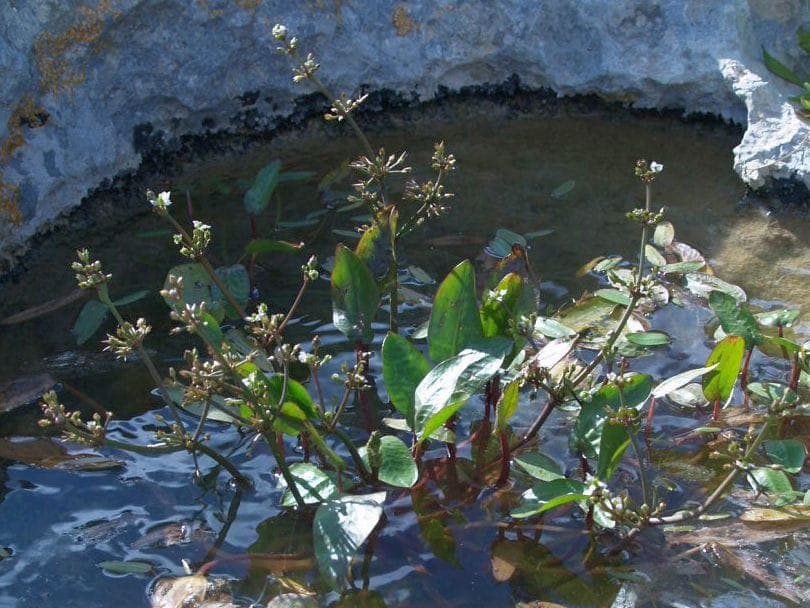
Starfruit grows to about 15–30 cm tall, with narrow, lance-shaped leaves emerging from a basal rosette. The foliage sits just above or slightly submerged in water. From June to August, delicate flowers rise above the leaves on slender stalks. Each bloom has five to seven petals, ranging from white to soft purple, forming a star-like pattern - hence the name.
The flowering period peaks in midsummer, especially when temperatures are warm and sunlight is abundant. After pollination, the flower transforms into a striking fruit: a radiating, star-shaped cluster of seed pods. These persist into autumn, adding visual interest long after the petals drop.
The plant spreads by seed, which drops into the water and settles in the mud. Germination happens in spring when water temperatures rise above 10°C. Because it's not a vigorous spreader, you'll need to encourage seed drop or manually collect and resow if you want it to establish permanently.
Ideal location
Full sun is non-negotiable. Give Damasonium alisma a spot with at least 8 hours of direct sunlight daily. It won't bloom well in shade, and the stems become weak and leggy. Plant it in shallow water, 5–15 cm deep, along the marginal zone of a pond or in a bog filter.
Avoid areas with strong currents or heavy fish activity - goldfish and koi love to nibble on tender shoots. A quiet corner of the pond, sheltered from wind and splashing, is ideal. If you're using containers, place them in the shallows where water movement is minimal.
Soil requirements
This plant thrives in acidic, low-fertility substrates. Aim for a pH between 5.0 and 5.5. Use a mix of peat and sand, or a commercial aquatic soil without added fertilisers. Avoid rich compost or manure-based blends - they'll trigger algal blooms and outcompete your starfruit.
Plant the rhizomes just beneath the surface, without compacting the soil. The root system is fine and sensitive; over-potting or burying too deep will hinder growth. In a container, ensure there are drainage holes to prevent stagnation, but line with hessian to keep soil from washing out.
Free design
Want to see Starfruit: complete guide in your garden? Make a free design now.
Watering
Keep the roots constantly submerged. Damasonium alisma is not a bog plant that tolerates drying - it needs permanent shallow inundation. Use rainwater if possible, as tap water can raise pH and introduce excess minerals. Change water periodically if it turns green or cloudy.
In summer, top up levels to compensate for evaporation. If your pond drops below 5 cm, the plant may go dormant or die back. In containers, place them in saucers of water to maintain consistent moisture.
Pruning
Pruning is minimal. Remove dead or damaged leaves in autumn, but leave the seed heads intact through winter. They add texture and provide food for aquatic insects. Don't cut back during flowering - you'll lose the next season's seed crop.
If you want to control spread, collect mature fruits in October before they disintegrate. Store seeds in moist peat in the fridge over winter, then sow in spring at 15°C.
Maintenance calendar
- Jan: Dormant; no action
- Feb: Check for overwintering seeds; no care needed
- Mar: Prepare soil; lightly disturb sediment to encourage germination
- Apr: Sow seeds in shallow water (10–15 cm deep)
- May: Monitor for seedlings; keep water clear
- Jun: Flowers appear; ensure full sun
- Jul: Peak bloom; watch for algae
- Aug: Fruits begin to form; maintain water depth
- Sep: Seed heads mature; avoid trimming
- Oct: Harvest seeds; remove decaying foliage
- Nov: Plant dies back; leave seeds in place
- Dec: Full dormancy
Winter hardiness
Damasonium alisma is hardy to USDA zone 7 (-15°C). In milder regions, it may overwinter as seed in the soil. The aerial parts die back in autumn, but the seed bank remains viable. In colder zones, treat it as an annual and resow each spring.
No frost protection is needed for in-ground plantings, but container-grown specimens should be moved to deeper water or stored in a frost-free area if freezing is prolonged.
Companion plants
Pair with other acid-loving marginal plants like Sagittaria sagittifolia, Eleocharis acicularis, or Mentha aquatica. Avoid aggressive spreaders like Elodea or invasive reeds. For contrast, plant alongside yellow-flowering Caltha palustris or purple loosestrife (Lythrum salicaria).
In a wildlife pond, it fits well with native sedges (Carex) and water forget-me-not (Myosotis scorpioides). The combination supports damselflies, beetles, and other small pond life.
Use gardenworld.app to preview how these combinations look in a real garden setting. You can layer textures and bloom times to create a balanced, low-effort pond edge.
Closing
Starfruit isn't going to dominate your pond, and that's the point. It's a plant for gardeners who appreciate understated beauty and ecological function. It won't fill space like a reed, but it will bring seasonal detail and support biodiversity.
You won't find it at every garden centre, but look for it at specialist aquatic nurseries or order online. In the UK, check seasonal stock at local garden centres; in Europe, Truffaut and Jardiland sometimes carry it. Always verify the botanical name - it's often mislabelled.
With the right conditions - sun, acidic soil, shallow water - Damasonium alisma becomes a quiet highlight. Not loud, not flashy, but deeply satisfying when it blooms just above the surface, like a secret only you know.
Want to see Starfruit: complete guide in your garden? Make a free design now.
Upload a photo, pick a style, and get a photorealistic design with plant list in under a minute.
No credit card required


Similar plants
California damsonium: complete guide
Damasonium californicum
Full guide to Damasonium californicum (California damsonium): shallow water, bog soil, care and companion plants for this rare western aquatic.
Yellow water lily: complete guide
Limnocharis flava
Discover the yellow water lily. Everything you need to know about cultivation, care and water placement.
Sagittaria subulata: complete guide
Sagittaria subulata
Discover narrow-leaf arrowhead (Sagittaria subulata), an aquatic plant for ponds and water gardens. Complete cultivation and care guide.