
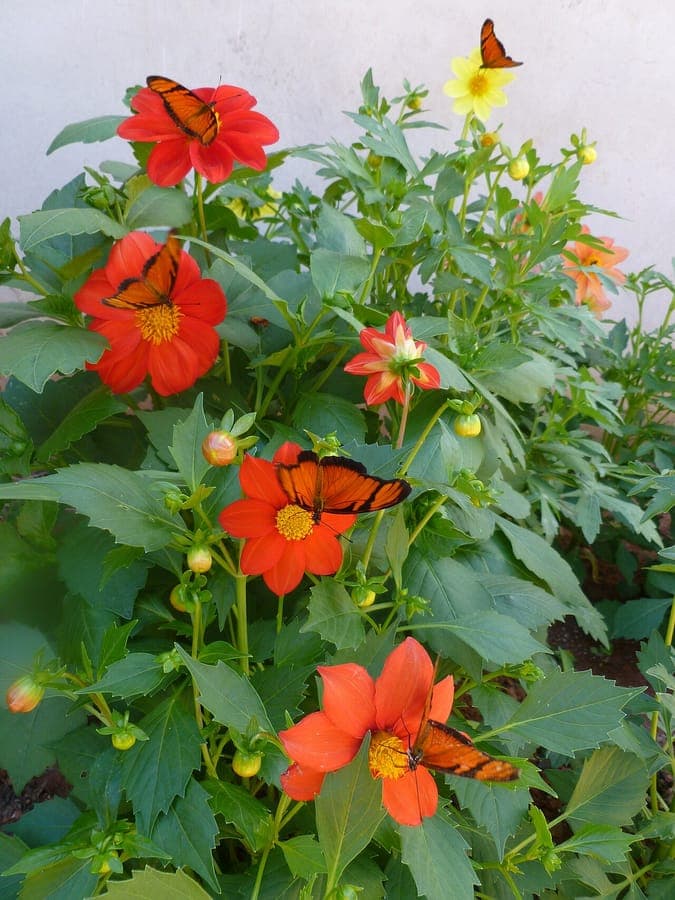
Denis Conrado / CC BY-SA 3.0, via Wikimedia Commons
Dahlia: complete guide
Dahlia pinnata
Want to see Dahlia: complete guide in your garden?
1 minute, no credit card
Overview
Dahlia pinnata is one of the most beloved tuberous perennials in temperate gardens. Native to the highlands of Mexico, this showstopper brings bold colour and structural interest from midsummer right through to the first frost. Easily found at garden centres across the UK and Europe, it's a staple for borders, containers, and cutting gardens. Growing between 60 and 120 cm tall, its upright habit and fern-like foliage make it a standout even before the blooms appear.
This herbaceous forb thrives in warm, sunny conditions and rewards attentive care with prolific flowering. Whether you're designing a cottage-style border or a modern patio display, Dahlia pinnata offers unmatched versatility. On gardenworld.app you can create a planting plan that aligns perfectly with its growth rhythm and visual impact.
Appearance & bloom cycle
Dahlia pinnata features dark green, finely divided, pinnate leaves that give the plant an airy, delicate texture. The flowers begin opening in July and continue blooming vigorously until late October or the first hard frost. Each bloom ranges from 10 to 15 cm in diameter, with a wide spectrum of colours: white, cream, pink, magenta, deep red, and bicolor combinations.
Flower forms vary from single (ideal for pollinators) to fully double (pompon or cactus types). In most UK garden centres, you'll find semi-double or anemone-flowered cultivars that balance ornamental appeal with ecological value. Deadheading regularly ensures non-stop blooms and prevents the plant from going to seed too early.
Ideal location
Plant in full sun-aim for at least 6 hours of direct sunlight daily. In shaded spots, stems become leggy and flowers are sparse. A bit of afternoon shade is acceptable during heatwaves, but overall, this plant thrives on warmth and light.
Space tubers 40–50 cm apart to allow airflow and prevent fungal issues like powdery mildew. For containers, choose compact cultivars (around 60 cm) and use pots at least 30 cm in diameter. Always use sturdy stakes from the start-tall varieties will flop without support by midsummer.
Soil requirements
Well-drained soil is essential. Heavy clay needs amending with horticultural grit and compost to prevent tuber rot. A light, loamy soil rich in organic matter with a pH between 6.0 and 7.0 is ideal. Avoid waterlogged conditions at all costs.
Before planting, mix in well-rotted manure or compost to boost fertility. Steer clear of high-nitrogen fertilisers-they promote leafy growth at the expense of flowers. If you're reworking a border, use gardenworld.app to assess your soil type and get custom planting recommendations.
Free design
Want to see Dahlia: complete guide in your garden? Make a free design now.
Watering
Water consistently, especially during dry spells. Focus on the base of the plant to keep foliage dry and reduce disease risk. Young plants need daily watering until established; mature plants are somewhat drought-tolerant but bloom better with steady moisture.
Mulch with 5 cm of compost or bark to retain moisture and suppress weeds. Potted dahlias dry out faster-check daily from July onward. Avoid overhead watering in the evening to prevent mildew.
Pruning
Pinch out the main stem when the plant reaches 30 cm to encourage bushier growth and more flowering stems. Deadhead spent blooms just above a leaf node using clean, sharp secateurs. This keeps the plant tidy and redirects energy into new flower production.
Stop feeding by mid-August to avoid tender new growth that won't survive winter. Never cut back foliage until after frost-it helps feed the tuber for next year.
Maintenance calendar
- March–April: Start tubers indoors or plant directly in April after frost risk passes, 10–15 cm deep.
- May: Harden off and transplant outdoors. Stake early.
- June–August: Water regularly, deadhead weekly, apply balanced feed every 3–4 weeks.
- September: Reduce watering, stop feeding.
- October–November: After first frost, cut back stems to 15 cm and lift tubers for storage.
Winter hardiness
Dahlia pinnata is not frost-hardy in USDA zones below 8. In the UK and most of Europe, lift tubers after the first frost. Let them dry in a shed or garage, then store in dry compost, sand, or peat-free mix at 5–10°C. Check monthly for rot or shrivelling.
In milder areas (e.g. coastal southwest UK), you can try overwintering in-ground with heavy mulch, but this is risky and not recommended for beginners.
Companion plants
Pair with late-summer stars like Echinacea, Rudbeckia, and tall Salvias. The fine foliage contrasts beautifully with bold-leaved plants like Hosta or ornamental grasses such as Pennisetum. For a cutting garden, interplant with Cosmos or Ammi majus for filler.
Avoid planting near greedy shrubs or trees with dense root systems. In containers, underplant with trailing lobelia or marigolds for continuous colour.
Closing
Dahlia pinnata isn't high-maintenance, but it does ask for consistency: full sun, good drainage, regular deadheading, and proper storage. When cared for, it delivers months of vibrant blooms. Available each spring at garden centres nationwide, it's a must for any summer-to-autumn display. Plan your layout and timing using gardenworld.app to maximise impact and bloom overlap.
Want to see Dahlia: complete guide in your garden? Make a free design now.
Upload a photo, pick a style, and get a photorealistic design with plant list in under a minute.
No credit card required


Similar plants
Calendula stellata: complete guide
Calendula stellata
Complete guide to Calendula stellata, the star-flowered marigold from Sicily: location, soil, watering and companion planting tips.
Korean chrysanthemum: complete guide
Chrysanthemum x rubellum
Chrysanthemum x rubellum is a hardy autumn perennial with single pink to copper flowers from August to November. Care and combinations.
Helianthus divaricatus: complete guide
Helianthus divaricatus
Helianthus divaricatus is a North American woodland sunflower with yellow summer blooms, ideal for naturalistic borders and shady edges.