
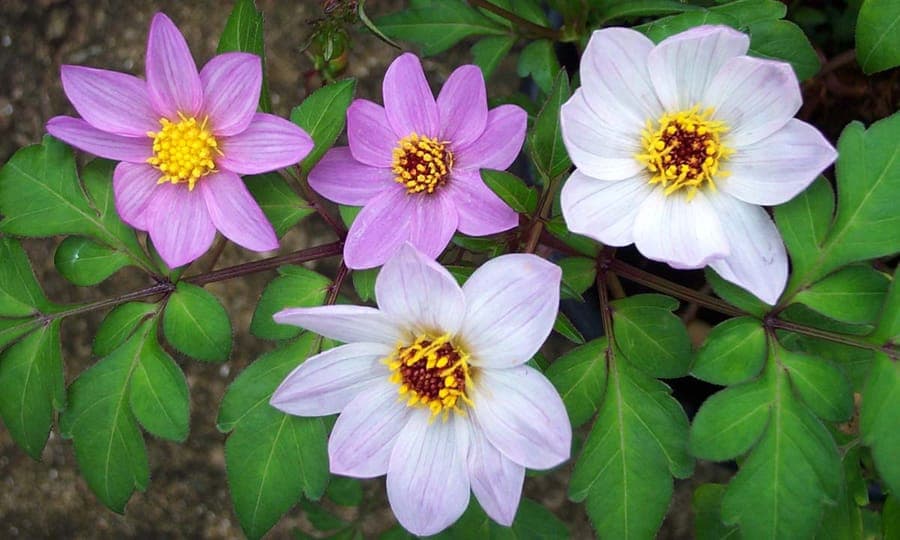
Mark Twyning / Marktee1 at en.wikipedia / CC BY-SA 3.0, via Wikimedia Commons
Merck's dahlia: complete guide
Dahlia merckii
Want to see Merck's dahlia: complete guide in your garden?
1 minute, no credit card
Merck's Dahlia (Dahlia merckii) is an elegant Mexican wild species belonging to the Asteraceae family (also known as Compositae). This graceful plant is known for its delicate, single to semi-double flowers in soft pink to white, its fine foliage, and growing habits that are less frost-sensitive than many domesticated dahlias.
Dahlia merckii grows as a slender, upright plant reaching 90-150 cm in height, depending on growing conditions. The flowers are single or semi-double, approximately 5-7 cm across, in soft pink to white with yellow stamens. The foliage is finely branched and green, providing nice contrast to light blooms. The plant flowers abundantly from August until the first frost, making it a valuable late-season bloomer.
This is a relatively compact dahlia and less aggressive grower than some larger cultivars, making it suitable for mixed borders, cutting gardens, and smaller spaces.
Ideal location and light
Merck's Dahlia thrives in full sun, requiring 6-8 hours of direct sunlight daily. More sun leads to richer flower production. Heavy shade significantly reduces flowering. The plant is sensitive to wind due to its slender growth; protect from strong winds or use staking.
The plant grows in zones 8 to 11, but can be grown in zone 7 with root care. In colder zones (7 and below), dig tubers in autumn and store them dry over winter.
Soil preparation
Merck's Dahlia requires well-draining, nutrient-rich soil. Heavy clay should be improved with compost and coarse sand. Ideal pH is neutral to slightly alkaline (pH 6.5-7.5).
At planting time, incorporate 5-7 cm of ripe compost or decomposed bark into the planting hole. This feeds young tubers without acidification. Ensure good drainage; dahlias hate permanently wet feet.
Planting and establishment
Plant Dahlia merckii tubers after all frost danger has passed (May in most temperate zones). The tuber should be planted approximately 7-10 cm deep with 'eyes' (small buds) pointing upward. Space at least 60 cm apart for air circulation.
Water immediately after planting, but avoid waterlogging. Install a stake or support nearby; slender dahlias can topple under bloom weight.
Watering and feeding
During growing period (May-October), water deeply 1-2 times weekly, depending on rain and temperature. Soil can be moister than some other plants. Mulch with 5-7 cm compost to retain moisture.
Feeding: After 4-6 weeks of growth, apply balanced fertilizer (e.g. 10-10-10) monthly until mid-August. Excess nitrogen leads to too much foliage and fewer flowers. Avoid feeding after August; this stimulates soft growth prone to frost damage.
Free design
Want to see Merck's dahlia: complete guide in your garden? Make a free design now.
Topping and shaping
For denser, more branched growth, pinch the top of young plants when approximately 30 cm tall. This stimulates lateral shoots. This can be done in May-June. For cut flowers, remove top blooms and stems; this stimulates more flowering.
Unlike some dahlias, over-pruning can eliminate single-flower production.
Maintenance calendar
April-May: Plant tubers after frost danger.
June: Growth starts; stake plants; top for branching.
July-September: Peak flowering; water regularly; apply monthly feeding.
October-November: Flowering diminishes; stop feeding; harvest blooms for cutting.
November-December: After first frost, dig tubers; let dry 1-2 days in warm, dry spot; store in cool, dry, dark place (5-10°C).
January-March: Check stored tubers monthly for rot or fungus.
Winter hardiness
Merck's Dahlia is hardy in zones 8-11. In zone 7b, it can survive with heavy mulch protection. In colder zones, dig tubers and store for winter.
Storage: Cool cellar, unheated (frost-free), dry. Tubers can be buried in peat, leaf compost, or sawdust and stacked on shelves. Check monthly for rot.
Companion plants
Merck's Dahlia combines beautifully with background shrubs, ornamental grasses, and late-season flowers. Planting alongside sunflowers, zinnias, monarda, echinacea, and coneflower creates natural border look. Pink-white blooms pair well with purple and blue tones.
Provide space around the plant for air circulation needs.
Propagation
Merck's Dahlia grows from tubers, not seed. Tubers can be divided in autumn, but requires care. Each tuber piece must have at least one 'eye' (small bud). Cut carefully with sharp knife; let cut surfaces dry 1-2 days before storage.
Seed: Dahlia merckii is sometimes grown from seed; seed germinates in 10-14 days at 20-25°C. Seedlings can be sown indoors in April and transplanted after frost danger.
Pests and diseases
Pests: Aphids can occur on young growth; treat with insecticidal soap. Whitefly can occur in warm conditions.
Diseases: Powdery mildew in humid, cool spring periods; improve air circulation. Leaf spot fungi can affect leaves; remove damaged foliage.
Verticillium wilt: in very wet soils; prevent with good drainage.
Recommendations for gardenworld.app
Merck's Dahlia is ideal for:
- Cut flower collections (long-lasting stems)
- Pollinator-friendly gardens
- Late-season borders (August-October flowering)
- Gardens larger than 100 square meters
Use as groups of 3-5 plants for dramatic effect. Also suited to containers (minimum 30L) in sheltered positions.
Availability: Tubers available from online seed houses and bulb dealers in NL/BE. Intratuin, Gamma sometimes carry dahlia tubers. German nurseries and Jardiland (FR) have seasonal stock.
Conclusion: Merck's Dahlia offers elegant, long flowering, easy cultivation, and real garden value. A bridge between wild and domesticated dahlias, reliable and generous.
Want to see Merck's dahlia: complete guide in your garden? Make a free design now.
Upload a photo, pick a style, and get a photorealistic design with plant list in under a minute.
No credit card required


Similar plants
Calendula stellata: complete guide
Calendula stellata
Complete guide to Calendula stellata, the star-flowered marigold from Sicily: location, soil, watering and companion planting tips.
Korean chrysanthemum: complete guide
Chrysanthemum x rubellum
Chrysanthemum x rubellum is a hardy autumn perennial with single pink to copper flowers from August to November. Care and combinations.
Helianthus divaricatus: complete guide
Helianthus divaricatus
Helianthus divaricatus is a North American woodland sunflower with yellow summer blooms, ideal for naturalistic borders and shady edges.