
Notafly2 / CC BY-SA 3.0, via Wikimedia Commons
Barnyard grass: complete guide
Dactylis glomerata
Want to see Barnyard grass: complete guide in your garden?
1 minute, no credit card
Overview
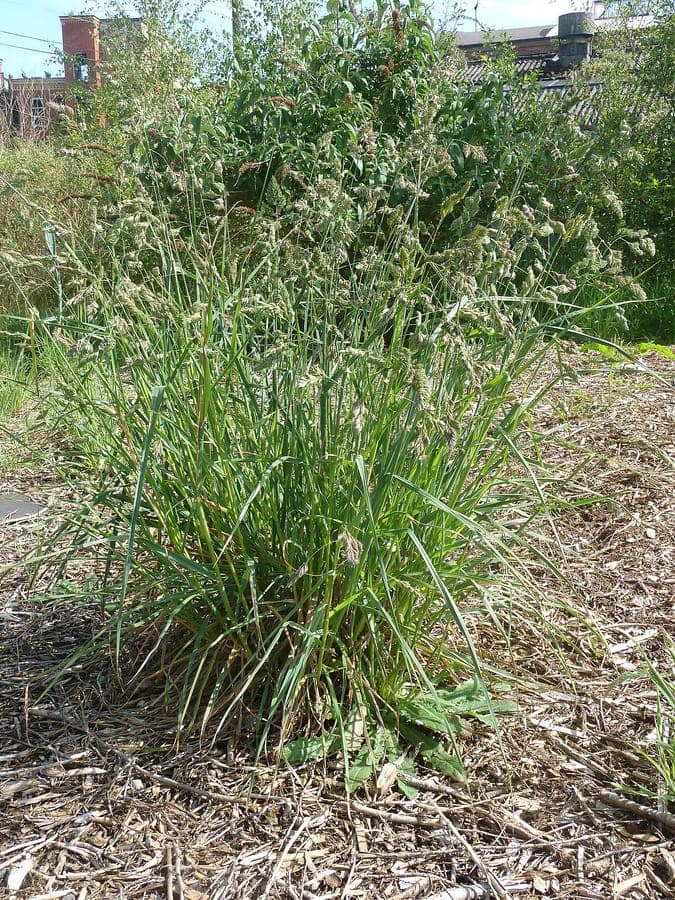
Dactylis glomerata, commonly known as Barnyard grass, is a resilient perennial grass native to much of Europe, including the UK and Ireland. Despite its misleading common name, it's not actually a true barnyard grass (that's Echinochloa crus-galli), but a highly ornamental and ecologically valuable species. Belonging to the Poaceae family, it grows in dense tufts and can reach up to 100 cm in height. Its clumping growth habit makes it ideal for naturalistic planting schemes, meadow gardens, or wildflower borders.
This grass is often found in damp meadows, roadside verges, and woodland edges. It's not fussy about soil and adapts well to various conditions, which makes it a solid choice for beginner gardeners. On gardenworld.app, you can generate a garden plan that integrates Dactylis glomerata into a low-maintenance, wildlife-supporting landscape design.
Appearance & bloom cycle
Barnyard grass gets its name from the dense, finger-like flower clusters that emerge from the top of the stems-'Dactylis' comes from the Greek word for 'finger'. These clusters start out greenish and mature into a silvery-green hue, blooming from April through September. The peak display is in June and July, when the airy panicles sway gently in the breeze, adding movement and texture to the garden.
The fine, flat leaves are bluish-green and slightly rough to the touch. As the season progresses, the foliage turns golden in late summer and autumn, providing visual interest even after flowering. The dried seed heads persist through winter, offering food and shelter for small birds and insects.
Ideal location
This grass thrives in full sun to light shade, scoring a 7 out of 10 for light requirements. Aim for at least 6 hours of direct sunlight daily. In deep shade, it becomes leggy and flops over. It performs best in open areas where air can circulate freely, reducing the risk of fungal issues.
Plant it at the back of a border, in a meadow setting, or along a streamside where moisture is naturally higher. It's a great fit for naturalistic gardens, especially those aiming to support native pollinators. When planning your layout, use gardenworld.app to simulate how Dactylis glomerata will look across seasons.
Soil requirements
Dactylis glomerata prefers loamy or clay soils with a pH between 5.2 and 7.5. It tolerates a wide range but struggles in very sandy or excessively dry soils unless irrigated. While it likes consistent moisture, it can handle short dry spells once established. Avoid highly fertile soils-too much nitrogen leads to floppy growth and fewer flowers.
No fertilizer is needed. In fact, this grass does better in modest, unfertilized conditions where competition from aggressive species is lower.
Free design
Want to see Barnyard grass: complete guide in your garden? Make a free design now.
Watering
Water regularly during the first growing season, especially in spring and early summer. Once established, it's moderately drought-tolerant but looks best with consistent moisture. During prolonged dry spells, give it a deep soak every 10–14 days. Avoid overhead watering if possible to prevent leaf diseases.
In winter, no additional watering is required. The plant goes dormant, and natural rainfall is sufficient.
Pruning
Pruning isn't mandatory, but cutting back in late winter or early spring (February to March) encourages fresh growth and keeps the plant looking tidy. Use shears to remove old foliage down to about 15 cm above ground level. If you want to limit self-seeding, cut off the flower heads before seeds mature-usually by late July.
Leaving some seed heads over winter adds visual structure and supports overwintering insects.
Maintenance calendar
- Jan: Dormant; clean up if needed
- Feb: Cut back old growth
- Mar: Final pruning, check soil moisture
- Apr: New growth begins; monitor for pests
- May: Blooming starts; ensure even watering
- Jun: Peak bloom; avoid high-nutrient mulch
- Jul: Seed development; deadhead if desired
- Aug: Watch for drought stress
- Sep: Flowers fade; reduce watering
- Oct: Leave stems for wildlife
- Nov: No action required
- Dec: Full dormancy
Winter hardiness
Dactylis glomerata is hardy in USDA zones 4–9. It reliably survives temperatures down to -20°C. The plant dies back in winter but returns from the roots each spring. In colder zones, a light mulch can help protect the crown, though it's generally not needed in most UK and European gardens.
Companion plants
Pair it with moisture-loving perennials like Carex, Eutrochium, or Molinia. For contrast, plant alongside purple salvias, yellow Rudbeckia, or white ox-eye daisies. It also works well in native grassland mixes with other grasses such as Festuca or Anthoxanthum.
Avoid pairing with alpine or Mediterranean plants that require sharp drainage and low humidity.
Closing
Barnyard grass is a tough, attractive grass that brings year-round interest to the garden. It's low maintenance, supports wildlife, and adds graceful texture to any planting scheme. Whether you're designing a wild meadow or filling a damp corner, Dactylis glomerata is a reliable performer. Find seeds or plugs at local garden centres, and use gardenworld.app to visualize how it fits into your long-term garden design.
Want to see Barnyard grass: complete guide in your garden? Make a free design now.
Upload a photo, pick a style, and get a photorealistic design with plant list in under a minute.
No credit card required


Similar plants
Sporobolus pungens: complete guide
Sporobolus pungens
Sporobolus pungens is a stoloniferous Mediterranean coastal grass with outstanding salt and drought tolerance, perfect for seaside and dry gardens.
Mediterranean aegilops: complete guide
Aegilops biuncialis
Everything about Aegilops biuncialis, a Mediterranean annual grass with ornamental spikes and outstanding drought tolerance for dry gardens.
Silver bluestem: complete guide
Bothriochloa saccharoides
Full guide to Bothriochloa saccharoides (silver bluestem): site, soil, watering, winter hardiness, pruning, and garden companions.