
Bouba at French Wikipedia / CC BY-SA 3.0, via Wikimedia Commons
Rockrose parasite: complete guide
Cytinus hypocistis
Want to see Rockrose parasite: complete guide in your garden?
1 minute, no credit card
Overview
Cytinus hypocistis, commonly known as Rockrose parasite, is a fascinating oddity in the plant world. It doesn't grow like your typical garden resident - it's a holoparasite, meaning it survives entirely by latching onto the roots of Cistus species, commonly called rockroses. Native to southern Europe - from southern France to Greece and the Mediterranean islands - it thrives in dry, sunbaked hillsides. You won't find it in standard garden centres, but if you're cultivating a Mediterranean-style garden with established Cistus, this plant could become a surprising guest. It's not about showy foliage or fast growth; it's about a quiet, intricate relationship between two plants.
Appearance & bloom cycle
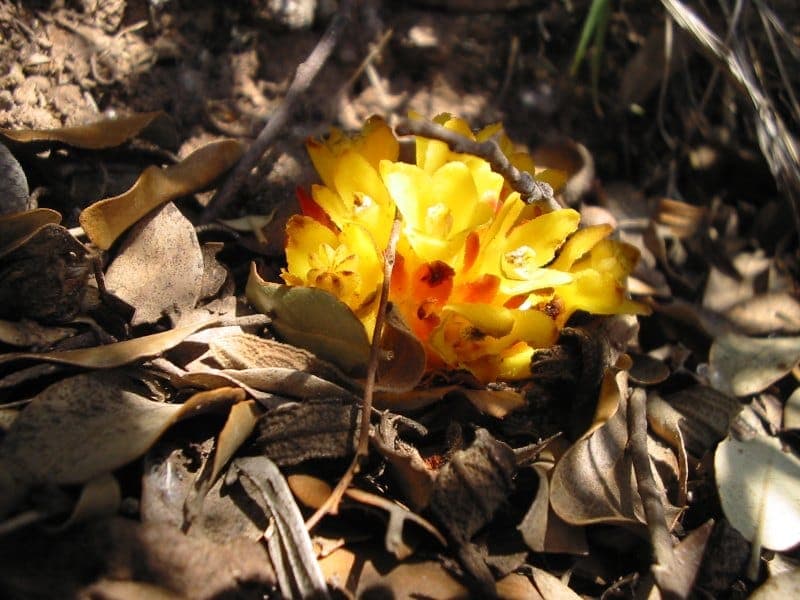
From April to June, expect sudden, almost alien-looking blooms rising directly from the soil near the base of a Cistus shrub. These fleshy, tubular flowers are 3–4 cm long, colored bright yellow to deep purple, and appear in clusters of 3–5. There are no leaves - just the flower stalks emerging like little torches from the ground. The bloom period lasts four to six weeks, depending on local conditions. Pollinators like bees and hoverflies are drawn to the nectar, and once fertilized, the plant produces tiny seeds that lie dormant until the right host is nearby.
Ideal location
Aim for full sun - a 7 out of 10 on the light scale or higher. In practical terms, this means a south- or southwest-facing rock garden, wall crevice, or slope where Cistus is already growing. The parasite won't survive without its host, so the key is to have healthy, mature Cistus plants (at least 2–3 years old) in place. Avoid shaded or damp corners. This plant belongs in a hot, dry, open environment, mimicking its natural Mediterranean habitat. If your garden leans toward gravel beds or xeriscaping, you're on the right track.
Soil requirements
The soil must be free-draining and low in nutrients. Aim for a pH between 4.5 and 5 - quite acidic. Mix in heath soil, coarse sand, and small gravel to mimic natural conditions. Avoid compost-rich or clay-heavy soils; they retain too much moisture and can weaken the Cistus host. In containers, use two parts ericaceous compost and one part horticultural grit. When planting seedlings, place them close to the Cistus roots so they can form a connection. Without contact, the parasite won't take hold.
Watering
Once established, Rockrose parasite needs no supplemental watering. It draws all moisture and nutrients from the host plant. Only water young seedlings lightly during prolonged dry spells in spring. Overwatering is the fastest way to kill both the parasite and the Cistus. In wetter climates like the UK, ensure excellent drainage - raised beds or rockeries with gravel bases work best. Let nature handle hydration.
Free design
Want to see Rockrose parasite: complete guide in your garden? Make a free design now.
Pruning
There's nothing to prune on Cytinus hypocistis. After blooming, the flower stalks dry up and fade naturally. Leave them in place to allow seed dispersal. The Cistus host can be lightly trimmed after flowering in June to maintain shape, but avoid heavy pruning - it stresses the shrub and indirectly affects the parasite.
Maintenance calendar
- Jan: Check Cistus for winter damage. No action for parasite.
- Feb: Prepare potting mix if starting seedlings indoors.
- Mar: Sow seeds near young Cistus plants; keep soil dry.
- Apr: Blooms emerge. Monitor for early insect activity.
- May: Peak bloom. Observe pollinators and take photos.
- Jun: Flowers fade. Let stalks dry completely.
- Jul: No maintenance. Watch for fungal issues if rainy.
- Aug: Keep area weed-free; avoid moisture buildup.
- Sep: Collect seeds if desired for next season.
- Oct: Scatter seeds around host plants.
- Nov: Dormancy begins. No action needed.
- Dec: Wait for spring.
Winter hardiness
Rockrose parasite is hardy in USDA zones 8–10. In zone 8b (like parts of southern UK), it typically survives mild winters if the Cistus host does. Avoid mulching heavily - it traps moisture and risks rot. The parasite lives underground as a root connection during winter, reactivating in spring when the host resumes growth.
Companion plants
Cistus is the essential companion - particularly Cistus ladanifer or Cistus salvifolius. Pair them with drought-tolerant, low-growing plants like Lavandula angustifolia, Thymus vulgaris, or Erigeron karvinskianus. Avoid moisture-loving or aggressive spreaders. On gardenworld.app, you can design a layout that maximizes sun exposure and drainage for this unique pairing. The platform's plant compatibility tool helps avoid clashes with unsuitable neighbours. Plus, gardenworld.app offers seasonal reminders tailored to parasitic and host plants alike, keeping your rock garden in sync.
Closing
Rockrose parasite isn't for everyone. It's not sold in every garden centre, and it won't bloom without the right host. But for gardeners who appreciate ecological quirks, it's a rewarding find. It teaches patience and observation. Look for seeds or seedlings at specialist nurseries or try OBI, Hornbach, Truffaut, Jardiland, or UK garden centres in spring. With the right conditions - sun, drainage, and a strong Cistus - you might witness this rare bloom in your own garden. It's not about control, but coexistence.
Want to see Rockrose parasite: complete guide in your garden? Make a free design now.
Upload a photo, pick a style, and get a photorealistic design with plant list in under a minute.
No credit card required


Similar plants
Acer pycnanthum: complete guide
Acer pycnanthum
Acer pycnanthum, the Japanese swamp maple, is a fast-growing tree with early red flowers and brilliant autumn color, ideal for damp garden settings.
Freeman maple: complete guide
Acer × freemanii
Everything about the Freeman maple (Acer x freemanii): a fast-growing shade tree with spectacular autumn colour for large gardens.
Silver vine: complete guide
Actinidia polygama
Discover silver vine (Actinidia polygama): a hardy climbing plant with silvery foliage, loved by gardeners and cats alike.