
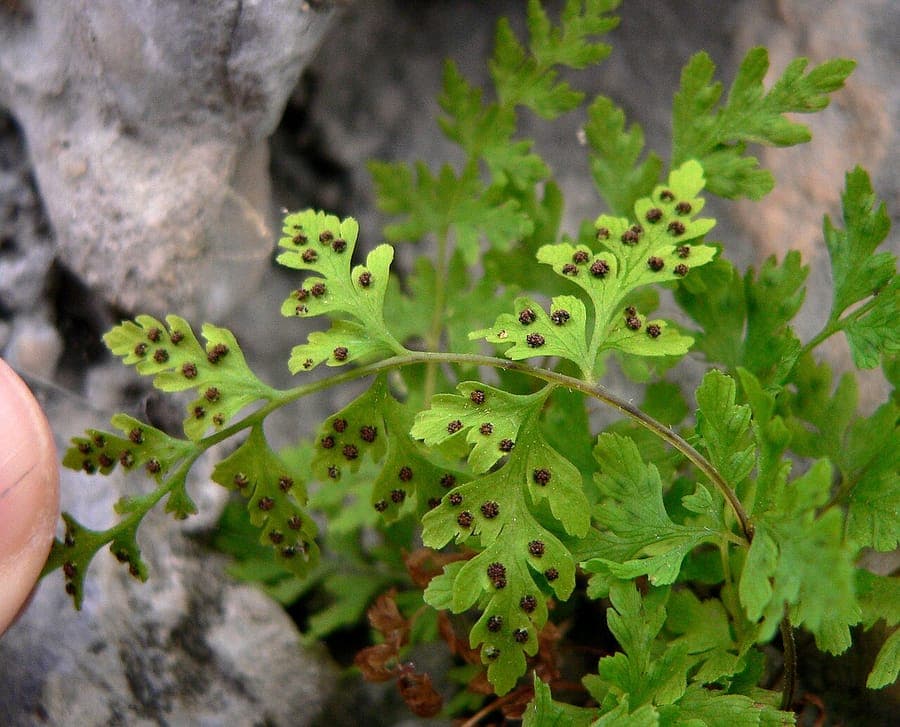
Stan Shebs / CC BY-SA 3.0, via Wikimedia Commons
Brittle bladder fern: complete guide
Cystopteris fragilis
Want to see Brittle bladder fern: complete guide in your garden?
1 minute, no credit card
Overview
Cystopteris fragilis, commonly known as the brittle bladder fern, is a modest yet resilient fern that thrives in cool, shaded environments. If you're after a plant that brings quiet elegance to overlooked corners, this is it. It's not flashy, but it's dependable-growing where few other plants dare. Native across much of the Northern Hemisphere, including parts of Alaska and northern Europe, it's perfectly adapted to temperate climates. You won't often find it in mainstream garden centres, but specialty nurseries and online growers sometimes carry it. Keep an eye out in spring at local garden centres or check trusted online suppliers.
Appearance & bloom cycle
The brittle bladder fern forms small, triangular fronds ranging from 10 to 25 cm in height. The fronds are doubly pinnate-finely divided and incredibly delicate, living up to its name 'fragilis'. They're so fragile that even a light brush can snap a leaflet. Despite this, the plant holds its own with a soft, airy texture that softens rocky or shaded areas. Varens don't flower, but from May to July, fertile fronds develop tiny, kidney-shaped sori (spore cases) along the undersides of the leaf edges. These appear as small brown dots and give the fern its common name-'bladder' refers to the sac-like covering over the spores.
Ideal location
This fern loves cool, damp shade. Think north-facing rock crevices, woodland slopes, or beneath dense tree canopies. In the garden, it performs best in a sheltered spot with dappled light-under a deciduous shrub like hazel or in a shaded rock garden. Avoid full sun, especially in the afternoon, as it scorches the fronds. It also works well in containers as long as they're placed in shade and kept moist. On gardenworld.app, you can generate a custom garden design that highlights ideal microclimates for ferns like Cystopteris fragilis, helping you place them where they'll thrive.
Soil requirements
The brittle bladder fern prefers humus-rich, well-draining soil. A mix of garden soil, leaf mould, and a bit of grit or sand works best. It tolerates a wide pH range (5.5–7.5) but dislikes heavy clay or waterlogged conditions. If your soil is dense, plant on a slope or raised bed to improve drainage. Avoid synthetic fertilisers-this fern gets all it needs from organic matter. A light mulch of leaf litter in autumn mimics its natural habitat and boosts long-term soil health.
Free design
Want to see Brittle bladder fern: complete guide in your garden? Make a free design now.
Watering
Consistent moisture is key, especially during the growing season (April to September). Water once a week during dry spells-about 1–2 gallons per square foot. Water at the base to prevent fungal issues. If planted in a rock crevice, natural rainfall and dew are often sufficient. Potted specimens dry out faster and may need checking every few days. Use rainwater when possible, as tap water with high lime content can stress the plant over time.
Pruning
No pruning required. Let dead fronds decompose naturally-they provide insulation and return nutrients to the soil. In late winter (February or March), you can gently remove any tattered or completely brown fronds, but it's not necessary. New growth emerges in spring from the rhizome. Never cut back in autumn; the old fronds protect the crown during winter.
Maintenance calendar
- Jan: monitor for damage, no action needed
- Feb: remove dead fronds if desired
- Mar: check soil moisture, clear debris
- Apr: begin regular watering if dry
- May: spore development begins, maintain moisture
- Jun: continue watering during dry periods
- Jul: protect from intense sun if exposed
- Aug: watch for drought stress
- Sep: reduce watering gradually
- Oct: leave fronds as winter mulch
- Nov: plant enters dormancy
- Dec: check for frost heave in containers
Winter hardiness
Cystopteris fragilis is hardy to USDA zone 5 (-20°C). In milder zones (6–8), fronds may stay semi-evergreen. In colder areas, the plant dies back but regrows from the rhizome in spring. No winter protection is needed in the ground. For container-grown plants, move pots to a sheltered spot or wrap with burlap to prevent root freeze. It's a reliable perennial for temperate gardens, especially in woodland or shade settings.
Companion plants
Pair the brittle bladder fern with other shade-loving, moisture-tolerant plants. Good companions include maidenhair fern (Adiantum pedatum), wild ginger (Asarum canadense), foamflower (Tiarella cordifolia), and squirrel corn (Dicentra canadensis). Avoid aggressive spreaders like mint or goutweed. It also blends beautifully with mosses and liverworts in a naturalistic planting scheme. Use gardenworld.app to explore companion plant combinations that match moisture needs, height, and seasonal interest.
Closing
The brittle bladder fern isn't for those seeking bold colour or rapid growth. But if you appreciate subtle beauty and low-maintenance greenery, it's a gem. It fits perfectly in rock gardens, shaded walls, or woodland edges. Never collect it from the wild-ethical sourcing is key. Look for nursery-propagated plants at garden centres in spring. With the right conditions-shade, moisture, and humus-rich soil-it will quietly enrich your garden for years.
Want to see Brittle bladder fern: complete guide in your garden? Make a free design now.
Upload a photo, pick a style, and get a photorealistic design with plant list in under a minute.
No credit card required


Similar plants
Mountain spleenwort: complete guide
Asplenium montanum
Everything about mountain spleenwort fern: cultivation, care, growing conditions and proper maintenance for your garden
Western spleenwort: complete guide
Asplenium vespertinum
The Western spleenwort (Asplenium vespertinum) is a delicate fern from California with fine, feathery fronds. Learn about care, location, and overwintering in this comprehensive guide.
Asplenium cirrhatum: complete guide
Asplenium cirrhatum
Discover the chestnut scale spleenwort, a tropical fern full of elegance. Learn how to care for this exotic plant at home.