
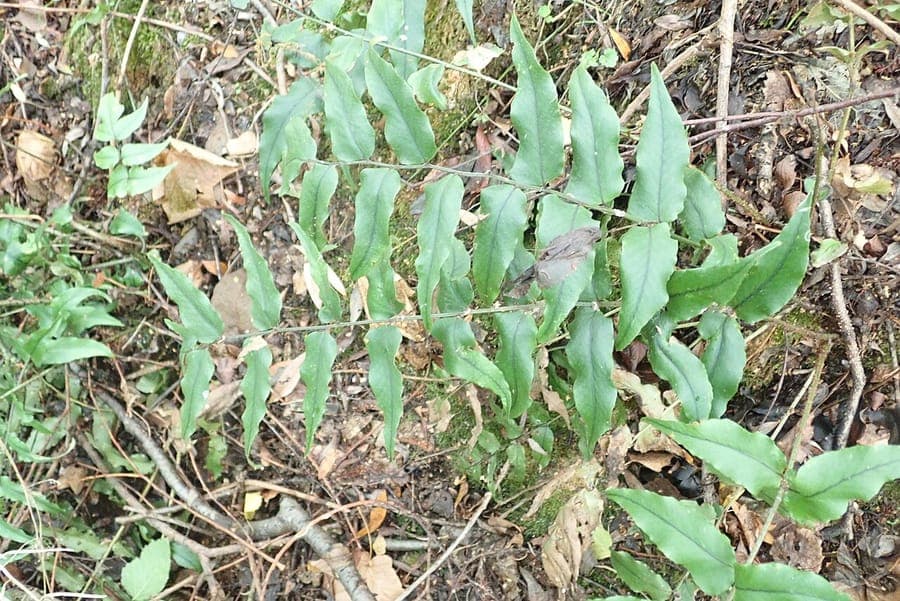
Andra Waagmeester / CC0, via Wikimedia Commons
Asian netvein hollyfern: complete guide
Cyrtomium fortunei
Want to see Asian netvein hollyfern: complete guide in your garden?
1 minute, no credit card
Overview
Cyrtomium fortunei, commonly known as the Asian netvein hollyfern, is a resilient, evergreen fern that thrives in challenging garden spots where other plants often fail. Native to a broad region stretching from Assam and the Himalayas through China, Korea, Japan, and into Vietnam, this fern has adapted well to temperate climates, including those found across much of Europe and North America. It's a herbaceous perennial in the Polypodiaceae family, forming upright clumps of arching fronds that bring year-round structure to shaded areas.
In the UK and northern US, this fern is increasingly popular for its ability to maintain fresh green foliage even through winter months. It's especially useful in urban gardens, under trees, or in narrow border strips where light is limited. Using gardenworld.app, you can design a garden layout that integrates Cyrtomium fortunei seamlessly with other shade-tolerant perennials.
Appearance & bloom cycle
The fronds of Cyrtomium fortunei grow up to 60 cm tall and are pinnately compound, with individual pinnae measuring 8–15 cm long. The foliage is leathery, glossy, and dark green, with prominent venation that gives the plant its 'netvein' name. Unlike flowering plants, ferns reproduce via spores, not blooms. The spore cases (sori) appear on the undersides of the pinnae from late summer through winter, arranged in neat rows that resemble tiny beads.
These sori are not showy but offer subtle visual interest for keen gardeners. The fern doesn't go dormant - old fronds may yellow slightly in harsh winters, but new growth typically emerges in early spring, pushing through from the rhizome base.
Ideal location
This fern thrives in partial to full shade. It performs best under deciduous trees, along north-facing walls, or in woodland-style gardens where direct sun is filtered or absent. Avoid hot, south-facing exposures, especially in regions with dry summers - intense sunlight can scorch the fronds.
A sheltered spot with consistent moisture and good air circulation is ideal. It adapts well to crevices in stone walls or between paving stones, provided some organic matter is present. On gardenworld.app, you can explore microclimate designs that enhance fern performance in shaded urban courtyards.
Soil requirements
Cyrtomium fortunei prefers humus-rich, well-draining soil with a slightly acidic to neutral pH (5.5–7.0). It tolerates a range of soil types - sandy loam, clay-loam, or rocky substrates - as long as water doesn't pool. Amending the planting hole with compost or leaf mold improves moisture retention and nutrient content.
In containers, use a mix of peat-free potting soil, perlite, and composted bark. Ensure pots have drainage holes to prevent root rot. This fern can even naturalize in thin soils over time, making it suitable for green walls or rock gardens.
Free design
Want to see Asian netvein hollyfern: complete guide in your garden? Make a free design now.
Watering
Keep the soil consistently moist but not waterlogged. During the growing season (March to October), water weekly if rainfall is below 2.5 cm. In dry spells, increase to twice weekly, especially for young plants or container-grown specimens.
Reduce watering in winter, but don't let the soil dry out completely. Overhead watering should be avoided to prevent fungal issues - aim at the base. Morning watering is best, allowing foliage to dry before nightfall.
Pruning
Pruning is minimal. Remove damaged, old, or frost-burned fronds in early spring using clean, sharp shears. Cut at the base to encourage neat new growth. Avoid cutting healthy fronds, as this can weaken the plant.
If the clump becomes too dense, thin out a few fronds to improve airflow. This helps prevent pests like scale insects or slugs from taking hold.
Maintenance calendar
- January: Check for frost damage; remove badly affected fronds
- February: Keep soil lightly moist; protect young plants if hard frost is forecast
- March: Cut back old growth; new fiddleheads emerge
- April: Apply a thin layer of compost as mulch
- May: Monitor for slugs; maintain soil moisture
- June: Water regularly during dry periods
- July: Ensure shade protection; mist foliage in heatwaves
- August: Spore cases mature; inspect for pests
- September: Reduce watering frequency
- October: Leave fallen leaves as natural mulch
- November: Shield container plants from freezing
- December: Avoid waterlogging; check drainage
Winter hardiness
Hardy to USDA zones 7–10 (-15°C to -12°C). In zone 7, mature plants usually survive without protection, but young or container-grown ferns benefit from a mulch of leaves or straw. In colder zones, growth may die back but often returns from the rhizome in spring.
In milder climates, the fronds remain fully evergreen, providing valuable winter texture.
Companion plants
Pair with Hellebores, Heuchera, Hosta, and Epimedium for layered shade planting. It also complements bulbs like Scilla siberica or Anemone nemorosa. For contrast, plant alongside fine-textured ferns like Athyrium filix-femina.
Avoid invasive spreaders like Lysimachia or aggressive groundcovers. Stick to slow-growing, well-behaved perennials that won't overcrowd the fern.
Closing
The Asian netvein hollyfern is a quiet achiever - not flashy, but reliable, elegant, and tough. It brings structure and depth to shady corners and requires little once established. Whether you're revamping a city courtyard or designing a woodland edge, this fern earns its place.
You can find Cyrtomium fortunei at most garden centres, including local independents and larger chains. Look for healthy, upright fronds and firm crowns. With proper care, it will thrive for years, adding quiet green presence to your garden.
Want to see Asian netvein hollyfern: complete guide in your garden? Make a free design now.
Upload a photo, pick a style, and get a photorealistic design with plant list in under a minute.
No credit card required


Similar plants
Dryopteris sieboldii: complete guide
Dryopteris sieboldii
Discover Dryopteris sieboldii (Siebold's Buckler Fern), an elegant evergreen fern from Asia. Growing tips, care, and uses in shade gardens.
Dryopteris tyrrhena: complete guide
Dryopteris tyrrhena
Discover Dryopteris tyrrhena (Mediterranean Buckler-fern), a rare and exquisite fern species. Growing tips, care, and shade garden design.
Dryopteris villarii: complete guide
Dryopteris villarii
Dryopteris villarii, known as rigid buckler fern, is a shade-loving fern form from the Alps. Discover how to grow and maintain this elegant alpine fern in your garden.