
Stan Shebs / CC BY-SA 3.0, via Wikimedia Commons
Japanese holly fern: complete guide
Cyrtomium falcatum
Want to see Japanese holly fern: complete guide in your garden?
1 minute, no credit card
Overview
The Japanese holly fern (Cyrtomium falcatum) is a resilient evergreen fern that thrives in tough garden spots where other plants struggle. Native to regions across East Asia including Japan, Korea, and parts of China, it's a standout performer in shaded areas with limited sunlight. Gardeners in temperate climates value it for its glossy foliage, minimal care needs, and year-round presence. If you're dealing with dry shade under trees or a north-facing wall, this fern could be your best ally.
On gardenworld.app, you can design a custom planting scheme that integrates Japanese holly ferns seamlessly into your garden layout. Whether you're working with a narrow urban courtyard or a sprawling woodland edge, this platform helps you visualise spacing, companion planting, and seasonal changes without guesswork.
Appearance & bloom cycle
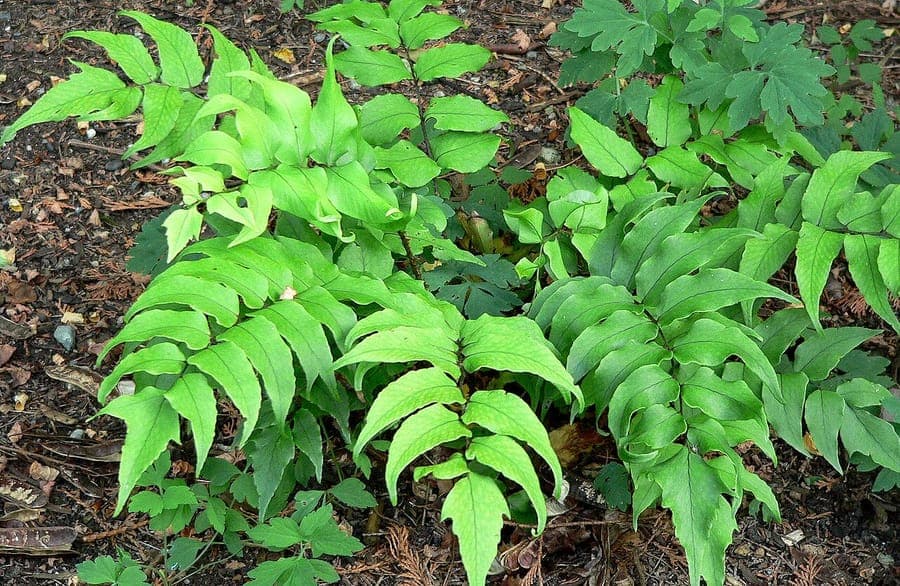
This fern earns its name from its holly-like appearance - dark green, leathery fronds with 10 to 20 lance-shaped leaflets arranged in a graceful arch. Mature plants reach 30–60 cm in height and spread to 40–50 cm wide, forming dense, upright clumps. The texture is coarse compared to delicate ferns, giving it architectural strength in borders.
Like all ferns, it doesn't bloom or produce flowers. Instead, it reproduces via spores found in sori - small, round clusters on the underside of fertile fronds. These appear in late autumn and persist through winter, releasing spores in spring. However, natural reseeding in gardens is rare. Spread occurs slowly through creeping rhizomes, making it non-invasive and well-behaved.
Ideal location
Plant Japanese holly fern in partial to full shade. It excels under deciduous trees, along shaded pathways, or tucked beside north-facing walls. Avoid hot, direct afternoon sun, which scorches the fronds and causes browning. That said, it tolerates morning sun in cooler climates if soil moisture is consistent.
Dry shade - such as under dense tree canopies - is its biggest challenge. While it survives there, growth will be slower. To compensate, apply mulch and water deeply during dry spells. Use gardenworld.app to generate a sun exposure map of your yard and pinpoint the ideal microclimates for this fern.
Soil requirements
It prefers rich, humusy, well-draining soil with a slightly acidic to neutral pH (5.5–7.0). Heavy clay soils should be amended with compost or leaf mould to improve drainage. Sandy soils benefit from added organic matter to retain moisture.
Avoid highly alkaline soils or compacted urban ground. If planting under beech or maple trees, where root competition is intense, consider raising the bed with imported topsoil and compost. The fern adapts well to rocky crevices or between pavers, as long as minimal moisture is available.
Free design
Want to see Japanese holly fern: complete guide in your garden? Make a free design now.
Watering
Keep soil consistently moist, especially during the first growing season (March–June). Water 2–3 cm per week during dry periods. Established plants are moderately drought-tolerant but perform best with regular hydration. Signs of stress include drooping fronds or crispy leaf edges.
Reduce watering in autumn and winter but never let the soil dry out completely - even in freezing conditions, roots need minimal moisture. Use rainwater when possible, especially in areas with hard tap water.
Pruning
Minimal pruning is needed. In early spring (March), cut back old, damaged, or discoloured fronds at the base with sharp shears. This clears space for fresh growth and reduces disease risk. Avoid winter pruning, as exposed rhizomes are vulnerable to frost.
If clumps become too large, divide them in early spring before new fronds emerge. Lift the plant, split the rhizome mass with a clean spade, and replant divisions 40 cm apart. Divisions establish quickly and flower (spore) within one season.
Maintenance calendar
- January: Check for frost damage; keep soil slightly damp
- February: Remove snow buildup from fronds; no feeding
- March: Cut old fronds; divide if needed; apply thin compost layer
- April: Begin regular watering; watch for new fiddleheads
- May: Peak growth phase; maintain moisture
- June: Water deeply during dry spells
- July: Refresh mulch to retain moisture
- August: Watch for slugs on young fronds
- September: Reduce watering frequency
- October: Stop fertilising; leave fallen leaves as natural mulch
- November: Protect young plants with leaf litter or horticultural fleece
- December: Minimal care; prevent complete drying
Winter hardiness
Hardy in USDA zones 7b–10 (−12 °C to −1 °C). In most of the UK, Pacific Northwest, and northern Europe, it remains evergreen through winter. In colder zones (6 or below), foliage may die back, but the plant often rebounds in spring. In exposed sites, a light mulch of straw or leaves helps insulate the crown.
Companion plants
Pair with other shade-tolerant perennials like Hellebores, Heuchera, Hosta, Epimedium, or Toi toi (Tetrapanax). The contrast in leaf shape and colour creates visual interest. Avoid aggressive spreaders like mint or ground elder.
It works beautifully in woodland gardens, rockeries, or modern minimalist beds with stone and gravel. The bold texture holds up well in container plantings too.
Closing
The Japanese holly fern is a low-effort, high-reward plant that brings structure and greenery to dark corners. It's tough, elegant, and surprisingly adaptable. You'll find it at most garden centres - look for healthy, green fronds in 1- or 2-litre pots.
Whether you're reviving a neglected corner or designing a serene shade garden, this fern delivers. Plan your layout on gardenworld.app to see how it fits with other plants, including automatic care reminders and seasonal visuals.
Want to see Japanese holly fern: complete guide in your garden? Make a free design now.
Upload a photo, pick a style, and get a photorealistic design with plant list in under a minute.
No credit card required


Similar plants
Dryopteris sieboldii: complete guide
Dryopteris sieboldii
Discover Dryopteris sieboldii (Siebold's Buckler Fern), an elegant evergreen fern from Asia. Growing tips, care, and uses in shade gardens.
Dryopteris tyrrhena: complete guide
Dryopteris tyrrhena
Discover Dryopteris tyrrhena (Mediterranean Buckler-fern), a rare and exquisite fern species. Growing tips, care, and shade garden design.
Dryopteris villarii: complete guide
Dryopteris villarii
Dryopteris villarii, known as rigid buckler fern, is a shade-loving fern form from the Alps. Discover how to grow and maintain this elegant alpine fern in your garden.