
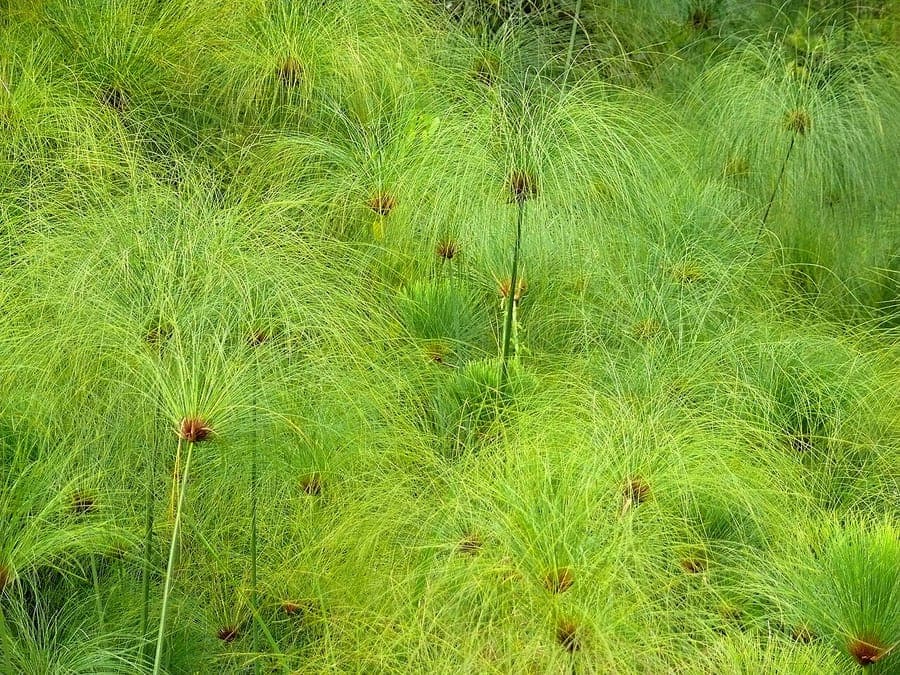
Bernard DUPONT from FRANCE / CC BY-SA 2.0, via Wikimedia Commons
Egyptian paperplant: complete guide
Cyperus papyrus
Want to see Egyptian paperplant: complete guide in your garden?
1 minute, no credit card
Overview
Cyperus papyrus, commonly known as Egyptian paperplant, is a bold, tropical-looking sedge that hails from wetlands across Africa, particularly along the Nile River. While native to regions like Egypt, Congo, and Angola, it thrives in temperate gardens when given the right conditions. It's a member of the Cyperaceae family and grows in a graminoid habit, meaning it resembles grass but is botanically a sedge. In the UK and northern Europe, it's often grown in containers or water features, where its dramatic form adds instant height and texture.
Historically, papyrus stems were used to make paper, but today it's grown purely for ornamental value. Its architectural shape makes it a favorite for modern water gardens. On gardenworld.app you can design a custom layout that highlights papyrus as a focal point, especially when paired with reflective water surfaces.
Appearance & bloom cycle
Egyptian paperplant grows in upright clumps, with stiff, triangular stems reaching 1.5 to 3 meters tall. At the top, a striking umbel of slender, green ray-like branches forms a feathery crown 20–40 cm wide. These aren't leaves but modified bracts that create the plant's signature fountain effect.
True flowers are rare in cultivation and appear as tiny greenish-brown spikes from June to August. They're hardly noticeable-this plant is grown for structure, not blooms. In USDA zones 9–10, it can remain evergreen, but in cooler climates like the UK (zone 8a and below), it dies back in autumn and must be protected over winter.
Ideal location
Papyrus needs high light-rate it a 9 out of 10. Place it in full sun to light shade, ideally with at least 6 hours of direct sunlight daily. It can handle full afternoon sun in cooler regions, but in hot summers, a bit of midday shade prevents scorching.
For pond planting: submerge the pot up to 15 cm deep in water. The roots must stay constantly wet. In containers on patios, sit the pot in a tray of water to maintain moisture. Avoid windy spots-tall stems can snap in strong gusts. Use gardenworld.app to visualize how papyrus fits into your pond or container scheme, ensuring balance and visual flow.
Soil requirements
Papyrus isn't picky about soil type as long as it stays wet. A mix of loam, compost, and a bit of clay works well. The ideal pH is neutral to slightly alkaline: 7.0–7.5. Use aquatic compost for pond pots or a rich, moisture-retentive potting mix for containers.
Ensure good drainage with a layer of gravel at the bottom, but don't let the soil dry out. Papyrus will yellow and die back quickly if roots dry, even for a few hours.
Free design
Want to see Egyptian paperplant: complete guide in your garden? Make a free design now.
Watering
Constant moisture is non-negotiable. In a pond, water levels should remain stable. In pots, keep the tray filled-top up daily in summer, twice during heatwaves. Use rainwater when possible; tap water high in lime can leave white deposits on stems.
In winter, reduce watering slightly but never let the soil go bone dry. If overwintering indoors, mist occasionally to maintain humidity.
Pruning
Pruning isn't essential, but it improves appearance. In spring (March–April), cut back all dead or damaged stems to ground level. Use sharp shears to avoid tearing. To control size, trim stems to desired height, but this may delay or reduce plume formation.
Divide the root ball every 2–3 years in spring to prevent overcrowding and rejuvenate growth. This is also the best time to take cuttings in water for next season.
Maintenance calendar
- January–February: Dormant. Keep indoors if overwintering. Water sparingly.
- March: Remove dead growth. Divide or repot if needed.
- April: Move outdoors after last frost. Begin regular watering.
- May–September: Peak growth. Water daily. Apply liquid fertilizer monthly.
- October: Reduce watering. Trim dying foliage. Prepare for indoor storage.
- November–December: Keep in a bright, frost-free spot (8–15°C). Mist weekly.
Winter hardiness
Papyrus is not hardy in cold climates (USDA zones below 9). It won't survive outdoor winter freezes. The best method is to bring potted plants indoors by late October. Keep in a greenhouse, conservatory, or bright room above 8°C. Let soil stay damp but not soggy.
Alternatively, take 15 cm stem cuttings in autumn, place in water, and root on a sunny windowsill. This gives you fresh plants for spring.
Companion plants
Pair papyrus with other moisture-loving plants: Water lilies (Nymphaea), Pickerel weed (Pontederia cordata), or Iris laevigata for pond edges. In containers, combine with Canna, Coleus, or Japanese sweet flag (Acorus gramineus) for tropical contrast.
Avoid crowding-papyrus spreads fast in ideal conditions. Use a large pot to contain roots, or plant it solo as a specimen.
Closing
Egyptian paperplant brings a bold, exotic feel to any garden with minimal care-just water and sun. It's not hardy, but the effort to overwinter or propagate pays off with its striking form. Look for healthy, green-stemmed plants at garden centres in late spring and summer.
Retailers like B&Q, Wyevale, and local independents often stock papyrus in May–August. Choose plants with tight, upright stems and no browning. Avoid those in dried-out pots. When designing your water feature, remember that papyrus works best as a vertical accent. Use gardenworld.app to sketch out layouts and test scale before planting.
Want to see Egyptian paperplant: complete guide in your garden? Make a free design now.
Upload a photo, pick a style, and get a photorealistic design with plant list in under a minute.
No credit card required


Similar plants
Flat-stemmed club-rush: complete guide
Bolboschoenus planiculmis
Everything about Bolboschoenus planiculmis: growing conditions, watering, care, and use as a pond margin or wetland plant in garden design.
Great Plains flatsedge: complete guide
Cyperus lupulinus
Everything about Great Plains flatsedge (Cyperus lupulinus): growing conditions, care, garden uses, and ecological value. Tips for pond margins and dry sandy soils.
Golden beak sedge: complete guide
Rhynchospora corymbosa
Everything about golden beak sedge (Rhynchospora corymbosa): a dramatic tropical marginal for pond edges, bog gardens, and wet habitats.