
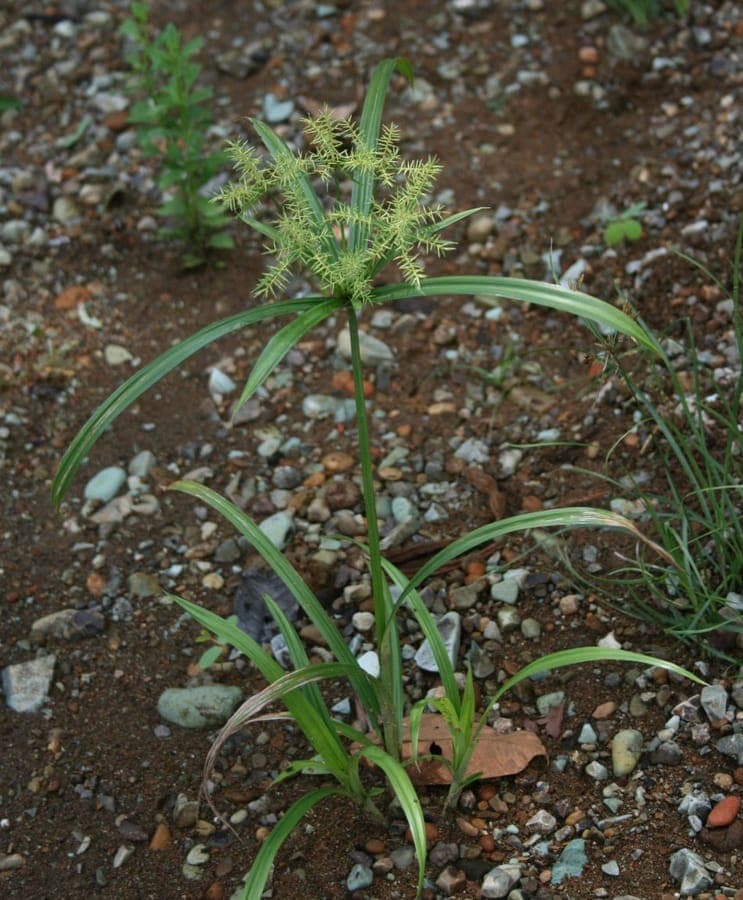
Franz Xaver / CC BY-SA 3.0, via Wikimedia Commons
Cyperus odoratus: complete guide
Cyperus odoratus
Want to see Cyperus odoratus: complete guide in your garden?
1 minute, no credit card
Overview
Cyperus odoratus, commonly known as calingale or fragrant sedge, is a moisture-loving grass species from the Cyperaceae family (sedge family). This plant naturally spreads in warm parts of both Americas and tropical and subtropical regions of the Old World extending to the Caucasus. The plant is valued for its fragrant brown flowers, elegant grass structure and preference for moist conditions.
This plant reaches 30 to 60 centimeters height and grows from underground roots in dense colonies. The stems are triangular with grass-like leaves. For gardeners with moist or wet corners, Cyperus odoratus is perfect choice.
Appearance and Bloom
Cyperus odoratus distinguishes itself with triangular stems and long, thin, grass-like leaves with prominent veining. Stems cluster in dense groups. From July through September, characteristic blooms appear in compact, brown, aromatic flower spikes.
The flowers emit subtle pleasant fragrance reminiscent of spice and grass. After blooming, small seeds form. The plant reaches maximum 60 centimeters height and forms dense growing clusters.
Ideal Location
Cyperus odoratus grows best in full sun to partial shade. This plant tolerates shade better than many other sedges. Position where at least 4-5 hours sunlight occurs daily. The plant can grow in moist shaded corners with slightly reduced bloom.
In moist environments with abundant sunlight, the plant grows vigorously. Plant along water edges, in marshes and other moist garden corners.
Soil
Cyperus odoratus requires moist to wet soils and can even grow in permanently wet conditions. The plant thrives in both acidic and alkaline soils. Preference goes to soils with abundant organic material.
The plant tolerates even periodic water flooding. Plant in marshes, along ponds and in moist depressions. Drainage is not needed; indeed, this plant seeks maximum moisture content.
Free design
Want to see Cyperus odoratus: complete guide in your garden? Make a free design now.
Watering
Cyperus odoratus requires consistently moist soil and grows best in wet conditions. Plant along water or marsh edges where feet remain constantly moist. During dry periods, add water regularly.
The plant can adapt to periodic drought but does not thrive in dry conditions. For optimal growth keep soil permanently moist to wet.
Pruning
Cyperus odoratus requires minimal pruning. Remove dead or damaged stems when they brown. The plant can be mowed in late autumn as it dies back.
The plant spreads via underground roots and can be slightly invasive. Control expansion where needed by digging edges.
Maintenance Calendar
In spring (April-May), check growth and add mulch. During growth (May-September), ensure adequate water. During bloom (July-September), enjoy fragrant flowers. After bloom (October), prepare for winter and remove dead parts.
Winter Hardiness
Cyperus odoratus tolerates temperatures down to approximately -10 to -15 degrees Celsius, depending on winter moisture. In temperate climates across the Netherlands, Belgium and France, the plant can overwinter outdoors if standing in water. In severe dry winters, roots may freeze.
Companion Plants
Cyperus odoratus combines beautifully with other moisture-loving and marsh plants:
- Iris (Iris versicolor) for yellow flowers
- Marsh spiraea (Filipendula) for pink flowers
- Yellow iris (Iris pseudacorus) for yellow flowers
- Manna grass (Glyceria) for supplementary grass
- Water mint (Mentha aquatica) for fragrance
Together they create rich, moist marsh environment.
Conclusion
Cyperus odoratus is valuable plant for moist and wet garden corners. Its fragrant brown flowers provide character and grass structure adds texture. For more inspiration on front yard transformation visit gardenworld.app!
Want more designs? Visit gardenworld.app for professionally designed moist gardens!
Want to see Cyperus odoratus: complete guide in your garden? Make a free design now.
Upload a photo, pick a style, and get a photorealistic design with plant list in under a minute.
No credit card required


Similar plants
Flat-stemmed club-rush: complete guide
Bolboschoenus planiculmis
Everything about Bolboschoenus planiculmis: growing conditions, watering, care, and use as a pond margin or wetland plant in garden design.
Great Plains flatsedge: complete guide
Cyperus lupulinus
Everything about Great Plains flatsedge (Cyperus lupulinus): growing conditions, care, garden uses, and ecological value. Tips for pond margins and dry sandy soils.
Golden beak sedge: complete guide
Rhynchospora corymbosa
Everything about golden beak sedge (Rhynchospora corymbosa): a dramatic tropical marginal for pond edges, bog gardens, and wet habitats.