
Wikimedia Commons / Public domain, via Wikimedia Commons
Sweet cyperus: complete guide
Cyperus longus
Want to see Sweet cyperus: complete guide in your garden?
1 minute, no credit card
Overview
Sweet cyperus (Cyperus longus) is a hardy, clump-forming perennial sedge that thrives in consistently moist to wet soils. Unlike its tropical cousin Cyperus papyrus, this species is fully winter hardy and well-suited to temperate gardens across USDA zones 6 to 9. Native to regions spanning from Afghanistan to Belgium and Angola, it naturally colonises ditch banks, marshes, and slow-moving streams.
This plant brings vertical interest and subtle texture to damp areas where many perennials struggle. It's not flashy, but its architectural form and resilience make it a smart choice for naturalistic planting schemes. On gardenworld.app, you can visualise how Sweet cyperus fits into a waterside garden design that complements your existing layout.
Appearance & bloom cycle
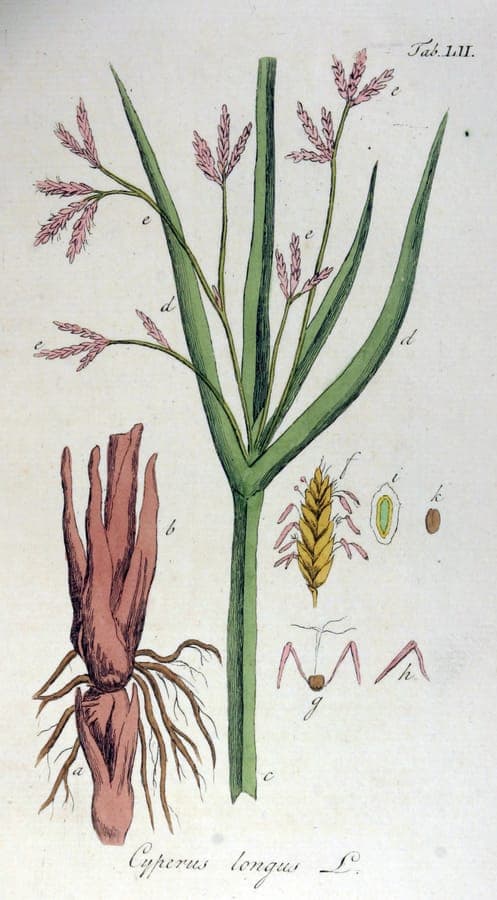
Sweet cyperus reaches 80–120 cm in height, with erect, triangular stems that emerge green and may develop reddish or purplish tints in full sun. The narrow, linear leaves grow mainly along the lower half of the stem, giving the plant a clean, grass-like silhouette.
From July to late September, it produces soft, spherical flower heads made up of dozens of tiny brown florets. These fluffy umbels sway gently in the breeze, adding movement and sound to the garden. Though not highly fragrant, the stems have a faint sweet scent when crushed-hence the common name. The seed heads persist into winter, offering structure and visual interest during the colder months.
Ideal location
Plant Sweet cyperus in full sun to light shade. It performs best in at least 6 hours of direct sunlight per day, which encourages compact growth and richer stem colouration. In heavy shade, the stems become leggy and may flop.
It's perfect for pond margins, rain gardens, or low-lying areas that retain water. Allow 40–50 cm of space between plants to accommodate its spreading habit via rhizomes. To contain growth, plant in a submerged pot or use a root barrier. On gardenworld.app, you can design a planting plan that integrates Sweet cyperus with other moisture-loving species for a cohesive wetland effect.
Soil requirements
Sweet cyperus demands consistently moist to waterlogged soil. It tolerates both clay and loam, as long as drainage is poor and water retention is high. Ideal pH ranges from slightly acidic to neutral (5.5–7.0).
Avoid sandy, free-draining soils-they dry out too quickly. When planting, mix in well-rotted compost or aquatic soil to boost moisture retention and nutrient content. Never use standard potting mix for this plant.
Watering
Keep the soil permanently wet during the growing season (May to September). If grown in a container, check moisture levels daily-this plant won't survive even short dry spells. In a pond, plant it in a planting basket at a depth of up to 10 cm of water above the crown.
Use rainwater when possible, as chlorinated or hard tap water can build up salts over time. If using tap water, let it sit for 24 hours before applying.
Free design
Want to see Sweet cyperus: complete guide in your garden? Make a free design now.
Pruning
Prune in early spring (March or April) by cutting back all dead foliage to 5–10 cm above the crown. Use sharp, clean shears to prevent disease spread. Leave new green shoots intact-they emerge quickly once temperatures rise.
You can leave the flower heads over winter for visual appeal and habitat value, or cut them back in late winter for a neater look. Avoid pruning during active growth unless removing damaged stems.
Maintenance calendar
- January: Dormant. No action needed.
- February: Clear any remaining debris if desired.
- March: Cut back old growth. Apply a thin layer of compost.
- April: Monitor for new shoots. Begin regular watering.
- May to September: Peak growth. Water daily if in pots. Feed every 4 weeks with aquatic plant fertiliser.
- October: Reduce watering gradually. Decide whether to leave or cut back seed heads.
- November to December: Dormancy. Mulch base in exposed areas for frost protection.
Winter hardiness
Sweet cyperus is hardy in USDA zones 6–9 (down to -20°C). In zones 7–9, it typically survives winter without protection, especially when planted in moist ground. In zone 6 or during harsh winters, apply a layer of straw or leaf litter around the base to insulate the crown.
Potted plants are more vulnerable. Wrap containers in horticultural fleece or move them to a sheltered spot. For extreme cold, consider overwintering in a cool, bright garage with damp soil.
Companion plants
Combine Sweet cyperus with other moisture-loving perennials like Iris versicolor, Carex elata 'Aurea', or Persicaria bistorta. For contrast, pair with bold foliage plants such as Rodgersia or Gunnera manicata.
It also works well with floating aquatics like water lilies or submerged oxygenators. In a naturalistic border, it adds height and rhythm between shorter sedges and ferns.
Closing
Sweet cyperus isn't a showstopper, but it's a reliable, low-maintenance performer in wet areas. Its architectural form, subtle blooms, and winter presence make it a valuable addition to any damp garden corner.
You can find Sweet cyperus at garden centres like B&Q, Wyevale, or local independents, usually in the pond plant or ornamental grass section. Be sure you're not buying Cyperus alternifolius by mistake-it's less hardy and needs more warmth.
On gardenworld.app, you can explore planting combinations and create a custom garden layout where Sweet cyperus plays a supporting yet essential role. Whether you're restoring a boggy patch or designing a wildlife pond, this sedge brings quiet strength to your planting scheme.
Want to see Sweet cyperus: complete guide in your garden? Make a free design now.
Upload a photo, pick a style, and get a photorealistic design with plant list in under a minute.
No credit card required


Similar plants
Flat-stemmed club-rush: complete guide
Bolboschoenus planiculmis
Everything about Bolboschoenus planiculmis: growing conditions, watering, care, and use as a pond margin or wetland plant in garden design.
Great Plains flatsedge: complete guide
Cyperus lupulinus
Everything about Great Plains flatsedge (Cyperus lupulinus): growing conditions, care, garden uses, and ecological value. Tips for pond margins and dry sandy soils.
Golden beak sedge: complete guide
Rhynchospora corymbosa
Everything about golden beak sedge (Rhynchospora corymbosa): a dramatic tropical marginal for pond edges, bog gardens, and wet habitats.