
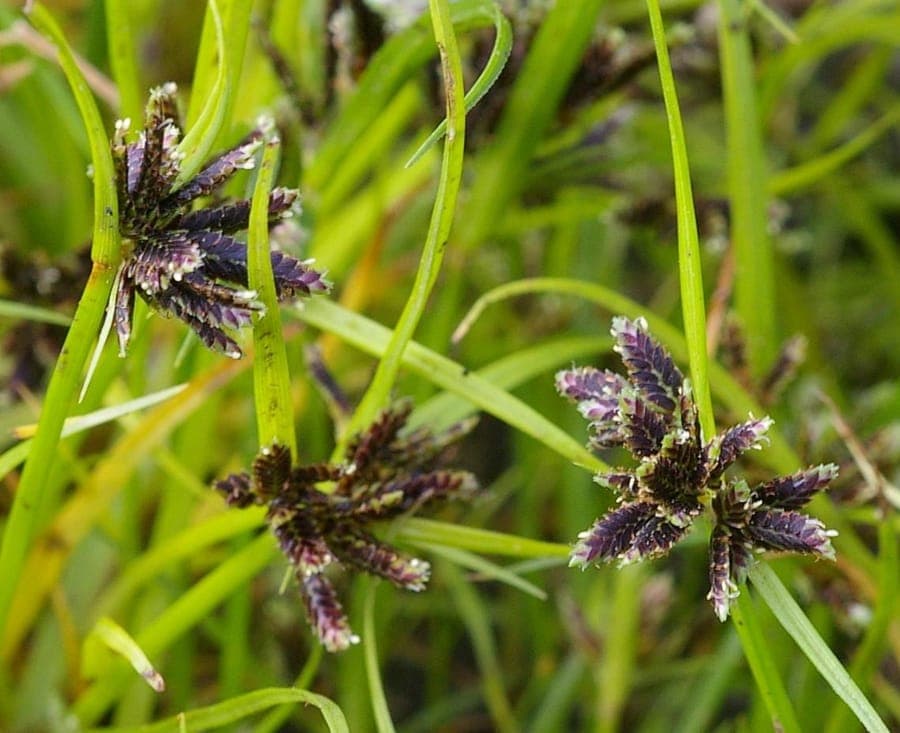
User:Fice / CC BY-SA 3.0, via Wikimedia Commons
Brown flatsedge: complete guide
Cyperus fuscus
Want to see Brown flatsedge: complete guide in your garden?
1 minute, no credit card
Overview
Brown flatsedge (Cyperus fuscus) is a slender, upright sedge native to parts of Europe, Asia, and North Africa, ranging from Austria to Afghanistan and from Algeria to Belarus. While it's rare in the wild in the UK and Ireland, it thrives in damp, open habitats like muddy margins, seasonal pools, and disturbed wet ground. As a garden plant, it's gaining popularity for its architectural form, minimal care needs, and adaptability to both moist and moderately dry soils.
This member of the Cyperaceae family grows 15–40 cm tall and suits small gardens, gravel beds, or waterside plantings. Its narrow profile and subtle texture add movement without overwhelming other plants.
On gardenworld.app, you can design a layout that highlights Brown flatsedge, using its height and bloom timing to create seasonal rhythm.
Appearance & bloom cycle
Cyperus fuscus forms tufts of bright green, triangular stems that stand rigid and upright. The leaves are short and clustered near the base, with the main visual interest coming from the flower heads. From July to September, it produces compact, dark brown inflorescences, 1–2 cm wide, resembling tiny burrs. These aren't true flowers but clusters of scale-like bracts that darken as they mature, offering a quiet contrast against the green stems.
The plant's bloom cycle is long and consistent, with flowers lasting up to eight weeks. Deadheading isn't necessary, as the seed heads add winter interest and support small insects.
Ideal location
Brown flatsedge thrives in full sun-rate it an 8 out of 10 for light. It performs best with at least 6 hours of direct sunlight daily. While it tolerates light shade, too little sun results in floppy stems and sparse flowering.
It's ideal for sunny borders, gravel gardens, or marginal zones near ponds. In drier areas, plant it where it can benefit from occasional runoff or supplemental watering. Avoid deep shade or heavily competitive ground covers.
Soil requirements
The ideal soil pH for Cyperus fuscus is between 5.5 and 6.5-slightly to moderately acidic. It prefers moist, well-drained loam with organic matter. Heavy clay soils can work if amended with grit or sand to improve drainage. In sandy soils, mix in compost to boost moisture retention.
Avoid highly alkaline soils (pH above 7.5), which may cause yellowing and nutrient lockout, particularly iron and manganese.
Watering
During active growth (April to October), keep the soil consistently moist. Brown flatsedge can handle brief dry spells but suffers if left parched for weeks. In containers, water once or twice a week, depending on heat and pot size.
It naturally grows in seasonally flooded areas, so short-term waterlogging isn't harmful. However, prolonged wet soil in winter can lead to root rot. Mulching helps retain moisture and regulate soil temperature.
Free design
Want to see Brown flatsedge: complete guide in your garden? Make a free design now.
Pruning
Minimal pruning is needed. In late winter or early spring (February to March), cut back old stems to 5 cm above the crown. This encourages fresh growth and keeps the plant tidy. Use sharp secateurs for clean cuts and avoid damaging emerging shoots.
You can leave the dead stems over winter for habitat value-many overwintering insects shelter in the base. On gardenworld.app, you can plan a wildlife-friendly garden that includes such low-intervention plants.
Maintenance calendar
- Jan: Monitor for frost heave; mulch if needed
- Feb: Prepare for pruning
- Mar: Cut back old growth; apply a light organic feed if soil is poor
- Apr: New shoots emerge; check for slugs
- May: Water during dry spells
- Jun: Growth accelerates; ensure full sun exposure
- Jul: Blooms begin; maintain consistent moisture
- Aug: Peak flowering; inspect for pests
- Sep: Flowering tapers off; reduce watering gradually
- Oct: Growth slows; leave stems or cut back for neatness
- Nov: No action required, unless in wet areas-improve drainage
- Dec: Dormant period; protect container plants from hard freezes
Winter hardiness
Brown flatsedge is hardy in USDA zones 6–9. It survives winter outdoors in most of the UK, Ireland, and similar climates without protection. In zone 6, where temperatures can dip to -20°C, a light mulch of straw or leaf litter helps insulate the crown.
Container-grown plants are more vulnerable-move pots to a sheltered spot or wrap them with hessian to prevent root damage from freeze-thaw cycles.
Companion plants
Pair Brown flatsedge with other moisture-tolerant or grass-like plants. Good companions include Carex comans, Deschampsia cespitosa, Eriophorum angustifolium, and Molinia caerulea. For contrast, add flowering perennials like Eupatorium maculatum, Persicaria bistorta, or Iris sibirica.
Avoid invasive species like Japanese knotweed, which can quickly dominate and shade out smaller sedges.
Closing
Brown flatsedge is a quiet achiever-unobtrusive, resilient, and ecologically valuable. It adds fine texture and late-summer depth without demanding attention. Whether tucked into a rockery or grouped along a stream, it brings understated elegance.
You'll find young plants at garden centres across the UK, especially those specialising in native or water plants. For design inspiration, use gardenworld.app to visualise how Brown flatsedge can anchor a sun-drenched, low-maintenance border with year-round appeal.
Want to see Brown flatsedge: complete guide in your garden? Make a free design now.
Upload a photo, pick a style, and get a photorealistic design with plant list in under a minute.
No credit card required


Similar plants
Flat-stemmed club-rush: complete guide
Bolboschoenus planiculmis
Everything about Bolboschoenus planiculmis: growing conditions, watering, care, and use as a pond margin or wetland plant in garden design.
Great Plains flatsedge: complete guide
Cyperus lupulinus
Everything about Great Plains flatsedge (Cyperus lupulinus): growing conditions, care, garden uses, and ecological value. Tips for pond margins and dry sandy soils.
Golden beak sedge: complete guide
Rhynchospora corymbosa
Everything about golden beak sedge (Rhynchospora corymbosa): a dramatic tropical marginal for pond edges, bog gardens, and wet habitats.