
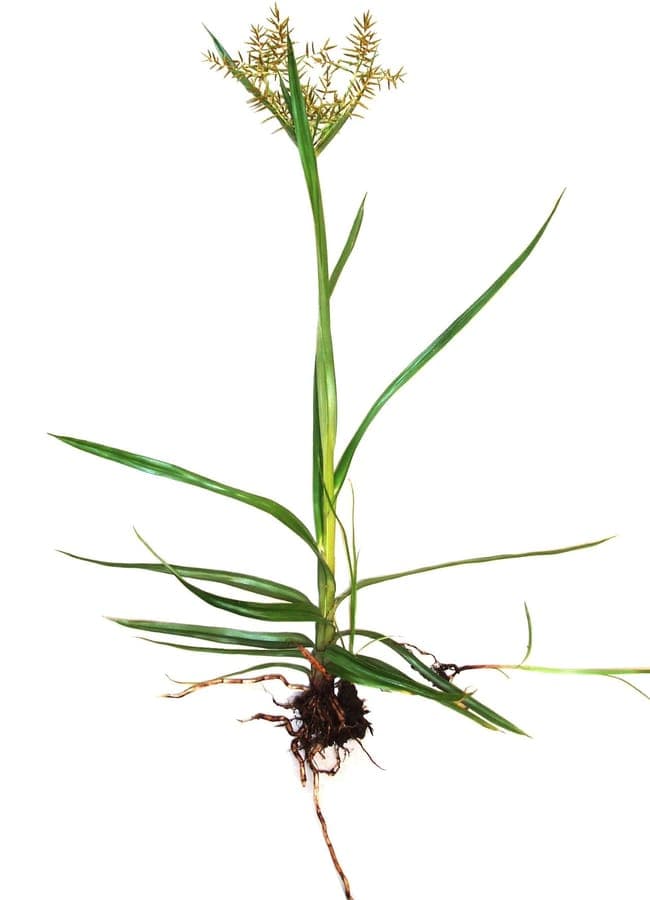
Wilcox, Mike / CC BY 4.0, via Wikimedia Commons
Earth-almond: complete guide
Cyperus esculentus
Want to see Earth-almond: complete guide in your garden?
1 minute, no credit card
Overview
Earth-almond (Cyperus esculentus) might not be the first plant you think of for your garden, but this edible sedge brings both form and function. Native to warm regions across Africa, the Americas, and southern Europe, it's hardy in USDA zones 8 to 11. In cooler zones, you can grow it as an annual or overwinter the tubers indoors. The plant grows 30–60 cm tall with a grass-like habit, producing small, nutty tubers underground that are perfect for snacking or making horchata.
Despite its reputation as a weed in some agricultural settings, in the garden it behaves predictably if given the right conditions. It's not invasive when managed well, and its upright, clumping form adds texture to sunny borders. From May to October, it grows actively, dying back in winter when temperatures drop.
On gardenworld.app, you can create a sun-drenched garden layout that makes room for Earth-almond alongside other drought-tolerant species.
Appearance & bloom cycle
Earth-almond has narrow, linear leaves that grow in sets of three from a triangular stem-typical of the Cyperaceae family. The foliage reaches 30–60 cm in height and stays green throughout the growing season. In mid to late summer (July–September), it produces small, greenish flower clusters in umbrella-like formations called umbels. These aren't particularly showy but add a soft, textural element to the garden.
The real prize lies underground: small, golden-brown tubers develop from late summer onward. These are the edible 'earth almonds', with a sweet, nutty flavour. Harvest them from October onwards, once the top growth turns yellow and collapses. Each plant can produce dozens of tubers, spreading via short rhizomes.
Be mindful: if left unchecked, it can self-seed or spread through tuber fragments. Use root barriers or grow in containers to keep it in check.
Ideal location
Earth-almond needs full sun-rate it an 8 out of 10 for light requirements. It performs best in open, unshaded spots with southern or southwestern exposure. While it tolerates light afternoon shade, growth will be sparser and tuber production reduced.
In the UK and parts of northern Europe, it's best treated as a tender perennial. Plant out after the last frost (late May) and expect it to thrive through summer. In colder zones (below 8), lift the tubers in autumn and store them in dry sand or peat at 5–10°C.
On gardenworld.app, you can map your garden's sun patterns to find the perfect spot for Earth-almond, ensuring it gets enough light without overcrowding other plants.
Soil requirements
Well-drained, loose soil is essential. Heavy clay or waterlogged ground will rot the tubers. Aim for sandy loam or amend heavier soils with coarse sand and compost. The ideal pH is between 5.0 and 7.0-slightly acidic to neutral.
Avoid rich, heavily fertilised soils, as this encourages leafy growth at the expense of tubers. A light top-dressing of compost in spring is sufficient.
Free design
Want to see Earth-almond: complete guide in your garden? Make a free design now.
Watering
During the growing season (May–October), water regularly but let the soil surface dry between irrigations. About once a week is enough in average weather; increase frequency during heatwaves. In pots, check every 3–4 days, as containers dry out faster.
Once growth dies back in autumn, stop watering completely-especially if storing tubers. Overwintering plants in the ground need no extra water unless the winter is unusually dry.
Pruning
No pruning is required. You can trim back dead foliage in late autumn or early winter for tidiness. In containers, cut stems to 5–10 cm above soil level after dieback. Avoid cutting during active growth, as this reduces photosynthesis and tuber development.
Maintenance calendar
- March–April: Start tubers indoors at 20°C or sow seeds. Harden off before planting.
- May: Plant outdoors after frost risk passes. Begin regular watering.
- June–July: Monitor for spreading. Install root barriers if needed.
- August: Tubers begin forming. Reduce nitrogen-rich feeds.
- September: Flowers mature. Keep soil lightly moist.
- October: Harvest tubers. Cut back dead foliage.
- November–February: Dormant period. Store tubers or leave in ground (zones 8+).
Winter hardiness
Hardy in USDA zones 8–11. In zone 8, it can survive mild winters if the soil drains well. Below zone 8, lift tubers and store in a frost-free, dry location. Potted plants should be moved to a greenhouse or shed to avoid freeze-thaw cycles.
Prolonged wet and cold conditions are the biggest threat-tubers rot easily in soggy soil.
Companion plants
Pair Earth-almond with other full-sun, drought-tolerant plants: lavender, yarrow, sedum 'Autumn Joy', or ornamental grasses like Pennisetum. Its vertical form contrasts well with mounding or spreading species. Avoid aggressive groundcovers that might compete for space.
In an edible garden, it fits neatly among rosemary, thyme, or oregano-herbs that enjoy similar dry, sunny conditions.
Closing
Earth-almond is a quiet achiever: unsung, but highly functional. It adds structure, tolerates drought, and gives you a harvest of tasty tubers. Whether you're making horchata or just want a low-maintenance grass with personality, it's worth a spot in your garden.
You can find tubers or young plants at garden centres across the UK and US. Look for labels like 'chufa' or 'tiger nut'. Be sure to plant in well-drained soil and give it space to form tubers without competition.
It's not a flashy plant, but for gardeners who value practicality and subtle beauty, Earth-almond delivers.
Want to see Earth-almond: complete guide in your garden? Make a free design now.
Upload a photo, pick a style, and get a photorealistic design with plant list in under a minute.
No credit card required


Similar plants
Flat-stemmed club-rush: complete guide
Bolboschoenus planiculmis
Everything about Bolboschoenus planiculmis: growing conditions, watering, care, and use as a pond margin or wetland plant in garden design.
Great Plains flatsedge: complete guide
Cyperus lupulinus
Everything about Great Plains flatsedge (Cyperus lupulinus): growing conditions, care, garden uses, and ecological value. Tips for pond margins and dry sandy soils.
Golden beak sedge: complete guide
Rhynchospora corymbosa
Everything about golden beak sedge (Rhynchospora corymbosa): a dramatic tropical marginal for pond edges, bog gardens, and wet habitats.