
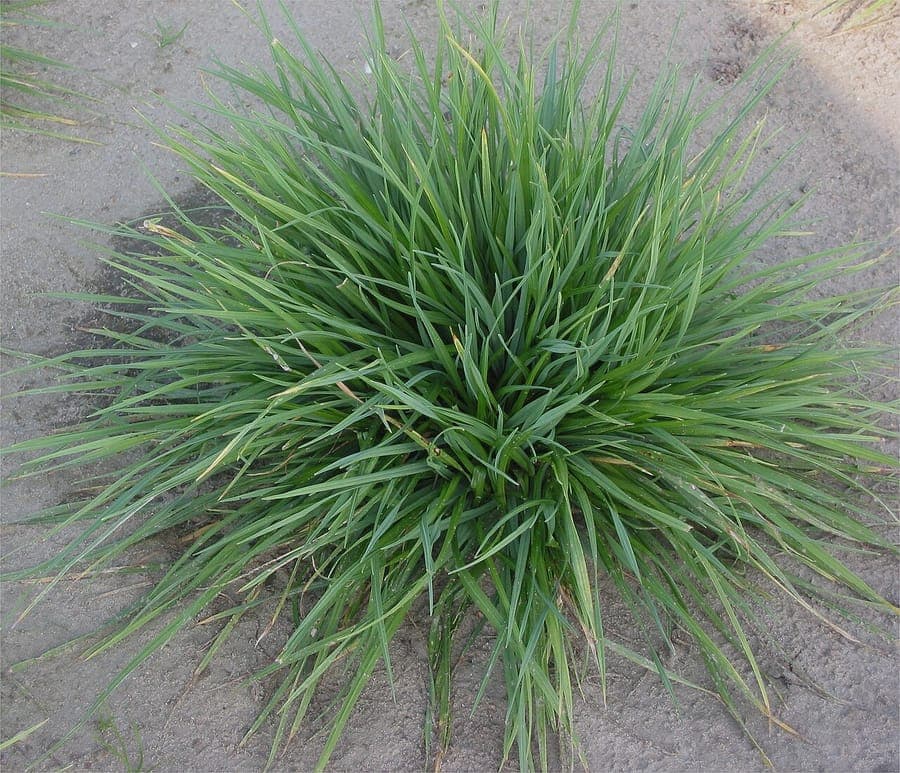
Rasbak / CC BY-SA 3.0, via Wikimedia Commons
Crested dog's-tail: complete guide
Cynosurus cristatus
Want to see Crested dog's-tail: complete guide in your garden?
1 minute, no credit card
Overview
Crested dog's-tail (Cynosurus cristatus) is a fine-leaved perennial grass native to European meadows and grasslands, including parts of the UK and Ireland. It's not flashy, but that's its strength - this grass brings subtle texture and movement to a garden without dominating. It grows in neat, upright tufts and adds a soft, flowing quality, especially when backlit by morning or evening sun. It's often used in naturalistic planting schemes, wildflower meadows, or as a component in low-maintenance lawns. On gardenworld.app, you can design a planting plan that integrates Crested dog's-tail seamlessly with other native species.
Appearance & bloom cycle
Crested dog's-tail reaches 30 to 60 cm in height, with narrow, bright green leaves that are smooth and slightly glossy. From May to July, it produces distinctive flower spikes - flat, comb-like plumes that are 3–5 cm long and held upright. These greenish inflorescences resemble a dog's tail with a crest, hence the name. As they age, the plumes turn golden-brown and remain visible into autumn, providing visual interest and food for small birds. The grass has a clump-forming habit and doesn't spread invasively, making it ideal for contained designs.
Ideal location
This grass thrives in full sun - it scores an 8 out of 10 for light requirement. It performs best with at least 6–8 hours of direct sunlight daily. While it tolerates light shade, especially in the afternoon, flowering is reduced in shadier spots. It's perfect for sunny borders, dry slopes, or open meadow-style gardens. Avoid placing it under dense tree canopies or in deeply shaded corners. If you're unsure whether your garden gets enough light, use the sun mapping tool on gardenworld.app to assess your site before planting.
Soil requirements
Crested dog's-tail prefers well-drained, moderately fertile soils with a pH between 5.5 and 6.5. It grows well in sandy loam, chalky soils, and light clay, as long as water doesn't pool around the roots. It dislikes waterlogged conditions and heavy, compacted soils. One of its biggest strengths is its ability to thrive in poor soils - rich, heavily fertilised ground leads to floppy, weak growth. If your soil is too rich, consider mixing in grit or sand to improve drainage and reduce fertility.
Watering
Once established, Crested dog's-tail is drought-tolerant and rarely needs supplemental watering. During the first growing season, water weekly during dry spells to help roots settle. After that, rely on rainfall unless you're experiencing prolonged drought (over 4 weeks without rain). Overwatering encourages fungal issues and root rot, so let the soil dry between waterings. A deep soak every few weeks is better than frequent shallow watering.
Free design
Want to see Crested dog's-tail: complete guide in your garden? Make a free design now.
Pruning
Cut back the entire plant in late winter, between February and early March. Trim the old foliage and spent flower stems to about 10 cm above ground level. This encourages fresh growth in spring and prevents the centre of the clump from becoming congested. Use sharp shears or a trimmer - for larger areas, a brush cutter works well. Leave cuttings for a few days to allow seeds to disperse, then remove if a tidy appearance is desired.
Maintenance calendar
- Jan: Inspect plants, prepare for pruning
- Feb: Cut back to 10 cm
- Mar: New growth emerges, no extra care needed
- Apr: Keep area free of weeds
- May: Blooming begins, green plumes appear
- Jun: Peak flowering, avoid mowing
- Jul: Flowers fade, plumes turn brown
- Aug: No watering unless drought persists
- Sep: Leave seed heads for birds
- Oct: Remove dead foliage if preferred
- Nov: No action required
- Dec: Dormant period, check for pests
Winter hardiness
Crested dog's-tail is fully hardy in USDA zones 5 to 9. It can withstand temperatures down to -20°C and remains semi-evergreen in milder winters. The old foliage provides insulation for the crown and should be left until late winter. In snowy regions, no additional protection is needed - just ensure the site doesn't stay waterlogged.
Companion plants
Pair Crested dog's-tail with other fine-textured grasses like Sheep's Fescue (Festuca ovina) or Quaking Grass (Briza media). It works beautifully with wildflowers such as Oxeye daisy (Leucanthemum vulgare), Common Knapweed (Centaurea nigra), or Selfheal (Prunella vulgaris). Avoid vigorous spreaders like Creeping Thistle or Bindweed. For best results, choose companions with similar light and soil needs. Explore plant combinations on gardenworld.app to see which pairings suit your garden's conditions.
Closing
Crested dog's-tail won't grab attention, but it earns quiet admiration over time. It's perfect for gardeners who value resilience, simplicity, and ecological function. With minimal care, it delivers lasting structure and supports local wildlife. You can find seeds or plugs at garden centres across the UK, or order online. Plant in spring or early autumn for best establishment. Whether in a meadow, border, or natural lawn, this grass brings understated elegance to any space. For a custom planting layout, try the design tools on gardenworld.app.
Want to see Crested dog's-tail: complete guide in your garden? Make a free design now.
Upload a photo, pick a style, and get a photorealistic design with plant list in under a minute.
No credit card required


Similar plants
Sporobolus pungens: complete guide
Sporobolus pungens
Sporobolus pungens is a stoloniferous Mediterranean coastal grass with outstanding salt and drought tolerance, perfect for seaside and dry gardens.
Mediterranean aegilops: complete guide
Aegilops biuncialis
Everything about Aegilops biuncialis, a Mediterranean annual grass with ornamental spikes and outstanding drought tolerance for dry gardens.
Silver bluestem: complete guide
Bothriochloa saccharoides
Full guide to Bothriochloa saccharoides (silver bluestem): site, soil, watering, winter hardiness, pruning, and garden companions.