
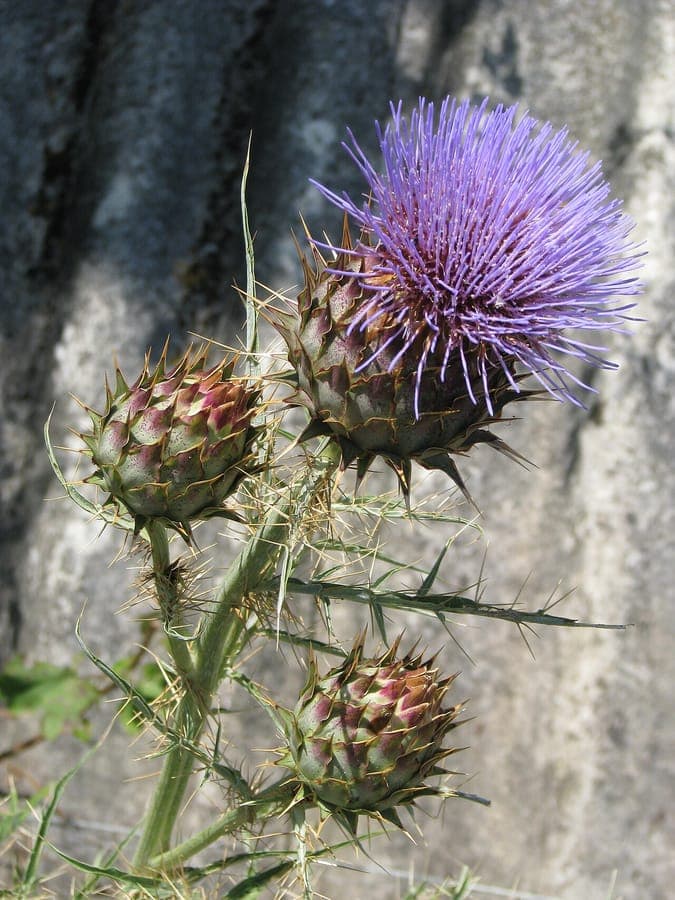
peganum from Henfield, England / CC BY-SA 2.0, via Wikimedia Commons
Spanish artichoke: complete guide
Cynara cardunculus
Want to see Spanish artichoke: complete guide in your garden?
1 minute, no credit card
Overview
Cynara cardunculus, commonly known as Spanish artichoke, is a bold, architectural perennial in the Asteraceae family. Native to southern Europe and North Africa, it thrives in hot, dry climates but can be grown as a biennial or short-lived perennial in cooler zones. Unlike its cousin the globe artichoke, cardoon is primarily grown for its thick leaf stalks, which are blanched and cooked like celery. It reaches 1.5 to 2 meters tall and spreads about 1 meter wide, making it a dramatic focal point in the garden. The plant forms a large rosette of deeply lobed, silvery-gray foliage, with spiny margins that add texture and intrigue.
On gardenworld.app, you can design a layout that accommodates the bold presence of cardoon, placing it where its vertical form enhances structure without crowding neighboring plants. It works especially well in cottage gardens, edible landscapes, or modern xeriscapes.
Appearance & bloom cycle
Cardoon's foliage is the main attraction. Leaves can reach up to 60 cm in length, with a felty, silver underside that reflects sunlight. The leaf stalks are fleshy and ribbed, perfect for cooking after blanching. In its second year, it sends up sturdy flowering stems topped with large, thistle-like purple buds. These bloom from July to September and can measure 10–15 cm across. While edible in theory, the flowers are often left for pollinators-bees, butterflies, and hoverflies love them. If left to fully open, the flowers resemble giant purple thistles, adding late-summer drama.
Ideal location
Cardoon needs full sun-rate it an 8 out of 10 for light. Choose a south- or southwest-facing spot with at least 6–8 hours of direct sunlight. It prefers shelter from strong winds, so position it near a wall or fence that absorbs and radiates heat. Allow 1.2 meters of space on all sides for air circulation and to prevent fungal issues. In colder zones, grow it in a large container (minimum 50 cm diameter) so it can be moved to a sheltered spot in winter.
Soil requirements
This plant favors well-drained, loamy soil with a pH between 7.5 and 8.0. It tolerates poor soils but performs best when enriched with compost or well-rotted manure. Avoid heavy clay unless amended with sand and organic matter. A slightly alkaline, calcareous substrate mimics its natural Mediterranean conditions. Don't over-fertilize, especially with nitrogen-this leads to weak growth and disease susceptibility.
Free design
Want to see Spanish artichoke: complete guide in your garden? Make a free design now.
Watering
Once established, cardoon is drought-tolerant. However, young plants need consistent moisture during their first growing season. Water deeply once a week during dry spells, letting the soil dry slightly between sessions. Overwatering, especially in winter, causes root rot. In containers, ensure excellent drainage and avoid letting pots sit in water.
Pruning
In cooler climates, cut back the plant in late autumn or early spring. After flowering, trim stems to 15 cm above ground level. In USDA zones 7–8, mulch the crown with dry straw or leaves to protect it from freezing. To blanch the stalks, tie the leaves loosely together in spring and cover with a tall pot or opaque sleeve for 3–4 weeks. This excludes light, softening the fibers and mellowing the flavor.
Maintenance calendar
- February–March: Inspect for crown damage; remove old debris.
- April: Begin blanching for edible stalks. Apply a light compost top-dressing.
- May: Plant outdoors after last frost. Space 1.2 m apart.
- June–August: Monitor for slugs and aphids. Water young plants weekly in drought.
- September: Flowers peak; harvest buds for decoration.
- October–November: Cut back foliage. Apply dry mulch before hard frosts.
- December–January: Minimal care; keep crown dry.
Using gardenworld.app, you can create a seasonal care schedule tailored to your local weather and garden layout, ensuring your cardoon thrives year after year.
Winter hardiness
Cardoon is winter-hardy in USDA zones 7 to 9. In zone 7, it survives with proper mulching. In zone 6, it may die back but often re-sprouts from the crown. In colder areas, treat it as an annual or overwinter in a cold greenhouse. Avoid wet mulch-use straw or leaves that stay dry.
Companion plants
Pair cardoon with other Mediterranean herbs like rosemary, sage, and thyme. These share similar water and soil needs. Garlic and onions deter pests naturally. Avoid moisture-loving plants like hostas or ferns. It also makes a strong backdrop for lower-growing perennials such as yarrow, echinacea, or red-hot poker.
Closing
Cardoon isn't for every garden, but if you have sun, space, and a taste for the unusual, it's a rewarding grow. It's edible, architectural, and wildlife-friendly. Buy healthy young plants from reputable garden centres instead of starting from seed, which can be unreliable in cooler climates. With proper care, it can last several years. Look for stock at trusted retailers and plan your layout carefully-this is a plant that demands attention. With the right conditions, Spanish artichoke becomes a striking, productive feature in any garden.
Want to see Spanish artichoke: complete guide in your garden? Make a free design now.
Upload a photo, pick a style, and get a photorealistic design with plant list in under a minute.
No credit card required


Similar plants
Calendula stellata: complete guide
Calendula stellata
Complete guide to Calendula stellata, the star-flowered marigold from Sicily: location, soil, watering and companion planting tips.
Korean chrysanthemum: complete guide
Chrysanthemum x rubellum
Chrysanthemum x rubellum is a hardy autumn perennial with single pink to copper flowers from August to November. Care and combinations.
Helianthus divaricatus: complete guide
Helianthus divaricatus
Helianthus divaricatus is a North American woodland sunflower with yellow summer blooms, ideal for naturalistic borders and shady edges.