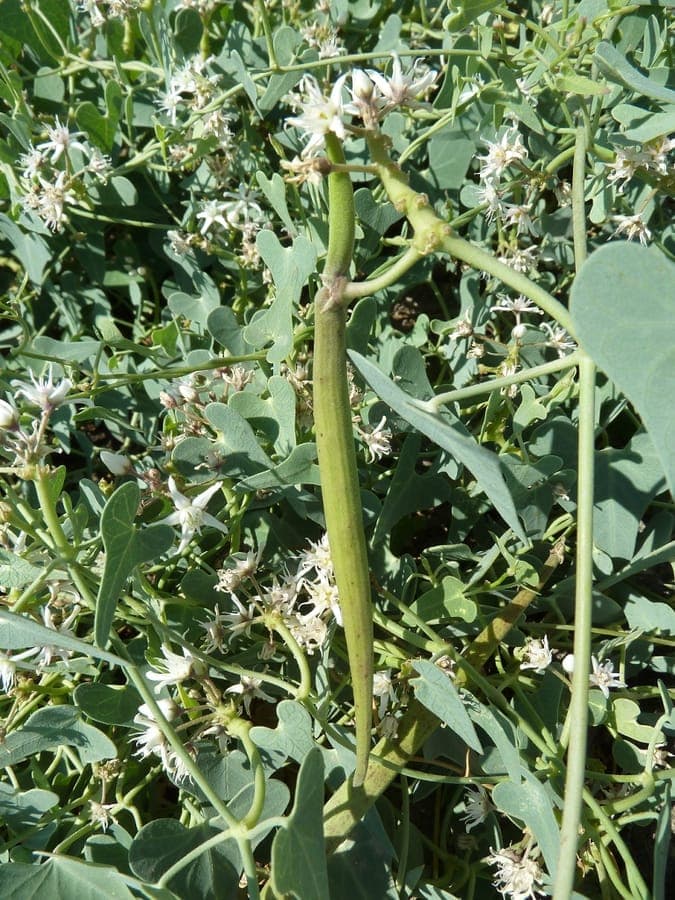
Philmarin / CC BY-SA 3.0, via Wikimedia Commons
Cynanchum acutum: complete guide
Cynanchum acutum
Want to see Cynanchum acutum: complete guide in your garden?
Full design in HD: €7.99
Look after your Cynanchum acutum with the GardenWorld app
Identify plants with your camera and get a care calendar with reminders for this plant.


Overview
Cynanchum acutum, known as Scammony or Swallowwort, is an elegant climbing plant native to Mediterranean regions, Asia, and warm areas worldwide. This vine produces delicate white flowers during summer months followed by fascinating seed pods - elongated, silken-haired capsules that split to release feathery seeds.
The plant reaches 1-2 meters and climbs readily via supporting structures. It's extremely hardy to -15°C, making it suitable for temperate climates. This appeals to gardeners seeking something different - not just flowers, but interesting seed structures and sculptural form.
Appearance & Bloom
Cynanchum acutum displays narrow, lance-shaped leaves that grow elegantly along thin vines. Foliage is green with fine texture. Stems are slender and flexible, excellent for climbing.
Flowers appear June through August in delicate white or pale pink clusters approximately 1 centimeter diameter. They're fragrant with a pleasant, subtle scent. The real attraction comes later: seed pods form after blooming, elongated capsules reaching 8 centimeters long. These open in October, releasing silky seeds dispersed by wind - creating spectacular autumn effects.
Ideal Location
Cynanchum acutum thrives in sunny to semi-shaded positions. Though originating from warm zones, sun is preferred but the plant tolerates partial shade. Aim for at least 3-4 hours daily sunlight.
Provide sturdy climbing support - pole, trellis, or mesh. The plant climbs naturally but appreciates guidance. Protect from severe wind that might damage slender vines.
Soil
Cynanchum acutum grows in dry to moderately dry soil. This heritage from warm, arid origins means good drainage is critical. Heavy clay needs amendment with sand or gravel.
The plant tolerates lean soil excellently - actually, rich soil encourages excessive foliage at the expense of flowers. Neutral to alkaline pH (7-8) is preferred.
Free preview
Want to see Cynanchum acutum: complete guide in your garden? Make a free preview of your design.
Watering
Cynanchum acutum is drought-tolerant once established. During the first year, water regularly until well-rooted. Thereafter, minimal watering - you can supplement during long dry spells, but avoid overwatering.
The plant actually thrives better dry than wet. Waterlogging causes root rot. Winter requires no water as the plant is dormant.
Pruning
Cynanchum acutum requires minimal maintenance. In spring (March-April), remove dead branches and tidy growth lightly. This is optional - the plant develops naturally into attractive form.
After flowering and seed-setting, you can leave seed pods for decorative effect or remove them if you want to prevent self-sowing. Generally let the plant grow to its natural shape.
Maintenance Calendar
April-May: Plant or sow. Regular water first season.
June-August: Blooming. Minimal maintenance.
September-October: Seed pods develop and ripen. Fascinating to observe.
October-November: Pods open, seeds release. Exceptionally showy.
December-March: Foliage falls. Plant dormant. No maintenance.
Winter Hardiness
Cynanchum acutum is hardy to at least -15°C, likely harder. The plant loses foliage in winter but roots survive. In very severe winters, you can add mulch around the base for protection, though this is rarely needed in northern Europe.
The plant regrows annually without replanting.
Companion Plants
Pair Cynanchum acutum with other Mediterranean climbers:
- Clematis: Large flowers, similar climbing habit
- Bittersweet (Solanum dulcamara): Purple flowers, red fruits
- Jasmine (Jasminum officinale): Fragrant, similar foliage
- Ivy (Hedera helix): Evergreen contrast
The combination of white flowers and silken seed pods creates striking visual interest.
Closing Thoughts
Cynanchum acutum appeals to gardeners seeking botanical interest. This isn't merely a pretty flower - it's an architectural vine with structurally fascinating seed pods. Plant along a warm, sunny wall or trellis and enjoy growth, blooming, and seed display. Discover more Mediterranean plants and complete garden designs at gardenworld.app.
Frequently asked questions about Cynanchum acutum
Is Cynanchum acutum winter hardy?
Cynanchum acutum is hardy to at least -15°C, likely harder. The plant loses foliage in winter but roots survive.
When and how do you prune Cynanchum acutum?
Cynanchum acutum requires minimal maintenance. In spring (March-April), remove dead branches and tidy growth lightly.
How much water does Cynanchum acutum need?
Cynanchum acutum is drought-tolerant once established. During the first year, water regularly until well-rooted.
Where does Cynanchum acutum grow best?
Cynanchum acutum thrives in sunny to semi-shaded positions. Though originating from warm zones, sun is preferred but the plant tolerates partial shade.
What soil does Cynanchum acutum need?
Cynanchum acutum grows in dry to moderately dry soil. This heritage from warm, arid origins means good drainage is critical.

See it in your garden
See Cynanchum acutum in your garden
One photo of your garden and a few questions. You see the result in about a minute.
Try it with a photoIdentify this plant in your own garden. Identify a plant
Similar plants
Arkansas bluestar: complete guide
Amsonia hubrichtii
Everything about Arkansas bluestar (Amsonia hubrichtii): position, soil, watering, cutting back and hardiness. A prairie perennial with pale blue stars and golden autumn colour.
String of hearts (Ceropegia woodii): care guide
Ceropegia woodii
How to grow string of hearts (Ceropegia woodii): light, watering, potting mix, propagating from tubers, winter care and whether it is safe for cats and dogs.
Wax plant (Hoya carnosa): complete guide
Hoya carnosa
Everything about the wax plant (Hoya carnosa): light, watering, flowering spurs, a cool winter rest, cuttings and toxicity. Not toxic to cats and dogs.
