
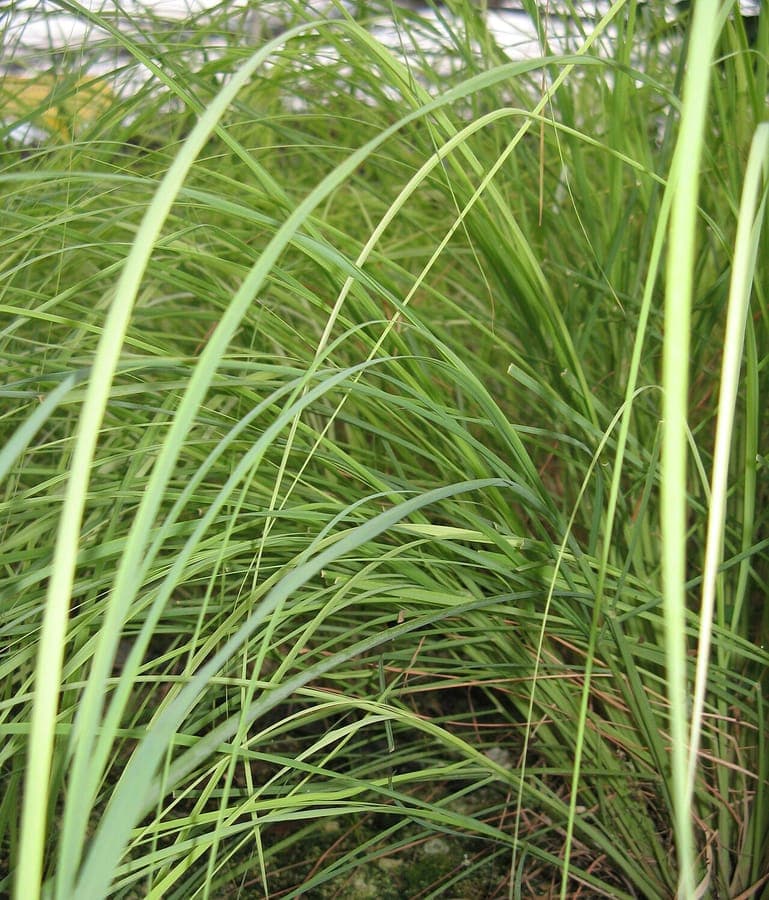
Pau Pámies Grácia / CC BY-SA 4.0, via Wikimedia Commons
Geranium Grass: complete guide
Cymbopogon schoenanthus
Want to see Geranium Grass: complete guide in your garden?
1 minute, no credit card
Geranium Grass (Cymbopogon schoenanthus), also known as Camel Grass or Scenanth, is a versatile ornamental grass originating from the Sahel and North Africa. This elegant grass belongs to the Poaceae family and is primarily known for its pleasant lemon-citral aroma, fine and distinctive leaf form, and exceptional drought tolerance.
Cymbopogon schoenanthus is a densely growing, clump-forming grass that typically remains 60-90 cm tall, with narrow leaves growing upright and forming slender, elegant plumes. The grass has a naturally silvery-grey colour that shows subtle green undertones in light. The leaves smell pleasantly of lemon when crushed or rubbed.
This grass has been valued in traditional North African medicines and ethnobotanic applications. It has been used for centuries for tea, aromatherapy, and traditional medicine in countries such as Mali, Egypt, and Iran.
Ideal location
Geranium Grass thrives in full sun with at least 6-8 hours of direct sunlight daily. It is extremely drought-tolerant and suited to USDA zones 9 to 11, though it can briefly tolerate temperatures down to -5 degrees Celsius in sheltered locations. In warmer years, more northern locations (zone 8) may be experimentally possible.
The grass tolerates full sun, strong wind, and extreme heat. Coastal salt spray and low temperatures can damage it, so select warm, protected positions in mixed climates. In North Africa, it grows from 200 to 1500 meters elevation, so it accepts a reasonably wide height range.
Soil preparation and drainage
Geranium Grass requires well-draining soil. Sandy, gravelly, and rocky soils are ideal. In gardens, you can use loose, nutrient-poor soil; this grass actually grows better in lean soils than in very fertile ones. Heavy clay or wet soils will lead to root rot.
Soil pH can range from neutral to slightly alkaline (pH 6.0-8.0). Add small amounts of organic material (1-2 cm tree bark or leaf compost), but avoid excess. This grass accepts poor, sandy soil without issue and even thrives in gravel beds.
Planting and establishment
Plant Geranium Grass in spring, after frost danger passes. In warmer zones, early summer works. Dig a hole just slightly larger than the root ball. Plant so the top of the root ball is level with the ground. Backfill with your drainage soil and firm gently.
Water well after planting, but avoid waterlogging. Place a light mulch layer (3-5 cm) at distance from the leaf base. Young plants need regular water during the first month, then quickly reduce to limited water.
Watering
During the first growing season (months 1-3), water 1-2 times per week, depending on rainfall. Soil can dry out between waterings. After establishment (after 4-6 weeks), water only during extreme drought or when leaves begin to droop.
Mature plants need virtually no supplemental water in temperate climates beyond natural rainfall. In very dry summers, occasional deep watering may help. Avoid stagnant water; this grass dislikes wet roots more intensely than dry ones.
Maintenance and pruning
Geranium Grass largely maintains itself. Remove dead leaves in spring when new growth starts. Cut grass back in March-April to approximately 15 cm above ground to remove dead, dark material and stimulate new growth energy. This promotes denser, more ornamental structure.
Regularly remove withered or brown leaves. The grass will not regrow vigorously from very old wood, so keep it lightly cleaned. No other special pruning needed.
Free design
Want to see Geranium Grass: complete guide in your garden? Make a free design now.
Maintenance calendar
January-March: Check for winter damage. Cut back to 15 cm in March after frost danger passes.
April-May: New growth starts; add water only if very dry.
June-August: Peak growing season; minimal water beyond rainfall.
September-October: Growth slows. No extra water.
November-December: Prepare for winter. Do not prune late in autumn.
Winter hardiness
Geranium Grass is hardy in USDA zones 9-11 and can briefly tolerate approximately -5 degrees Celsius in very sheltered situations. In colder zones (zone 8 and below), it will likely die in winter. A mulch layer of 10-15 cm dry leaves or straw offers some protection in borderline zones.
In maritime Benelux climates, the plant may produce seedlings that re-establish in subsequent seasons. Consider growing it in containers and overwintering in a greenhouse or sheltered location in colder regions.
Companion plants
Geranium Grass combines beautifully with other drought-tolerant and Mediterranean plants. Planting alongside lavender, santolina, sage, dwarf palms, or succulents (Sedum, Echeveria) creates attractive sandy/rocky looks. Allow grass to grow freely on gravel or stone beds for maximum effect.
Arabic-architecture-style gardens benefit from this grass; consider Moroccan gardens with palm branches and stones. Note: Cymbopogon grows faster than some small ornamental grasses, so give it space.
Propagation
Geranium Grass can be grown from seed or root division. Seed germinates best after stratification (1-2 weeks cold) at temperatures around 20-25 degrees Celsius. Sow in spring in seed compost and keep moister than mature plants. Germination occurs in 2-4 weeks.
Root division can occur in spring when the plant shows re-expansion. Carefully dig around the base, break clumps with 3-4 shoots loose, and replant in individual pots. Growth requires water and guarantees drainage.
Pests and diseases
Geranium Grass is very robust against diseases and pests. Root rot is the primary risk and occurs only with overwatered, poorly drained soil. Mealybugs can occur in very wet situations; treat with insecticidal soap spray.
Optical fungus in extremely wet winters is possible; prevention through good drainage is crucial. The plant tolerates much neglect better than excessive attention.
Aroma and applications
The greatest attraction of Geranium Grass is its lemon aroma. Leaves can be picked and dried for tea, traditionally consumed in North Africa for digestion and vitalization. The scent gives earthy, warm growing situations in gardens an extra dimension.
Aromatic leaves are also used in flower arrangements. Fresh from the garden, leaves have intense lemon scent; after drying, aroma lasts months.
Recommendations for gardenworld.app
Geranium Grass is ideal for experimental gardens, ethnobotanic collections, and drought-tolerant designs. It forms an interesting eye-catcher in Mediterranean settings or minimalist gravel gardens. For gardens larger than 200 square meters with North African or Moroccan theme, highly suitable.
Limitations: very long winters and extremely wet climates (Alpine foothills, Jura, Highlands) make this grass impractical outdoors except in containers. In southern Europe, Provence, Spain, and Greece, ideal.
Availability: Not everywhere available. Nurseries in southern France, Spain, and southern Italy stock it. Online seed merchants offer seed. Growing operations in Morocco and Egypt are sources.
Conclusion: Geranium Grass combines exotic beauty, pleasant aroma, and climate adaptation, ideal for future-proof gardens.
Want to see Geranium Grass: complete guide in your garden? Make a free design now.
Upload a photo, pick a style, and get a photorealistic design with plant list in under a minute.
No credit card required


Similar plants
Sporobolus pungens: complete guide
Sporobolus pungens
Sporobolus pungens is a stoloniferous Mediterranean coastal grass with outstanding salt and drought tolerance, perfect for seaside and dry gardens.
Mediterranean aegilops: complete guide
Aegilops biuncialis
Everything about Aegilops biuncialis, a Mediterranean annual grass with ornamental spikes and outstanding drought tolerance for dry gardens.
Silver bluestem: complete guide
Bothriochloa saccharoides
Full guide to Bothriochloa saccharoides (silver bluestem): site, soil, watering, winter hardiness, pruning, and garden companions.