
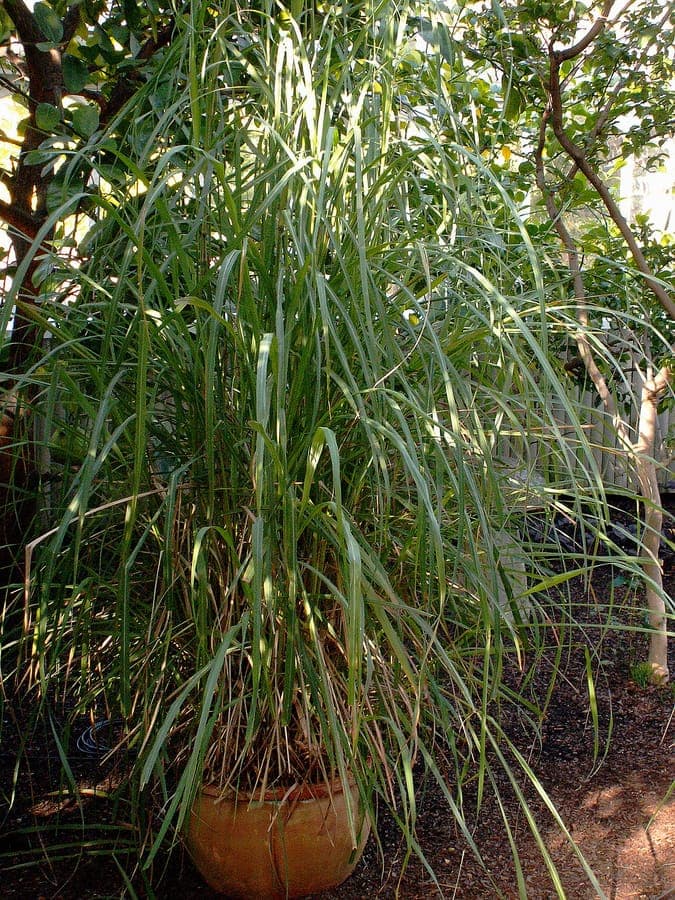
Cbaile19 / CC0, via Wikimedia Commons
East Indian lemongrass: complete guide
Cymbopogon flexuosus
Want to see East Indian lemongrass: complete guide in your garden?
1 minute, no credit card
Overview
East Indian lemongrass - known botanically as Cymbopogon flexuosus - is one of the most aromatic clump-forming plants you can grow in a garden or on a balcony. Native to the humid hill regions of India, Myanmar, Bangladesh and Vietnam, this plant belongs to the grass family (Poaceae) and has been celebrated in its homeland for centuries as a source of valuable essential oils. In temperate climates it is grown as a container specimen that spends summer outdoors and winters in a frost-free space indoors.
C. flexuosus is related to but distinct from the more widely grown Cymbopogon citratus. Both share the common name lemongrass, but C. flexuosus - also called Cochin lemongrass and Malabar lemongrass - has somewhat thinner stems and a slightly more vivid blade colour. The essential oil extracted from this species is particularly rich in Lemonol (geranial and neral combined), making it highly prized in the perfumery and aromatherapy industries worldwide. On gardenworld.app you can explore garden design ideas featuring aromatic accent plants like this one.
The plant was formally described in 1882 and has been cultivated commercially in Kerala, Tamil Nadu and Karnataka for essential oil extraction since at least the early twentieth century. Today it is the species most commonly grown for lemongrass oil in South and Southeast Asia, occupying hundreds of thousands of hectares.
Appearance and bloom cycle
Cymbopogon flexuosus forms dense, upright clumps that reach 150 to 180 cm in height in tropical conditions. In a container in a temperate garden, it typically reaches 80 to 120 cm with a spread of 60 to 90 cm. The long, strap-like leaves are light to blue-green above and paler below, with sharp edges that require a degree of care when harvesting.
The inflorescence is a branched panicle that rises above the leaf canopy. In tropical regions the plant blooms for much of the year, but in temperate climates it flowers - given sufficient summer warmth - from July to September. The flowers are botanically interesting but not showy: small, winged spikelets in yellowish-brown to purplish tones. The real attraction of this plant is the fragrant leaf mass, not the blooms.
After flowering, leaf tips gradually turn brown. With adequate warmth and moisture the plant remains pleasantly green for a long season. The leaves contain essential oils that give the plant some protection against insects - a bonus many gardeners welcome.
Ideal location
Lemongrass needs a sunny to lightly sheltered position with at least five to six hours of direct sunlight per day. Full sun is preferred: the more warmth and light, the more intense the fragrance and the more vigorous the growth. In northern Europe, place the container against a south-facing wall or on a sheltered, warm patio or balcony.
Avoid persistently windy spots. The long, slender blades break in strong winds and develop brown tips when regularly lashed. A sheltered position against a wall or hedge protects the plant considerably. The ideal temperature range for active growth is 20 to 35 degrees Celsius; below 10 degrees growth slows noticeably, and any frost is lethal.
Overwintering indoors is unavoidable in temperate climates: bring the plant in before the first frost, usually in late September or October, to a bright, frost-free room with at least 10 degrees Celsius. A cool greenhouse, conservatory, or bright indoor window sill all work well.
Soil
For best results in a container, use a free-draining, nutrient-rich compost mix. Blend standard potting compost with 20 to 30 percent perlite or coarse horticultural sand to prevent waterlogging. Lemongrass does not tolerate permanently wet roots; standing water leads rapidly to root rot.
The ideal pH is between 5.5 and 7.0. In open ground, the plant thrives on light, sandy to loamy soil that drains freely after rain. Heavy clay is less suitable unless significantly improved with grit and compost. In its native habitat Cymbopogon flexuosus grows on hillsides and riverbanks where the soil is typically mineral-rich but well drained.
Always use a pot with several drainage holes and never stand it in a saucer full of water. A container of at least 30 to 40 litres gives the roots enough room to develop a substantial clump during the growing season. Larger pots reward you with more impressive plants.
Watering
During the growing season (May to September), lemongrass needs regular water but always with intervals: allow the top layer of compost to dry out lightly before watering again. In warm, dry weather this may mean watering two to three times per week. In cool or overcast conditions, once a week is usually sufficient.
Rain water or tap water at room temperature is preferable. Cold water applied directly to roots can temporarily check growth. In winter, when the plant is kept indoors, reduce watering drastically: give just enough to prevent complete drying out, typically once every two to three weeks.
A useful test: push your finger into the compost to the second knuckle. If it still feels slightly moist, do not water yet. If it feels dry, it is time. Consistently overwatering is one of the most common causes of poor results when growing lemongrass in a container.
Free design
Want to see East Indian lemongrass: complete guide in your garden? Make a free design now.
Pruning
Lemongrass requires little intensive pruning, but some tidying is beneficial. In early spring (March to April), before new growth begins, cut away all dead or browning leaves close to the base. Use sharp, clean secateurs. Removing old foliage stimulates the formation of fresh, fragrant new blades.
During the growing season you can freely harvest leaves for culinary use - this actually encourages the plant to produce more shoots. Always cut leaves close to the base rather than halfway up, so no unsightly brown stump remains. Remove any spent flower heads once they have lost their decorative appeal.
In autumn, before bringing the plant indoors, cut it back to about 10 to 15 cm above soil level. This makes overwintering more manageable and promotes vigorous new growth the following spring. The cut leaves can be dried and used in the kitchen or as ingredients for potpourri.
Maintenance calendar
March-April: Remove all dead foliage and cut back if you did not do so in autumn. Begin increasing watering as temperatures rise. Move the pot outdoors after the last frost date.
May-June: Introduce the plant gradually to outdoor conditions. Add a slow-release fertiliser to the compost at the start of the season. Water when the top layer feels lightly dry. Check for aphids or spider mite.
July-August: This is the period of most vigorous growth. Water two to three times per week in dry weather. Apply liquid fertiliser monthly. Harvest fresh blades for the kitchen or herbal teas.
September: Reduce watering slightly. Monitor night temperatures. Move the plant indoors at the first forecast of frost.
October-February: Overwinter indoors in a bright, frost-free location. Minimal watering, no fertiliser. Check periodically for mould caused by low indoor humidity.
Winter hardiness
Cymbopogon flexuosus is not frost-tolerant in temperate northern European climates. The plant originates from a climate zone corresponding to USDA zones 10 to 11, meaning it cannot survive temperatures below zero. Even brief frost can damage roots or kill the plant outright.
It is essential to bring the plant indoors before the first overnight frost, which typically falls between mid-September and mid-October in the Netherlands and Belgium. Keep it in a bright indoor location away from heating radiators that dry the air excessively. A temperature of 10 to 15 degrees Celsius is ideal for overwintering: the plant pauses growth but does not deteriorate.
In mild coastal areas, some gardeners attempt to overwinter lemongrass outdoors under a thick mulch layer in a sheltered, frost-free corner, but this is risky and is not recommended. The safest approach is always to bring the plant inside once temperatures consistently drop towards five degrees Celsius.
Companion plants
Lemongrass pairs beautifully with other aromatic and Mediterranean plants. On gardenworld.app you can browse garden designs showing how clump-forming aromatic plants create textural interest alongside broader-leaved species.
Excellent companions in a container or border include: basil (Ocimum basilicum), which also needs full sun and adds a complementary fragrance; rosemary (Salvia rosmarinus), which prefers a similar dry, warm position; mint (Mentha spp.) as a ground-covering companion in a separate pot (mint spreads aggressively and should not share a container); lavender (Lavandula angustifolia) for colour contrast and double fragrance appeal; and Agapanthus for a dramatic blue-purple floral display that contrasts beautifully with the grassy green blades of lemongrass.
For a purely Asian-themed container garden, combine lemongrass with bamboo, galangal (Alpinia galanga) and kaffir lime (Citrus hystrix). Avoid pairing with moisture-loving plants that need consistently wet conditions: lemongrass requires dry intervals and tolerates permanently wet soil poorly. Good garden centres stock lemongrass as a container plant through the summer months.
Closing
Cymbopogon flexuosus, East Indian lemongrass, is a remarkable plant that adds fragrance, flavour, and dramatic texture to any garden or patio. Those willing to overwinter the plant indoors annually are rewarded with an impressive clump and an overwhelming citrus scent throughout the summer.
Look for lemongrass plants at specialist garden centres and nurseries from late spring onwards. It is also easy to propagate by dividing the clump in spring: use a sharp knife to split the clump in half or quarters, pot each section in fresh compost and water well. Within a few weeks each section will establish itself as an independent plant.
The scent of fresh lemongrass leaves is itself enough reason to grow this plant - rub a blade between your fingers and you immediately understand why this species has been valued across South and Southeast Asia for millennia.
Want to see East Indian lemongrass: complete guide in your garden? Make a free design now.
Upload a photo, pick a style, and get a photorealistic design with plant list in under a minute.
10,000+ gardens designed already
No credit card required


Similar plants
Lemongrass: complete guide
Cymbopogon Citratus
Everything you need to know about Lemongrass - growing, caring and enjoying this plant in your garden.
Cymbopogon nardus: complete guide
Cymbopogon nardus
Citronella grass is an aromatic grass with a strong refreshing scent. Ideal for borders and insect repulsion. Discover how to cultivate and maintain it.