
Mikenorton / CC BY-SA 4.0, via Wikimedia Commons
Clover dodder: complete guide
Cuscuta epithymum
Want to see Clover dodder: complete guide in your garden?
1 minute, no credit card
Overview
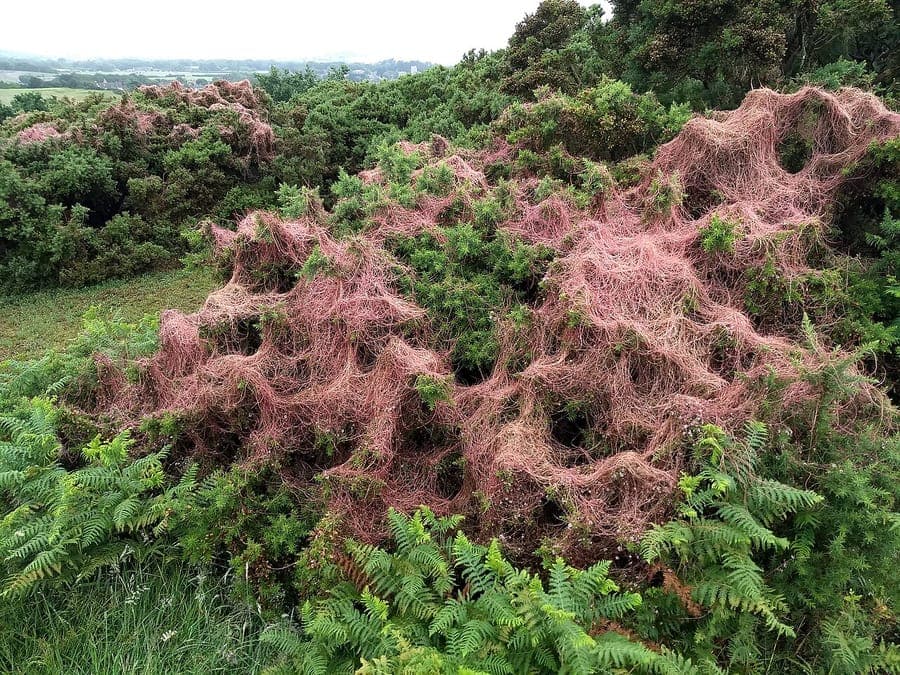
Clover dodder (Cuscuta epithymum) isn't your average garden plant. It's a thread-like, bright yellow-orange parasite that wraps itself around host plants like clover, thyme, and other low herbs. It has no real leaves and relies entirely on its host for water and nutrients. As a gardener, you'll either love it for its eerie beauty or hate it for its aggressive spread. It's not sold in most standard garden centres, but can appear spontaneously. If you're curious, you can plan around it using gardenworld.app to design a layout that accounts for its creeping nature and host dependencies.
Appearance & bloom cycle
The plant looks like tangled golden string, twisting tightly around stems of clover or thyme. Stems are thin, about 1–2 mm thick, and can reach 50 cm in length. Tiny white to pale pink flowers bloom from July to September, clustered in small round heads no more than 3 mm across. After flowering, it produces round seed capsules that mature by late summer. Each plant can drop dozens of seeds, which remain viable in soil for up to two years. The lack of green foliage gives it an almost alien appearance.
Ideal location
Full sun is essential. Clover dodder thrives in open, dry areas where its host plants grow well. Look for edges of meadows, dry borders, or gravel gardens. Since it depends on clover (Trifolium spp.) or wild thyme (Thymus serpyllum), your location must already support those. Avoid planting near rare or delicate species. If you want to grow it on purpose, create a designated patch with healthy clover. Keep it away from vegetable beds - once established, it's hard to remove. Consider using physical barriers like stone edging to contain spread.
Soil requirements
The dodder itself doesn't care about soil - it only matters for the host. Clover prefers well-drained loam with a pH between 6.0 and 7.0. Avoid heavy clay unless amended with sand or compost. Sandy soils work if they're not too dry. The key is a strong host: weak clover means weak dodder, but also a higher chance of plant death. Test your soil before introducing clover - you can use gardenworld.app's soil analysis tool to check nutrient levels and drainage.
Watering
Don't water the dodder directly. It pulls all moisture from its host. Focus instead on keeping clover plants hydrated, especially during dry spells. Aim for about 2.5 cm of water per week in summer. Use drip irrigation or soaker hoses to avoid wetting foliage, which can promote disease. Overwatering weakens clover and makes it more vulnerable to parasitism. Let the top 2.5 cm of soil dry between waterings.
Free design
Want to see Clover dodder: complete guide in your garden? Make a free design now.
Pruning
Pruning here means removal, not shaping. Cut or pull stems by hand before seeds form - ideally in August. Wear gloves; the stems can be sticky. If you're trying to preserve it in a controlled area, trim only excess growth beyond your boundary. Keep lengths under 50 cm with regular checks. Never compost cuttings - seeds may survive. Dispose of them in sealed bags.
Maintenance calendar
January: Check for leftover seed pods, prep soil for clover. February: Amend soil if needed. March: Sow clover seeds. April: Monitor for early dodder sprouts. May: Ensure clover is healthy and established. June: Maintain moisture, watch for dodder attachment. July: First blooms appear; monitor spread. August: Remove flowering stems to prevent seeding. September: Clear all dodder remnants. October: Inspect for late growth. November: Clean garden debris. December: Plan next season's host placement.
Winter hardiness
Clover dodder is an annual but survives winter as seed. It's hardy in USDA zones 5–10. Seeds tolerate temperatures down to -20°C. The plant dies back completely in autumn. Seeds germinate in spring when soil hits 10°C - usually April or May. To reduce spread, lightly rake soil in early spring to bring seeds to the surface, where birds may eat them.
Companion plants
Use white clover (Trifolium repens) as the primary host. Wild thyme and oregano also work. Avoid pairing with slow-growing or rare perennials. While not a companion in the traditional sense, you can use tough plants like lavender or yarrow as barriers - dodder won't easily attach to their woody stems. Keep it away from herb gardens unless you want to risk losing your thyme or oregano.
Closing
Clover dodder is not for the faint-hearted. It's fascinating, yes, but also invasive if unchecked. If you're determined to grow it, do so in a contained area with strong, expendable host plants. It's rarely available at garden centres, but you might find seeds through specialty suppliers. In the UK or US, check independent nurseries or online forums. Mainstream retailers like OBI or Truffaut don't typically carry it. Use gardenworld.app to simulate how dodder might spread across your garden based on host placement and sun exposure.
Want to see Clover dodder: complete guide in your garden? Make a free design now.
Upload a photo, pick a style, and get a photorealistic design with plant list in under a minute.
No credit card required


Similar plants
Spreading alkaliweed: complete guide
Cressa truxillensis
Full growing guide for Cressa truxillensis, the salt-tolerant groundcover of alkaline flats: location, soil, watering, pruning and winter care.
Betony-leaved bindweed: complete guide
Convolvulus betonicifolius
Full guide to betony-leaved bindweed (Convolvulus betonicifolius): origin, appearance, ideal site, soil, watering and garden uses.
Ivyleaf morning glory: complete guide
Ipomoea hederacea
Everything about Ipomoea hederacea: location, soil and climbing care. A fast-growing annual vine with blue funnel flowers for sunny walls and pergolas.