
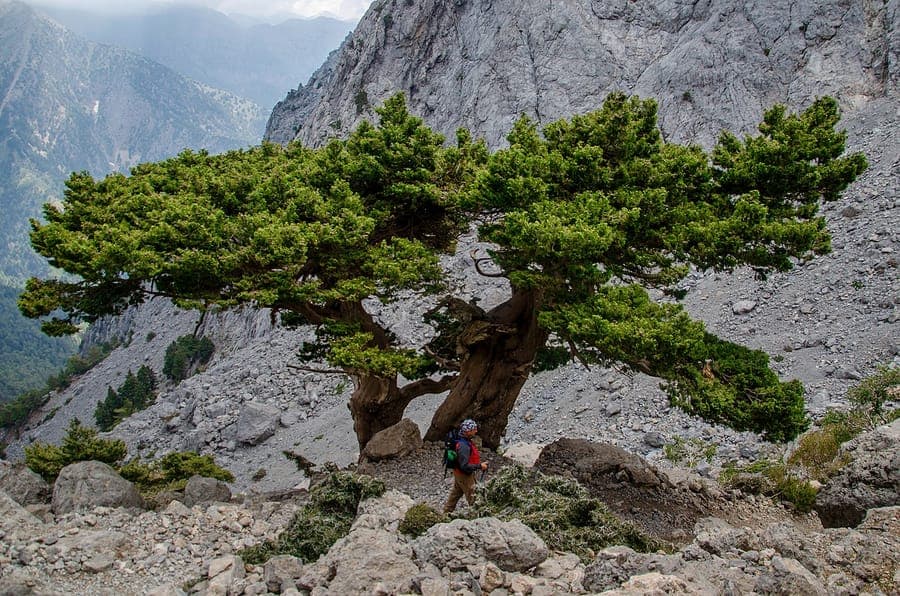
Andloukakis / CC BY-SA 4.0, via Wikimedia Commons
Mediterranean cypress: complete guide
Cupressus sempervirens
Want to see Mediterranean cypress: complete guide in your garden?
1 minute, no credit card
Overview
Cupressus sempervirens, commonly known as the Mediterranean cypress, is a striking evergreen tree that brings instant structure and verticality to any garden. Native to regions like Cyprus, Turkey, and the eastern Mediterranean, this tree thrives in hot, dry climates but can adapt well to temperate zones with proper care. It's a slow to moderate grower, gaining 30–50 cm per year, and can eventually reach 20–25 meters in height, though in cultivation it's often kept narrower through pruning.
This tree has long been associated with formal landscapes, especially in Italian and Provençal gardens, where rows of cypresses frame pathways or accentuate entrances. Its tall, columnar form makes it perfect for adding drama without taking up much ground space. If you're planning a modern or Mediterranean-style garden, the Mediterranean cypress should be at the top of your list.
On gardenworld.app, you can design a layout that integrates these trees seamlessly into your outdoor space, whether you have a compact urban courtyard or a sprawling rural estate. Visualising their mature height and spacing early on prevents overcrowding later.
Appearance & bloom cycle
The Mediterranean cypress features dense, dark green foliage made up of tiny, scale-like leaves that cling tightly to upright branches. The overall shape is narrowly conical or columnar, rarely exceeding 2–3 meters in width even at full maturity. This vertical habit makes it ideal for tight spaces or formal alignments.
Though not showy in the traditional sense, Cupressus sempervirens produces small, inconspicuous flower structures in April. These are creamy-white male strobili that release pollen into the air. Female cones follow and develop into woody, spherical cones about 2–3 cm in diameter, ripening over two years before splitting open to disperse seeds. While not ornamental in the way flowering shrubs are, the tree's year-round evergreen presence provides consistent texture and form.
Young trees grow faster than older ones, and the foliage may appear slightly softer in texture during the first few years.
Ideal location
Full sun is non-negotiable for this species - aim for at least 8 hours of direct sunlight daily. The Mediterranean cypress will not thrive in shade or even partial shade. It also needs good air circulation to prevent fungal issues, so avoid planting it in stagnant, enclosed areas.
Give it room to grow vertically and ensure the site isn't too close to buildings, underground pipes, or paved surfaces. The root system is spreading and can cause damage over time. In exposed or windy locations, young trees may need staking for the first 1–2 years.
Soil requirements
This tree prefers well-drained, sandy or loamy soils with a neutral to slightly alkaline pH (7.0–7.5). It tolerates poor, rocky soils but struggles in heavy clay or waterlogged conditions. If your soil is compacted or retains too much moisture, consider planting in a raised bed or amending with grit and sand to improve drainage.
Avoid enriching the soil with compost or manure - the Mediterranean cypress evolved in nutrient-poor environments and can suffer from over-fertilisation. Excess nutrients often lead to weak, leggy growth and increased susceptibility to pests like cypress aphids.
Free design
Want to see Mediterranean cypress: complete guide in your garden? Make a free design now.
Watering
Once established, Cupressus sempervirens is highly drought-tolerant. During the first growing season, however, water deeply once a week during dry spells to help the root system establish. After that, mature trees rarely need supplemental watering, except during prolonged droughts in summer.
When you do water, soak the base thoroughly rather than light sprinkling. This encourages deeper root development. Use rainwater if possible, as tap water high in lime can build up in the soil and affect pH over time.
Pruning
Pruning is minimal for this tree. Its natural form is elegant and tight, so heavy cutting is discouraged. If shaping is needed - for hedges or topiary - prune lightly in late winter or early spring before new growth begins. Avoid cutting into old wood, as the tree won't regenerate from bare branches.
For formal hedges, a second light trim in early summer helps maintain density. Always use clean, sharp tools to prevent disease transmission.
Maintenance calendar
- Jan: Inspect for frost damage, remove dead branches
- Feb: Light pruning if needed, prepare for spring growth
- Mar: Check young trees for moisture stress
- Apr: Pollen release (male strobili visible), no fertiliser required
- May: Monitor for cypress aphids or spider mites
- Jun: Optional light shaping, keep soil well-drained
- Jul: Drought watch, especially for container-grown specimens
- Aug: No maintenance needed, avoid pruning in heat
- Sep: Check for bagworms or cypress canker
- Oct: Reduce watering as growth slows
- Nov: Protect potted trees from freezing with insulation
- Dec: Final inspection, secure loose ties on staked trees
Winter hardiness
The Mediterranean cypress is hardy to USDA zones 7b–11, tolerating temperatures down to -12°C. In colder regions, young or container-grown trees should be moved to sheltered spots or wrapped with hessian. In exposed gardens, wind scorch can damage foliage, so consider a windbreak.
In colder zones, tip dieback may occur after harsh winters, but the tree often recovers in spring if the main trunk remains healthy.
Companion plants
Pair with drought-tolerant, sun-loving plants that complement its architectural form. Lavender, rosemary, santolina, and thyme work well, offering fragrance and soft texture contrast. For lower structure, try boxwood or dwarf olive trees.
Avoid moisture-loving plants like ferns or hostas, which create conflicting cultural needs and may invite root rot in shared beds.
Closing
The Mediterranean cypress is a low-maintenance, high-impact tree that brings timeless elegance to any garden. With its narrow profile and evergreen foliage, it's perfect for modern designs, Mediterranean themes, or classic formal layouts.
When planning your planting scheme, use gardenworld.app to visualise spacing, mature height, and shadow patterns. This helps avoid future conflicts with structures or other plants. You can also find recommended retailers like garden centres across the UK that stock healthy, well-rooted specimens ready for planting. Whether you're creating a dramatic entryway or a secluded garden room, Cupressus sempervirens delivers year-round presence and style.
Want to see Mediterranean cypress: complete guide in your garden? Make a free design now.
Upload a photo, pick a style, and get a photorealistic design with plant list in under a minute.
No credit card required


Similar plants
Cupressus macnabiana: complete guide
Cupressus macnabiana
The Fragrant Cypress offers elegant growth with fine, aromatic foliage. Perfect for temperate climates and as specimen trees in contemporary gardens.
Cupressus guadalupensis: complete guide
Cupressus guadalupensis
The Guadalupe cypress: an elegant conifer for gardens. Complete cultivation guide for this Mexican cypress. Information about care, location, form and maintenance.
Austrocedrus chilensis: complete guide
Austrocedrus chilensis
Discover Austrocedrus chilensis, the Chilean Cedar ornamental conifer. Elegant specimen with fine foliage and columnar form for permanent structure.