
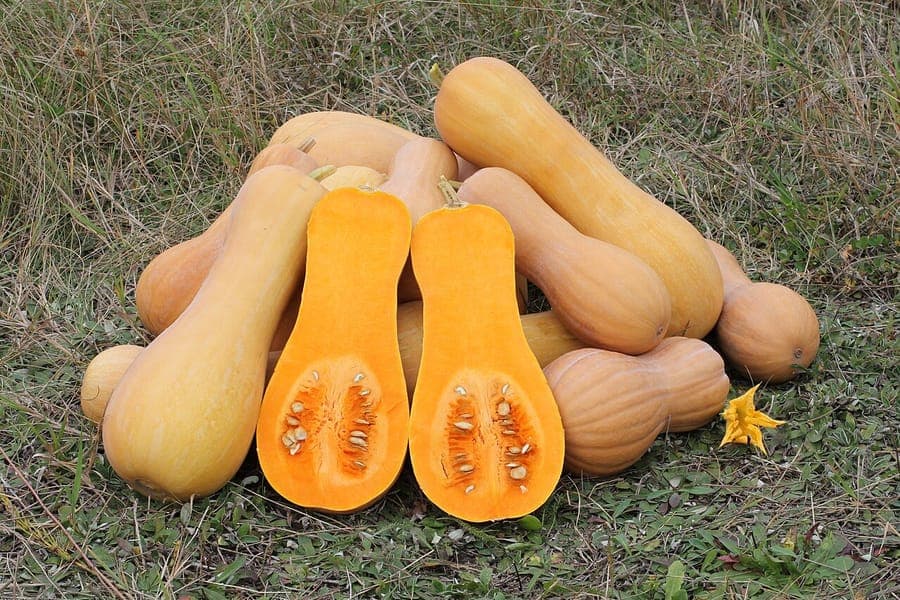
George Chernilevsky / Public domain, via Wikimedia Commons
Spanish gourd: complete guide
Cucurbita moschata
Want to see Spanish gourd: complete guide in your garden?
1 minute, no credit card
Overview
Cucurbita moschata, commonly known as Spanish gourd, is a warm-season annual vine in the Cucurbitaceae family. Native to regions of Mexico, Guatemala, and Belize, this plant thrives in hot summers and long growing seasons. In temperate climates like USDA zones 3–9, it's planted after the last frost, typically from late May to early June, and harvested between September and October. The vine can stretch 3 to 5 meters, so it needs space - either along the ground or supported by trellises.
Spanish gourd is prized for its dense, sweet flesh, often used in soups, pies, and roasted dishes. Unlike some pumpkins, its flesh stores well for months when cured properly. It's a reliable performer for gardeners who want high yields with moderate effort.
Planning a garden layout? On gardenworld.app, you can design a plot that accounts for sprawling vines, ensuring your Spanish gourd has room without crowding other crops.
Appearance & bloom cycle
The plant features large, deeply lobed leaves up to 30 cm across, with a rough, sandpapery texture. Vines are hairy and sturdy, capable of climbing or trailing. Bright yellow flowers appear from July onward - male flowers on long, slender stems, female flowers closer to the vine with a small swelling at the base (the future fruit).
Pollination is key. Bees and bumblebees do most of the work, but if insect activity is low, hand-pollinate using a small brush. Transfer pollen from male to female flowers in the morning for best results. Fruit sets within days and grows steadily through late summer.
Mature fruits range from 2 to 6 kg, with tan to golden-brown rinds and a slightly elongated shape. The skin hardens as it matures, which helps in storage.
Ideal location
Spanish gourd demands full sun - at least 6 to 8 hours daily. A south-facing spot with minimal shade is ideal. Because the vines spread widely, allocate at least 2 square meters per plant. If space is tight, train it vertically on a strong trellis made of wood or metal, rated to support 10+ kg.
Elevating the vines reduces disease risk and saves ground space. On gardenworld.app, you can simulate different support structures to see which fits your garden layout and load requirements.
Soil requirements
Grow in rich, well-draining soil with plenty of organic matter. Amend planting holes with 2–3 liters of compost or well-rotted manure. The ideal pH is between 6.0 and 6.8. Avoid waterlogged or compacted soils - these lead to root rot.
Before planting, loosen the soil to 30 cm depth. A layer of straw or leaf mulch helps retain moisture and suppress weeds. Keep mulch a few inches from the stem base to prevent rot.
Free design
Want to see Spanish gourd: complete guide in your garden? Make a free design now.
Watering
Consistent moisture is critical, especially during flowering and fruit development. Water deeply 2–3 times per week, delivering 15–20 liters per plant weekly. Increase to 30 liters during heatwaves.
Drip irrigation is ideal - it keeps foliage dry and delivers water directly to roots. Avoid overhead watering, which promotes powdery mildew. Early morning is the best time to irrigate.
Pruning
Pruning isn't required but can improve air circulation and fruit size. Pinch off the growing tip once the main vine reaches 4 meters to encourage lateral branching. Remove weak or diseased side shoots.
You can also prune to direct growth away from pathways or other plants. Never cut too close to developing fruit - leave at least 15 cm of stem attached for proper curing.
Maintenance calendar
- April–May: Start seeds indoors in 10 cm pots at 21–24°C. Harden off before transplanting.
- Late May–early June: Plant outdoors after frost danger passes. Space 1.5 m apart.
- July: Monitor for squash bugs and vine borers. Hand-pollinate if needed.
- August: Mulch to retain moisture. Support heavy fruits with slings if grown vertically.
- September–October: Harvest when rind is hard and stem is dry and corky. Cure in a warm, dry spot for 10–14 days before storage.
Winter hardiness
Spanish gourd is not frost-tolerant. It dies back completely after temperatures drop below 5°C. As an annual, it won't return next year. Save seeds from mature fruits: clean, dry, and store in a cool, dark place for up to 4 years.
Companion plants
Grow alongside corn and pole beans - the traditional Three Sisters method. The gourd's broad leaves shade the soil, reducing weeds and evaporation. Nasturtiums and dill attract beneficial insects. Avoid planting near potatoes or cucumbers, which compete for nutrients and attract similar pests.
Closing
Spanish gourd is a rewarding addition to any vegetable garden. With full sun, rich soil, and consistent care, it delivers abundant, flavorful harvests. Its long storage life makes it a staple for winter meals.
Pick up seedlings at local garden centres or start from seed. Look for healthy, dark green plants without signs of yellowing or pests. And remember: good garden design prevents overcrowding. Use gardenworld.app to plan spacing and support systems that match the plant's vigorous growth.
Want to see Spanish gourd: complete guide in your garden? Make a free design now.
Upload a photo, pick a style, and get a photorealistic design with plant list in under a minute.
No credit card required


Similar plants
Kiwano: complete guide
Cucumis metuliferus
Everything about growing kiwano: location, soil, watering, and harvesting this striking African horned cucumber with spiny orange fruits.
Sponge gourd: complete guide
Luffa aegyptiaca
Full guide to growing sponge gourd (Luffa aegyptiaca): sowing, care, harvesting edible fruits and drying natural loofah sponges in your garden.
Cucumis prophetarum: complete guide
Cucumis prophetarum
Wild cucumber is a fascinating climbing plant with remarkable spiky fruits. Learn how to grow this exotic annual from seed to harvest for decorative interest.