
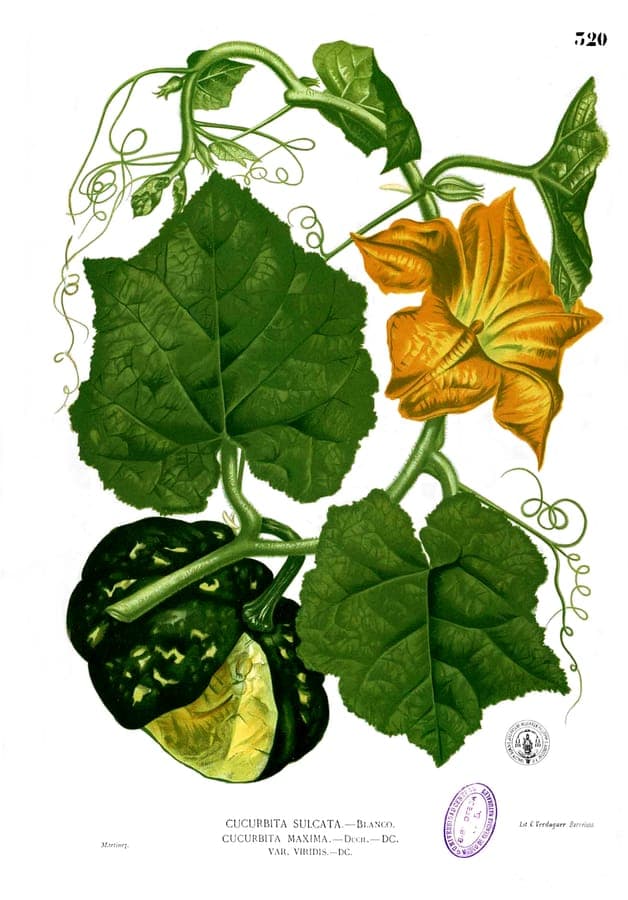
Francisco Manuel Blanco (1778 – 1845) (O.S.A.) / Public domain, via Wikimedia Commons
Great pumpkin: complete guide
Cucurbita maxima
Want to see Great pumpkin: complete guide in your garden?
1 minute, no credit card
Overview
Cucurbita maxima, commonly known as the Great pumpkin, is a standout in the Cucurbitaceae family. Native to northeastern and northwestern Argentina and Bolivia, this vigorous vine has won the hearts of gardeners worldwide with its massive, flavorful fruits. In temperate climates like USDA zones 6 to 8, it's grown as an annual, completing its life cycle in one season. The plant spreads as a forb or herb, sending out vines that can stretch 3 to 5 meters, so space is a must. But that sprawling habit also makes it excellent for covering bare ground and suppressing weeds.
If you're planning your layout, gardenworld.app offers smart garden designs that accommodate sprawling vines like Cucurbita maxima. Whether you're using a corner of your vegetable patch or training young shoots along a trellis, a well-thought plan prevents overcrowding and improves airflow. These pumpkins aren't just for Halloween - many varieties are prized for their sweet, nutty flesh used in soups, pies, and roasting.
Appearance & bloom cycle
Great pumpkins start with large, heart-shaped leaves up to 30 cm across, covered in fine hairs that deter pests and reduce moisture loss. From late June through August, bright yellow flowers appear. Male flowers show first, followed by female ones, identifiable by the small fruit swelling behind the bloom. Pollination relies heavily on bees - if insect activity is low, hand-pollinating with a small brush can boost fruit set.
Fruit development takes 90 to 120 days, depending on the variety. Giants like 'Atlantic Giant' can surpass 20 kg, with record specimens hitting over 100 kg under ideal care. Other popular cultivars include 'Crown Prince' with its blue-gray skin and golden flesh, and 'Hokkaido', a smaller, edible-rind type perfect for home gardens.
Ideal location
Full sun is non-negotiable - aim for 6 to 8 hours of direct sunlight daily. Choose a site that warms up early in spring and stays unshaded through midday. Avoid planting near tall shrubs or fences that cast afternoon shadows. The vines need room, so allocate at least 2 meters in each direction per plant. If space is tight, gently train vines onto low supports, but keep in mind that heavy fruits should rest on the ground or be cradled in slings.
You can use gardenworld.app to visualize how to place your pumpkin patch within existing beds or borders, ensuring enough clearance for vine expansion and harvest access.
Soil requirements
Cucurbita maxima thrives in rich, well-draining loam or clay-loam with a pH of 6.0 to 6.8. Before planting, mix in 5 to 10 cm of compost or well-rotted manure to boost fertility. These pumpkins are heavy feeders, especially during flowering and fruiting, so a balanced organic fertilizer applied every 3 to 4 weeks helps sustain growth.
Plant seedlings outdoors after the last frost, typically from late May to early June, when soil temperature reaches at least 15°C. Space plants 120 to 150 cm apart, with 180 cm between rows to reduce disease risk and improve air movement.
Free design
Want to see Great pumpkin: complete guide in your garden? Make a free design now.
Watering
Consistent moisture is key. Provide 10 to 15 liters of water per plant per week, applied at the base to keep foliage dry. Drip irrigation is ideal. During fruit swell, don't let the soil dry out - inconsistent watering can cause rind cracking.
Water early in the morning to allow excess moisture to evaporate. Avoid overhead watering, which encourages powdery mildew. In hot, dry spells, increase frequency but avoid waterlogging, which leads to root rot.
Pruning
Pruning isn't required, but strategic trimming can improve fruit quality. After 3 to 4 fruits have set, pinch off the vine tips to redirect energy into ripening rather than new growth. Remove any crowded or ground-hugging side shoots to enhance airflow and reduce fungal issues.
Use clean, sharp shears to prevent disease spread. Never prune during wet conditions, and avoid touching open wounds on the vine.
Maintenance calendar
- March–April: Start seeds indoors in 10 cm pots.
- May: Harden off seedlings. Prepare soil with compost.
- June: Transplant outdoors after frost danger passes. Begin monitoring for squash bugs and mildew.
- July–August: Flowers appear. Hand-pollinate if needed. Maintain even watering.
- September: Fruits swell rapidly. Reduce nitrogen, increase potassium.
- October: Harvest before first frost. Cut stem at least 10 cm from the fruit.
- November: Clear plant debris. Compost healthy material only.
Winter hardiness
This is a tender annual, not frost-tolerant. Plants die back at temperatures below 0°C. In USDA zones 9 and above, it may survive mild winters, but is typically replanted each spring. Save seeds from healthy fruits: dry them for a week, then store in a cool, dark place for next season.
Companion plants
Pair Great pumpkin with corn, beans, or sunflowers. The 'Three Sisters' method uses corn as a trellis, beans to fix nitrogen, and pumpkin as a living mulch. Alliums like garlic or chives deter aphids and beetles. Avoid planting near potatoes or brassicas, which compete for nutrients and attract similar pests.
Nasturtiums make excellent ground cover companions - they repel squash bugs and add edible blooms to salads.
Closing
Growing Cucurbita maxima takes effort, but the payoff is huge - literally. Whether you're chasing a record-breaking harvest or want homegrown pumpkin for pies, this plant delivers. Buy seeds or starter plants from garden centres like those in your area, and give them sun, space, and steady care. With attention to soil, water, and timing, you'll enjoy a bountiful autumn harvest. And remember, gardenworld.app can help you design a layout that maximizes yield while keeping your garden looking tidy and functional.
Want to see Great pumpkin: complete guide in your garden? Make a free design now.
Upload a photo, pick a style, and get a photorealistic design with plant list in under a minute.
No credit card required


Similar plants
Kiwano: complete guide
Cucumis metuliferus
Everything about growing kiwano: location, soil, watering, and harvesting this striking African horned cucumber with spiny orange fruits.
Sponge gourd: complete guide
Luffa aegyptiaca
Full guide to growing sponge gourd (Luffa aegyptiaca): sowing, care, harvesting edible fruits and drying natural loofah sponges in your garden.
Cucumis prophetarum: complete guide
Cucumis prophetarum
Wild cucumber is a fascinating climbing plant with remarkable spiky fruits. Learn how to grow this exotic annual from seed to harvest for decorative interest.