
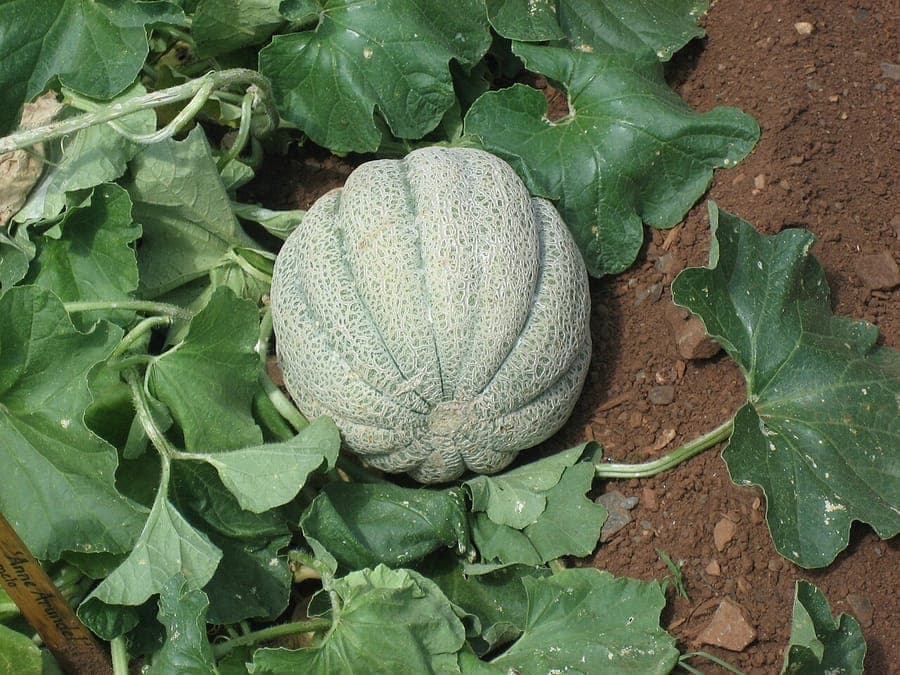
Seth Vidal / CC BY-SA 2.0, via Wikimedia Commons
Melon: complete guide
Cucumis melo
Want to see Melon: complete guide in your garden?
1 minute, no credit card
Overview
Melons (Cucumis melo) bring tropical sweetness to home gardens, rewarding gardeners with fragrant, juicy fruits when grown with care. Native to regions stretching from Afghanistan through northern India and parts of East Africa like Ethiopia and Kenya, these plants thrive in hot, dry conditions. In temperate zones like USDA hardiness zones 6–9, melons need a long, warm growing season of at least 70 to 90 days. Starting seeds indoors from late March to early April gives you the best shot at ripening fruits before autumn.
These members of the Cucurbitaceae family grow as sprawling or climbing annual vines, often reaching 1.5 to 2 meters in length. Their large, fuzzy leaves help shade the soil, reducing moisture loss. For best results in cooler climates, grow melons in a greenhouse, against a warm south-facing wall, or under cloches. On gardenworld.app, you can generate a custom layout optimized for heat-loving crops like melons, ensuring your plants get maximum sun exposure.
Appearance & bloom cycle
Melon vines produce large, palmate leaves up to 15 cm across, with a rough, hairy texture. In early summer, typically from June onward, bright yellow flowers appear. These are monoecious, meaning both male and female blooms form on the same plant. Female flowers are easily identified by the tiny fruit swelling behind the bloom. Pollination often requires bees or hand-pollination in enclosed spaces.
Fruits begin forming in mid-July and mature by late August to early September. Depending on variety-like cantaloupe, honeydew, or Charentais-the skin may be netted, smooth, or ribbed, and flesh ranges from pale green to orange. A ripe melon yields slightly to pressure and emits a sweet aroma at the stem end.
Ideal location
Full sun is non-negotiable-aim for 7 to 8 hours daily. Choose a south- or southwest-facing spot that absorbs and radiates heat, such as near a brick wall or stone patio. In cooler regions, use black plastic mulch to warm the soil before planting. Vines can sprawl on the ground or climb supports; use trellises up to 1.8 meters high and secure fruits in slings made from cloth or mesh to prevent breakage.
Vertical growing saves space and improves air circulation. On gardenworld.app, explore designs that integrate melon trellises into pergolas or raised beds for smarter space use.
Soil requirements
Well-draining, loamy soil rich in organic matter is ideal. Aim for a pH between 6.0 and 6.8. Amend heavy clay with compost, aged manure, and coarse sand to improve texture and fertility. Loosen the soil to 30 cm deep before planting. For container growing, use a high-quality potting mix with added perlite or coconut coir for drainage.
Soil temperature should be at least 18°C before transplanting outdoors. Use a soil thermometer to monitor-planting too early leads to stunted growth.
Free design
Want to see Melon: complete guide in your garden? Make a free design now.
Watering
Consistent moisture is key, especially during flowering and fruit set. Water deeply 2–3 times per week, applying 2.5 to 4 cm per session. Avoid wetting foliage to reduce fungal risks-use drip irrigation or water at the base. As fruits near maturity, taper off water slightly to concentrate sugars and prevent splitting.
Mulching with straw or compost helps retain moisture and keeps fruits clean.
Pruning
Pruning boosts airflow and directs energy into fruit production. Once vines have 5–6 true leaves, pinch the main stem to encourage lateral growth. Train 2–3 primary side shoots and remove weaker ones. Limit each side shoot to 2–3 fruits for optimal size and sweetness.
Wear gloves when handling-sap from stems and leaves can cause skin irritation. Use sterilized pruners and clean between plants to avoid spreading diseases like cucumber mosaic virus.
Maintenance calendar
- March–April: Start seeds indoors in 8 cm pots, two per pot, 1 cm deep. Keep at 22–25°C.
- May: Transplant to larger pots or harden off for outdoor planting.
- June: Set out after last frost, spacing 60 cm apart. Install trellises and supports.
- July–August: Monitor for pests, water consistently, and hand-pollinate if needed.
- September: Harvest ripe melons. Protect late fruits with row covers if cold sets in.
Winter hardiness
Melons are not frost-hardy and die at temperatures below 10°C. As annuals, they complete their life cycle in one season. There's no need to overwinter-re-sow each spring. In cooler zones, choose early varieties like 'Minnesota Midget' or 'Dulce' to maximize ripening chances.
Companion plants
Good companions include corn, nasturtiums, and marigolds. Corn provides natural support, while nasturtiums deter aphids and attract pollinators. Avoid planting near potatoes or other cucurbits like pumpkins, which compete for nutrients and share pests.
Basil and oregano planted nearby improve flavor and repel some insects, but don't overcrowd-melons need good airflow.
Closing
Growing melons outside the tropics takes planning, but the payoff is worth it. Start seeds early, protect young plants from cool nights, and keep vines well-supported. In the UK and northern Europe, look for early-maturing varieties at garden centres like those in late May displays. Recommended suppliers include local nurseries and online seed companies.
For a personalized planting schedule and companion layout, visit gardenworld.app-its tools help you time sowings and maximize yields based on your local climate.
Want to see Melon: complete guide in your garden? Make a free design now.
Upload a photo, pick a style, and get a photorealistic design with plant list in under a minute.
No credit card required


Similar plants
Kiwano: complete guide
Cucumis metuliferus
Everything about growing kiwano: location, soil, watering, and harvesting this striking African horned cucumber with spiny orange fruits.
Sponge gourd: complete guide
Luffa aegyptiaca
Full guide to growing sponge gourd (Luffa aegyptiaca): sowing, care, harvesting edible fruits and drying natural loofah sponges in your garden.
Cucumis prophetarum: complete guide
Cucumis prophetarum
Wild cucumber is a fascinating climbing plant with remarkable spiky fruits. Learn how to grow this exotic annual from seed to harvest for decorative interest.