
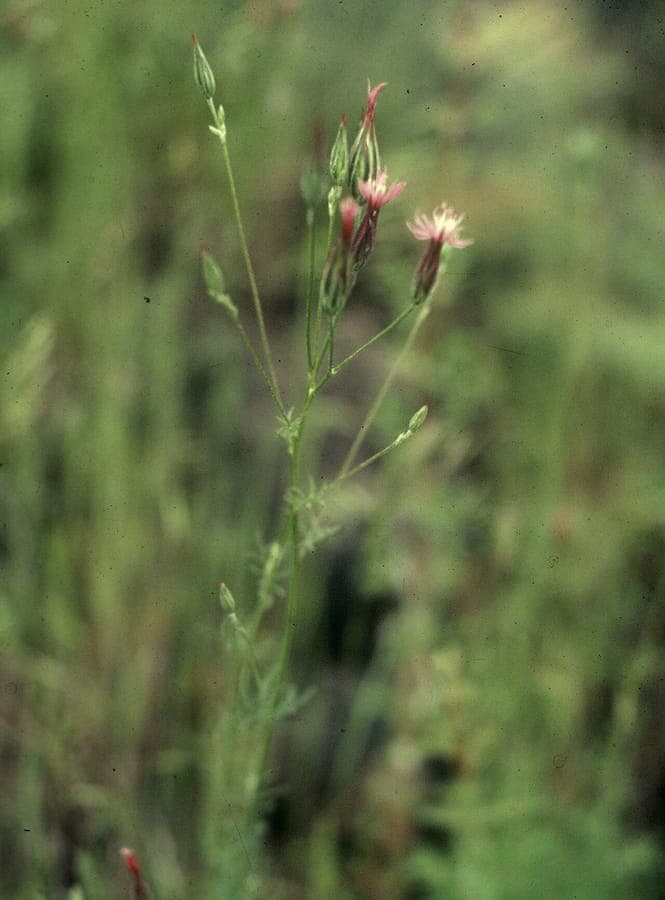
USDA APHIS PPQ Archive, USDA APHIS PPQ, Bugwood.org / CC BY 3.0 us, via Wikimedia Commons
Crupina vulgaris: complete guide
Crupina vulgaris
Want to see Crupina vulgaris: complete guide in your garden?
1 minute, no credit card
Overview
Crupina vulgaris, commonly known as bearded creeper, is an elegant plant from the Asteraceae family widely distributed across Europe and the Mediterranean region. This versatile plant naturally thrives in Mediterranean zones, from Portugal and Spain to Turkey and Asia Minor. It is a half-climbing species with attractive purple flowers and a compact growth habit that excels in borders and naturalized garden settings.
If you seek a low-maintenance plant that tolerates drought and poor soils, Crupina vulgaris is an excellent choice. This plant thrives in sunny locations and requires relatively minimal care, making it ideal for fuss-free gardening.
Appearance & Bloom
Crupina vulgaris is a herbaceous plant, typically growing 30-60 cm tall, with thin, branched stems bearing finely divided foliage. The leaves are linear, giving the plant an airy appearance. The flowers are small purple blooms clustered in dense heads, creating an attractive ornamental effect. The flowering period runs from May to July, adding valuable interest to spring borders.
The fruits are small, stiffly hairy nutlets with characteristic bristly attachments, earning the plant its common name "bearded creeper." This feature provides visual interest even after blooming concludes.
Ideal Location
Crupina vulgaris thrives best in sunny positions receiving 6-8 hours of direct sunlight daily. The plant is highly tolerant of full sun and even dry conditions. A south-facing location against a wall or garden building is ideal. Avoid shady spots where the plant may grow but will produce fewer flowers.
This plant excels in hot, dry situations and grows well even in poor soils. It is perfect for dry gravel plantings, green roofs, or other forms of xeriscaping.
Soil
Crupina vulgaris is not particular about soil type. It grows in both heavy clay and light sandy soils, provided drainage is adequate. Waterlogged conditions are detrimental. For optimal success, incorporate sand or gravel into the soil beforehand to prevent water stagnation.
The plant prefers neutral to slightly alkaline pH levels. In rare cases, it can also grow in slightly acidic soils. Regular compost additions are unnecessary; this plant flourishes on poor soils.
Free design
Want to see Crupina vulgaris: complete guide in your garden? Make a free design now.
Watering
Once established, Crupina vulgaris is highly drought-tolerant. During the growing season, especially in the first years after planting, regular watering is important. Water deeply but infrequently; the goal is to encourage roots to grow deep into the soil.
Toward the end of the growing season (August-September), reduce watering to help prepare the plant for winter. In rainy periods, additional watering is usually unnecessary.
Pruning
Crupina vulgaris is low-maintenance regarding pruning. After flowering, remove spent flowers to maintain a neat appearance and promote branching and fuller growth. A vigorous spring pruning (March) helps keep the plant in shape and encourages compact growth.
Avoid heavy autumn pruning, as this may compromise the plant's winter hardiness.
Maintenance Calendar
March: Cut back to approximately 15-20 cm height. Apply a thin layer of compost. May-July: Regular observation of flowers. Removal of spent blooms. August-September: Reduce watering. Collect seeds if desired. October-February: Minimal maintenance. Winter preparation completed.
Winter Hardiness
Crupina vulgaris is moderately winter-hardy in western and central Europe. In temperate climates (zones 5-9), the plant usually survives winter without protection. In very cold regions, protection with leaf litter or straw may be beneficial. The plant regenerates from roots each spring, even if the above-ground portion freezes.
Companion Planting
Crupina vulgaris pairs well with other Mediterranean plants such as lavender, rosemary, and sage. For a wildflower effect, group it with legumes like sainfoin or red clover. In borders, it combines nicely with ornamental grasses for textural interest.
Closing Thoughts
Crupina vulgaris is a reliable, low-maintenance plant that offers much for the modern front garden. With its elegant purple flowers, compact growth, and drought tolerance, this plant provides a perfect combination of beauty and practical benefits. Whether creating a Mediterranean-inspired garden or seeking a robust wildflower plant, Crupina vulgaris certainly deserves your attention.
Good luck growing this stunning plant! For more information and plant recommendations, visit gardenworld.app, where you will find inspiration for creating your dream garden. Gardenworld.app also offers complete designs and plant packages perfectly suited for this type of garden ingredient.
Want to see Crupina vulgaris: complete guide in your garden? Make a free design now.
Upload a photo, pick a style, and get a photorealistic design with plant list in under a minute.
No credit card required


Similar plants
Calendula stellata: complete guide
Calendula stellata
Complete guide to Calendula stellata, the star-flowered marigold from Sicily: location, soil, watering and companion planting tips.
Korean chrysanthemum: complete guide
Chrysanthemum x rubellum
Chrysanthemum x rubellum is a hardy autumn perennial with single pink to copper flowers from August to November. Care and combinations.
Helianthus divaricatus: complete guide
Helianthus divaricatus
Helianthus divaricatus is a North American woodland sunflower with yellow summer blooms, ideal for naturalistic borders and shady edges.