
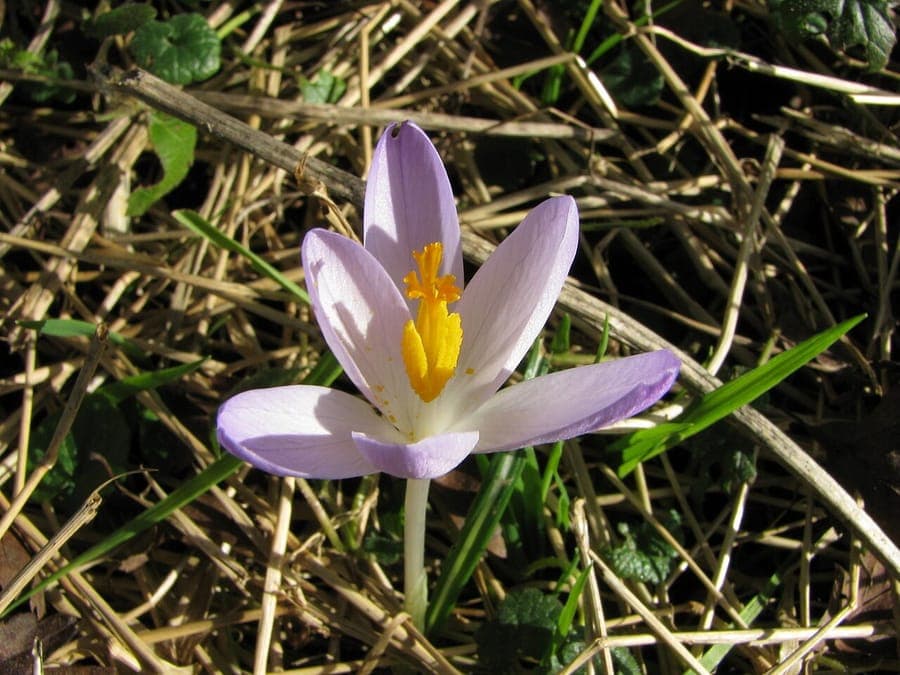
Martyn M aka Martyx / CC BY-SA 3.0, via Wikimedia Commons
Early crocus: complete guide
Crocus tommasinianus
Want to see Early crocus: complete guide in your garden?
1 minute, no credit card
Overview
Crocus tommasinianus, commonly known as the early crocus, is one of the most reliable and charming spring-flowering bulbs for gardens across the UK and North America. Native to the Balkans - Albania, Bulgaria, Hungary, and former Yugoslavia - this species thrives in temperate climates and is fully hardy in USDA zones 3 to 8. It belongs to the Iridaceae family and is renowned for its resistance to squirrels and voles, a rare quality among crocuses.
Unlike many of its relatives, this crocus naturalizes with ease, spreading gently through self-seeding and bulb offsets. That makes it perfect for informal drifts in lawns, under shrubs, or along woodland paths. On gardenworld.app, you can design a planting scheme that mimics this natural spread, using recommended densities and spacing for long-term impact.
Appearance & bloom cycle
Reaching just 10–15 cm in height, the early crocus pops up as early as February in mild areas, with flowering lasting into early April. The blooms are delicate, funnel-shaped, and come in soft shades of lilac, rose-pink, or pale mauve. Some cultivars, like 'Whitewell Purple', have deeper tones, while 'Ruby Giant' offers intense magenta hues.
One of its standout traits is that the flowers open even on overcast days - unlike many crocuses that stay closed when it's dull. This makes the plant a cheerful sight during the greyest weeks of late winter. The blooms last about two weeks per plant, and because they emerge gradually, the overall display can stretch over six weeks.
After flowering, narrow, grass-like leaves persist until early summer, photosynthesizing to feed the bulb for next year. By June, the foliage dies back completely, leaving no trace until the following season.
Ideal location
This crocus grows best in full sun to partial shade. It performs especially well in open woodland settings or under deciduous trees like birch or hazel, where it can flower before the canopy closes. It also works beautifully in lawns, rock gardens, or between paving stones.
For a naturalistic look, scatter the bulbs by hand and plant them where they fall. This method avoids rigid rows and mimics how the plant spreads in the wild. On gardenworld.app, you can map out bulb distribution patterns and preview how your garden will evolve over the years.
Soil requirements
Crocus tommasinianus is adaptable but prefers well-drained soil. It tolerates clay if it's not waterlogged, but heavy, compacted soils increase the risk of bulb rot. Improve drainage by mixing in grit or coarse sand, especially in low-lying areas. A neutral to slightly acidic pH (6.0–7.0) is ideal.
In containers, use a mix of loam-based compost and horticultural grit. Ensure pots have drainage holes. Avoid rich, overly fertile soils, as these can encourage leaf growth at the expense of flowers.
Free design
Want to see Early crocus: complete guide in your garden? Make a free design now.
Watering
Once planted, these bulbs need little to no supplemental watering. Natural rainfall is usually sufficient during the growing season (February to May). Only water in prolonged dry spells, especially if the plants are in containers or very free-draining soil.
During summer dormancy, keep the bulbs dry. Overwatering at this stage is a common mistake and leads to rot. If growing in pots, store them in a dry, shaded spot or plant them out in autumn.
Pruning
No pruning is required. The key is to let the foliage die back naturally. Cutting or mowing the leaves too soon weakens the bulb and reduces flowering in subsequent years. Wait until the leaves turn yellow or brown - usually by late May or early June - before removing them.
If planted in lawns, delay mowing for at least six weeks after flowering. Use a strimmer or hand-shear around clumps to avoid damaging the foliage.
Maintenance calendar
- January: Check for emerging shoots. Mulch lightly if extreme frost is forecast.
- February: Flowers appear. Protect from heavy foot traffic.
- March: Peak bloom. Optional light top-dressing of compost.
- April: Bloom fades. No feeding required.
- May: Foliage yellows. Prepare to stop mowing around plants.
- June–December: Dormant period. No action needed.
Sync this calendar with your personal planner on gardenworld.app to stay on track with seasonal tasks.
Winter hardiness
This crocus is fully hardy down to -15°C and thrives in USDA zones 3–8. It requires no winter protection in most temperate regions. Bulbs can remain in the ground year-round and actually perform better when left undisturbed.
In areas with wet winters, a light mulch of straw or leaf mould can help prevent waterlogging, especially in heavy soils. Avoid thick mulches that trap moisture.
Companion plants
Pair early crocus with other spring bulbs like snowdrops (Galanthus), winter aconite (Eranthis hyemalis), or dwarf irises. Later companions include grape hyacinths (Muscari) and small daffodils like 'Tête-à-Tête'.
For a layered effect, plant under hellebores or emerging ferns. It also combines well with early perennials like pulmonaria or primroses, which extend the season of interest.
Closing
Crocus tommasinianus is a quiet achiever in the garden - small in stature but big in impact. Its early bloom time, rodent resistance, and ability to self-spread make it a top choice for low-effort, high-reward planting. Whether you're filling gaps in a border or naturalizing a lawn, this crocus brings joy when little else is flowering.
Plant bulbs in autumn (September to November) at a depth of 5–8 cm and 5 cm apart. Buy from reputable garden centres or online suppliers. With a little planning and patience, you'll enjoy expanding drifts of these cheerful blooms for years to come.
Want to see Early crocus: complete guide in your garden? Make a free design now.
Upload a photo, pick a style, and get a photorealistic design with plant list in under a minute.
No credit card required


Similar plants
Iris tingitana: complete guide
Iris tingitana
Iris tingitana, the Morocco iris, is the bulb species behind the Dutch iris: early blue-violet blooms that need a sunny, well-drained position.
Iris hookeri: complete guide
Iris hookeri
Hooker's Iris is a compact North American native plant with blue flowers. Low-growing and moisture-loving water plant.
Siskiyou iris: complete guide
Iris bracteata
Complete guide to Iris bracteata, the Siskiyou iris: location, soil, bloom cycle, watering, pruning and companion plants for this rare Pacific Coast iris.