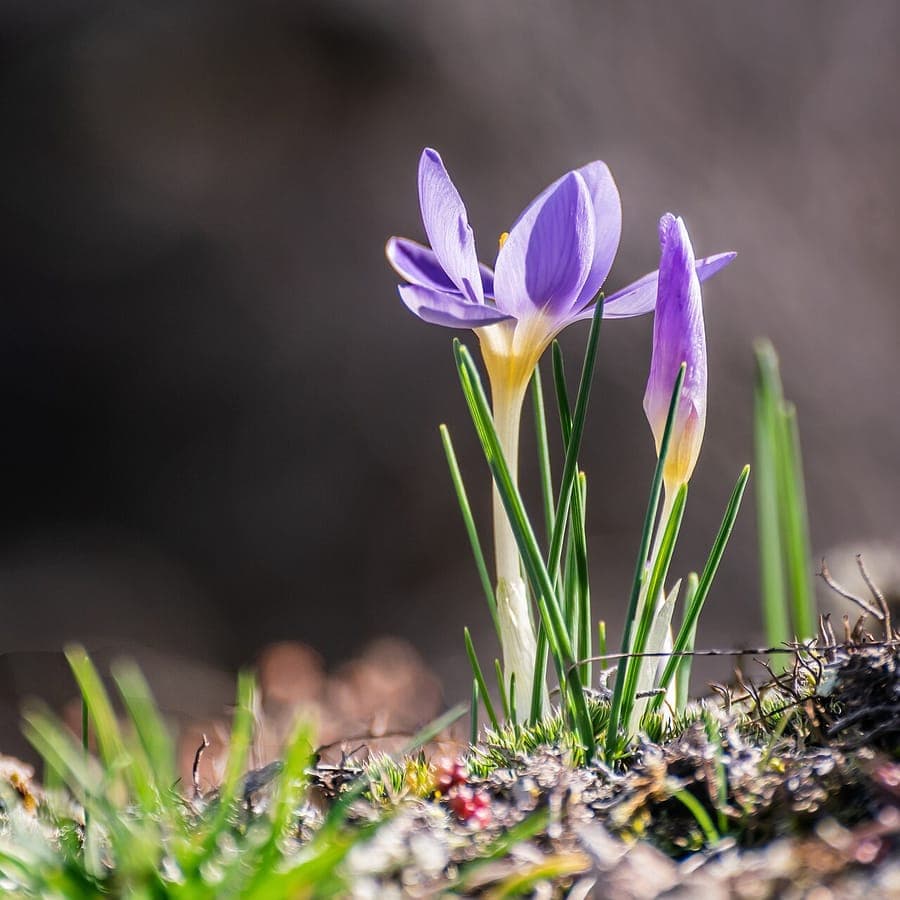
Krzysztof Golik / CC BY-SA 4.0, via Wikimedia Commons
Crocus carpetanus: complete guide
Crocus carpetanus
Want to see Crocus carpetanus: complete guide in your garden?
Full design in HD: €7.99
Look after your Crocus carpetanus with the GardenWorld app
Identify plants with your camera and get a care calendar with reminders for this plant.


Overview
Crocus carpetanus is a delicate crocus from the mountainous region between Portugal and northern Spain. This rare species is also known by the Spanish name "Azafrán serrano". The plant belongs to the winter-flowering crocuses and produces abundant flowers in late autumn and early winter.
Appearance and bloom
Crocus carpetanus grows to approximately 10-15 cm in height with fine, linear foliage. The flowers are small and delicate with a purplish color and whitish base. The flowering period extends from October to February, depending on location and winter conditions. It is a reliable bloomer that returns year after year.
Ideal location
Plant the crocus in a sunny to partially shaded spot. The plant grows well in borders, alpine gardens and in pots. Ensure the location is well-drained and not too wet. A south or west-facing location is ideal for flowering.
Soil type
Use nutrient-rich, well-draining garden soil. Crocus carpetanus prefers moderately dry soil. You can add coarse sand to improve drainage if needed. For pots, use flower bulb mix.
Watering
Watering is usually not necessary as the plant mainly grows during the wet season (autumn-winter). Ensure good drainage so water does not accumulate. In summer it can remain dry.
Free preview
Want to see Crocus carpetanus: complete guide in your garden? Make a free preview of your design.
Pruning
Pruning is not necessary. Leave the foliage after flowering until it wilts. This gives the bulb energy for next year.
Maintenance calendar
In August-September, plant the crocus bulbs. October through March is the growth and flowering period. April and May are rest and foliage disappears. June to September is the dormancy period. After flowering, you can carefully apply some plant food.
Winter hardiness
Crocus carpetanus is fully winter-hardy in northern regions. The plant tolerates temperatures down to -15 degrees Celsius without problems. This makes it a perfect plant for harsh winters.
Companion plants
Crocus carpetanus combines beautifully with other winter-flowering plants such as snowdrops (Galanthus), winter jasmine and helleborus. It also looks lovely in groups between groundcovers.
Conclusion
Crocus carpetanus is a jewel for lovers of winter-flowering plants. Although rare, it is a reliable bloomer that returns year after year. This species is sometimes available from specialized bulb sellers. Visit gardenworld.app for more plant advice and inspiration.
Frequently asked questions about Crocus carpetanus
Is Crocus carpetanus winter hardy?
Crocus carpetanus is fully winter-hardy in northern regions. The plant tolerates temperatures down to -15 degrees Celsius without problems.
When and how do you prune Crocus carpetanus?
Pruning is not necessary. Leave the foliage after flowering until it wilts.
How much water does Crocus carpetanus need?
Watering is usually not necessary as the plant mainly grows during the wet season (autumn-winter). Ensure good drainage so water does not accumulate.
Where does Crocus carpetanus grow best?
Plant the crocus in a sunny to partially shaded spot. The plant grows well in borders, alpine gardens and in pots.
What soil does Crocus carpetanus need?
Use nutrient-rich, well-draining garden soil. Crocus carpetanus prefers moderately dry soil.

See it in your garden
See Crocus carpetanus in your garden
One photo of your garden and a few questions. You see the result in about a minute.
Try it with a photoIdentify this plant in your own garden. Identify a plant
Similar plants
Giant montbretia (Crocosmia masoniorum): growing guide
Crocosmia masoniorum
Everything about giant montbretia (Crocosmia masoniorum): position, soil, planting, winter protection and companions for its fiery orange summer flowers.
Dierama pulcherrimum: growing angel's fishing rod
Dierama pulcherrimum
Everything about angel's fishing rod (Dierama pulcherrimum): full sun, moist but free-draining soil, spring planting and winter care for this graceful summer perennial.
Hesperantha coccinea (Schizostylis): autumn stars for your border
Hesperantha coccinea
A complete guide to Hesperantha coccinea, formerly Schizostylis coccinea: site, moist soil, dividing and overwintering this late-flowering crimson flag lily.
