
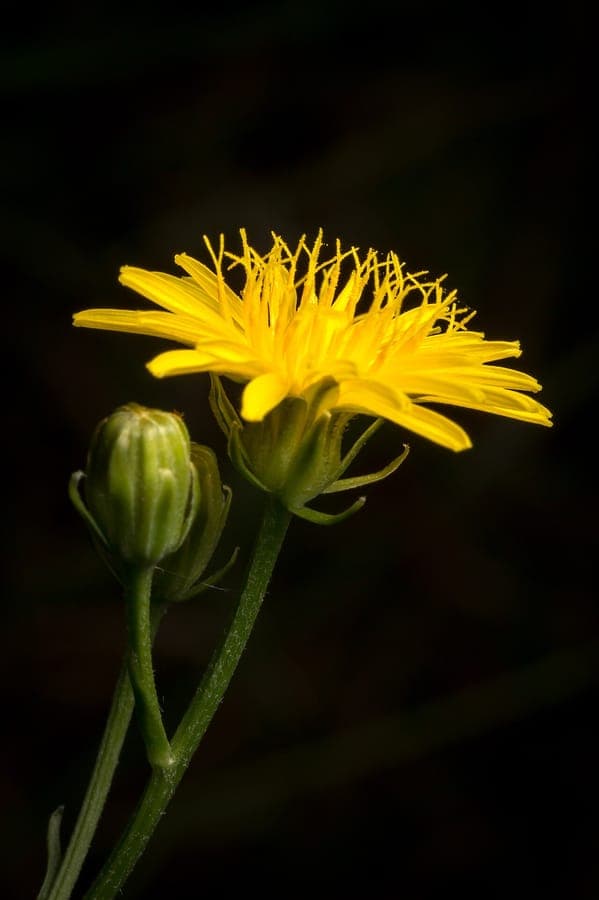
Manfred Moitzi / CC BY-SA 2.0, via Wikimedia Commons
Crepis-dandelion: complete guide
Crepis vesicaria
Want to see Crepis-dandelion: complete guide in your garden?
1 minute, no credit card
Overview
Crepis-dandelion, or Crepis vesicaria, is a hardy herbaceous perennial from the Asteraceae family that's gaining popularity among gardeners seeking resilient, low-effort plants for sunny, dry areas. Native to southern and central Europe - including France, Austria, the Balearic Islands, and parts of North Africa - this plant thrives in Mediterranean and sub-Mediterranean climates. Though not native to the UK or much of northern Europe, it adapts well to well-drained, lean soils in full sun.
It's best suited to USDA hardiness zones 7 through 9. Crepis vesicaria typically reaches 30–50 cm in height, with a spread of about 25 cm. The plant returns reliably each year, blooming from May through June. Its tolerance for poor soil and drought makes it ideal for gravel gardens, rockeries, and naturalistic planting schemes. On gardenworld.app, you can design a garden layout that maximizes sun exposure and soil drainage for plants like Crepis-dandelion.
Appearance & bloom cycle
The plant forms a low rosette of dark green, deeply toothed leaves that closely resemble those of the common dandelion - hence the common name. These basal leaves stay close to the ground, while slender, slightly hairy flower stalks rise above in late spring.
The flowers are bright yellow, daisy-like, and about 2–3 cm across. Each stem usually carries a single bloom, creating a delicate, airy effect in the border. The bloom period peaks in May and June, occasionally extending into early July in warm, dry summers. These flowers are excellent for pollinators, attracting bees, hoverflies, and small butterflies.
After flowering, the plant produces fluffy seed heads similar to dandelions. These are easily dispersed by wind, so if you want to limit self-seeding, deadhead before the seeds mature. However, allowing a few to set seed can help maintain a naturalized look in wilder garden areas.
Ideal location
Crepis vesicaria needs at least 8 hours of direct sunlight daily. A south- or southwest-facing spot is ideal. It performs best in open, unshaded areas with good airflow. In cooler, cloudier regions like the UK, it may struggle unless planted in a very warm microclimate - such as against a sunny wall or in a raised bed.
This plant is perfect for xeriscaping, dry borders, or gravel gardens. Avoid shady, damp corners or areas with poor drainage. On gardenworld.app, use the sunlight simulation tool to identify the sunniest zones in your garden before planting.
Soil requirements
It prefers lean, well-drained soils - sandy or gravelly types are ideal. The optimal pH range is 7.0 to 7.5, slightly alkaline. One of its biggest strengths is its ability to thrive in nutrient-poor soils. Avoid heavy clay or overly rich, organic soils, which can lead to root rot and weak growth.
When planting, mix in coarse sand or small gravel to improve drainage, especially if your soil is dense. No fertilizer is needed - in fact, too much nitrogen promotes leafy growth at the expense of flowering.
Free design
Want to see Crepis-dandelion: complete guide in your garden? Make a free design now.
Watering
Once established, Crepis-dandelion is highly drought-tolerant. During the first growing season, water young plants about 1 litre per week during dry spells to help roots establish.
From the second year onward, supplemental watering is rarely needed, except during prolonged droughts. Overwatering is a common mistake - it weakens the plant and increases the risk of fungal diseases. Always water at the base, not over the foliage, to prevent mildew.
Pruning
Pruning isn't essential, but deadheading spent flowers can extend blooming and reduce self-seeding. Cut back flower stems to just above the leaf rosette using clean, sharp secateurs. Do this in the morning when the plant is hydrated.
If you're aiming for a tidy look, cut all stems back after flowering. Alternatively, leave some seed heads for winter interest and to feed birds.
Maintenance calendar
- Jan: No action
- Feb: No action
- Mar: Check soil compaction around crowns
- Apr: Watch for emerging shoots; light top-dressing if soil is very poor
- May: Blooming begins; monitor for pests; water if dry
- Jun: Peak bloom; deadhead regularly
- Jul: Remove spent stems or leave for wildlife
- Aug: No watering unless in extreme drought
- Sep: No maintenance
- Oct: Cut back or leave seed heads
- Nov: No action
- Dec: No action
Winter hardiness
Crepis vesicaria is winter-hardy in USDA zones 7–9. In zone 8 (much of western Europe), the plant dies back to the ground in winter and regrows in spring. No winter protection is needed. However, wet winter soils can cause root rot, so good drainage is critical.
Companion plants
Pair Crepis-dandelion with other drought-tolerant species like Echinacea, Sedum, Stipa tenuissima, or Salvia. The yellow blooms contrast beautifully with purple or silver foliage. Avoid moisture-loving plants like hostas or ferns.
In a Mediterranean-style garden, combine it with lavender, sage, or thyme. This not only looks cohesive but also creates a low-water, high-reward planting scheme.
Closing
Crepis-dandelion is an underrated gem for sustainable, low-maintenance gardens. It's not flashy, but it's dependable, long-blooming, and supports pollinators without demanding much in return. Its subtle charm fits perfectly in naturalistic or gravel gardens.
You can find Crepis vesicaria at garden centres across the UK and Europe. Look for young plants in spring at local nurseries or order online. And remember - with gardenworld.app, you can map out your planting plan and test companion combinations before you dig a single hole.
Want to see Crepis-dandelion: complete guide in your garden? Make a free design now.
Upload a photo, pick a style, and get a photorealistic design with plant list in under a minute.
No credit card required


Similar plants
Calendula stellata: complete guide
Calendula stellata
Complete guide to Calendula stellata, the star-flowered marigold from Sicily: location, soil, watering and companion planting tips.
Korean chrysanthemum: complete guide
Chrysanthemum x rubellum
Chrysanthemum x rubellum is a hardy autumn perennial with single pink to copper flowers from August to November. Care and combinations.
Helianthus divaricatus: complete guide
Helianthus divaricatus
Helianthus divaricatus is a North American woodland sunflower with yellow summer blooms, ideal for naturalistic borders and shady edges.