
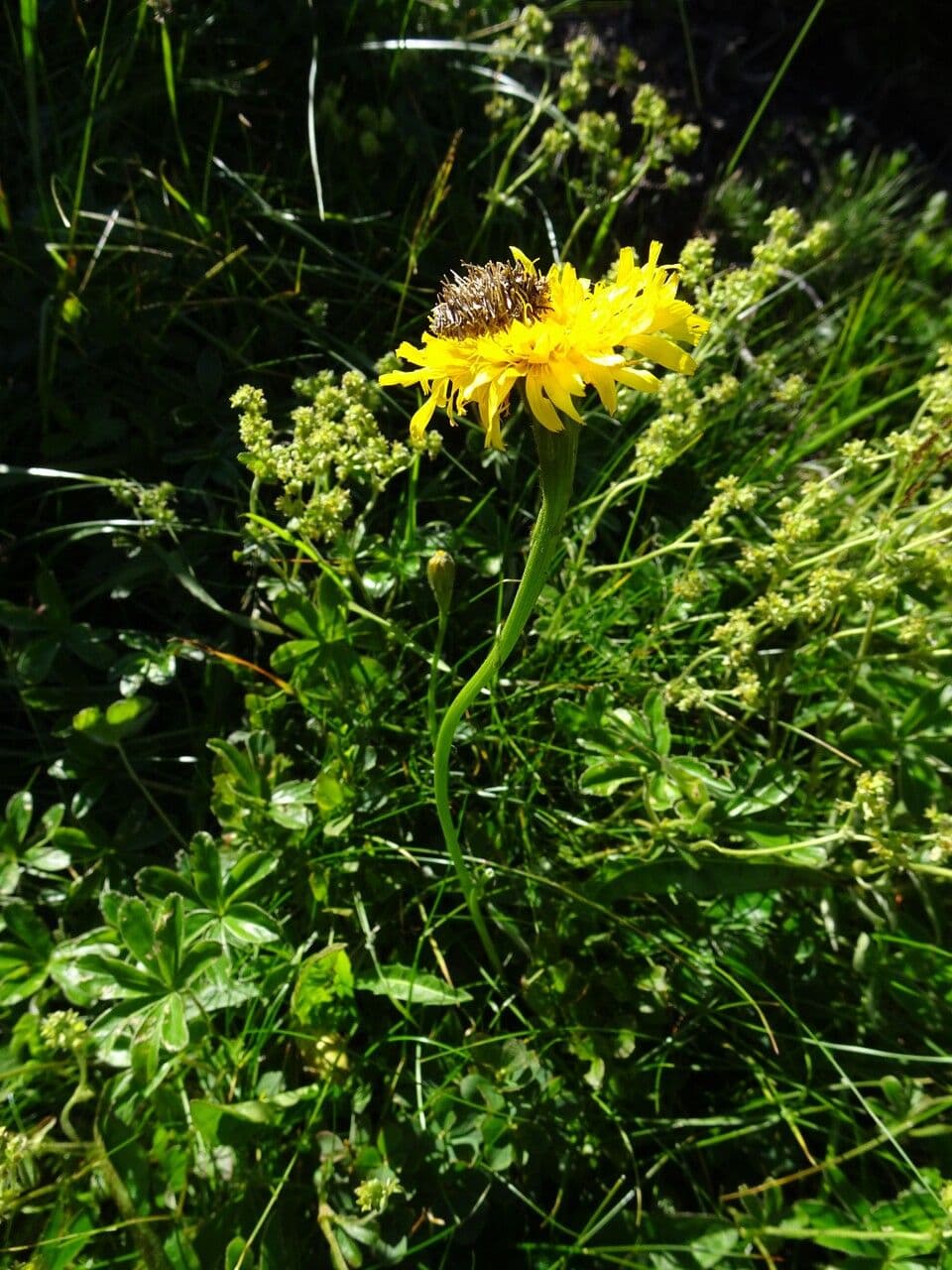
Crepis conyzifolia: complete guide
Crepis conyzifolia
Want to see Crepis conyzifolia: complete guide in your garden?
1 minute, no credit card
Overview
Crepis conyzifolia, known as the Large-flowered Hawksbeard or Grande-Flowered Hawksbeard, is an elegant flowering plant from the Asteraceae family (also known as the Daisy Family). This remarkably refined plant grows natively in southern and central Europe and the Caucasus region, where it blooms on mountain slopes and rocky riverbanks.
This plant offers gardeners a captivating flower spectacle with large, sunny yellow blooms typically flowering from June through September. The plant is remarkably easy to cultivate, drought-tolerant, and attractive to pollinators. With its slender form and elegant flowers, Crepis conyzifolia is a jewel for contemporary gardens.
Appearance and bloom
Crepis conyzifolia grows as a herbaceous plant, usually 60 to 90 centimeters tall. The plant forms a dense leafy base with upright flowering stems that rise above the foliage. The growth habit is elegant and natural.
The basal leaves are graceful, elongated, and toothed, typically 10 to 20 centimeters long. They form an attractive rosette at the plant's base. The stem leaves are smaller and stem-clasping.
The flowers are the true attraction of this plant. They appear in July and August in numerous dense clusters atop the stems. Each flower head is a sunny yellow composition of tightly-arranged small florets. The blooms are highly decorative and continue flowering for months if you regularly remove spent flowers.
Following flowering, characteristic fruits with feathery seeds (pappus) form, attracting bird visitors and dispersing by wind.
Ideal location
The Large-flowered Hawksbeard thrives best in fully sunny locations. A minimum of six hours of direct sun daily is essential for abundant blooming. The plant tolerates light partial shade but flowers less profusely.
The plant is flexible regarding growing conditions and grows well in windy locations, slopes, and coastal areas. The plant tolerates drought excellently and is ideal for xeriscaping projects and drought-prone gardens.
Use Crepis conyzifolia in full-sun borders, on dry slopes, in rock gardens, or as cut flowers for arrangements. The plant is also suitable as edging along pathways.
Soil
Crepis conyzifolia grows best in well-drained, yet moderately fertile soils. The plant accepts both acidic and alkaline soils with pH from 5.5 to 8.0. Heavy and waterlogged soils should be avoided.
When planting, it is recommended to add sand to heavy soils. The plant tolerates poor soils well and requires no regular feeding. Excessive nutrients lead to more foliage but fewer flowers.
Once established, the plant requires minimal care. No mulch is necessary and actually undesirable in climates with heavy rainfall, as it may cause root rot.
Free design
Want to see Crepis conyzifolia: complete guide in your garden? Make a free design now.
Watering
Crepis conyzifolia should be watered regularly during its first growing season. This helps roots become well-established. Once rooted, the plant is highly drought-tolerant.
Under normal conditions, little supplemental water is needed. The plant survives normal dry summers without any supplemental watering. During extreme drought, sporadic watering helps, but is not essential.
Essential is good drainage. The plant does not grow well in wet conditions. In containers, watering may be needed more frequently, but dry soil is preferred over wet.
Pruning
Crepis conyzifolia can be cut during the growing season to stimulate branching formation. In spring, dead parts from the previous year can be removed.
Regular deadheading of spent flowers significantly extends the blooming period. It also promotes more flowering by directing energy toward blooming rather than seed production.
At season's end, all stems can be cut to ground level. The plant is typically short-lived and may return from seed the following year.
Maintenance calendar
March-April: Plant shows new growth. Remove dead parts from previous year. Water well. May-June: Plant grows rapidly. Water carefully during dry periods. Sunny highlight. July-August: Plant is full of blooms. Regular deadheading promotes more flowers. Water only in extreme drought. September-October: Blooming begins to decline. Seeds ripen. Birds eat seeds. November-December: Plant gradually declines. Allow seed production. January-February: Plant may return from seed. Leave dead material for birds.
Winter hardiness
Crepis conyzifolia is a reasonably hardy plant tolerating temperatures down to approximately -12 degrees Celsius. The plant behaves as a non-perennial in many climates and may overwinter as a rosette.
In Britain, the plant grows best in warm, dry microclimates. In colder regions, it is better to grow the plant fresh from seed each year. A light mulch in autumn can help with overwintering.
Companion plants
Combine Crepis conyzifolia well with other sun-lovers. Excellent companions include Salvia species, Stachys byzantina (lamb's ear), Helichrysum, and Euphorbia species.
In borders, it pairs well with Achillea, Lavandula, and other xerophyte plants. In rock gardens, it combines well with sedums and dwarf-growing conifers. The yellow flowers form a nice combination with blue blooms of Veronica and Delphinium.
In dry slope planting, this is an ideal partner for Sedum species and other succulents. The plant also works well as a cut flower.
Conclusion
Crepis conyzifolia provides months of sunny yellow flowers with minimal maintenance requirements. This elegant plant is ideal for gardeners desiring abundant blooming with minimal effort.
Whether you are arranging a dry border, populating a rock garden, or seeking a prolific blooming specimen, the Large-flowered Hawksbeard is an excellent choice. Seeds are available from major seed suppliers and garden centers.
Want to see Crepis conyzifolia: complete guide in your garden? Make a free design now.
Upload a photo, pick a style, and get a photorealistic design with plant list in under a minute.
No credit card required


Similar plants
Calendula stellata: complete guide
Calendula stellata
Complete guide to Calendula stellata, the star-flowered marigold from Sicily: location, soil, watering and companion planting tips.
Korean chrysanthemum: complete guide
Chrysanthemum x rubellum
Chrysanthemum x rubellum is a hardy autumn perennial with single pink to copper flowers from August to November. Care and combinations.
Helianthus divaricatus: complete guide
Helianthus divaricatus
Helianthus divaricatus is a North American woodland sunflower with yellow summer blooms, ideal for naturalistic borders and shady edges.